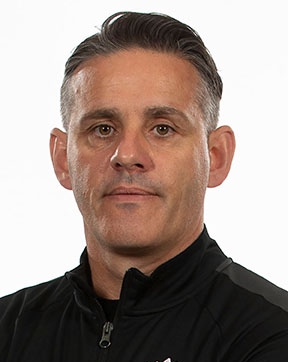
338: How Sports Science Has Changed Coaching with Simon Grayson
Sep 21, 2026 · 41 min · 10 segments
Few people are better placed to chart the evolution of sports science in professional football than Simon Grayson. Across a career spanning five decades, Simon has experienced the game as both a…
Few people are better placed to chart the evolution of sports science in professional football than Simon Grayson. Across a career spanning five decades, Simon has experienced the game as both a player and manager, from an era of bacon sandwiches before training and beers on the team bus, through to the GPS data, individualised programmes and specialist performance departments that are now part of everyday professional football. This week, Richard Graves sits down with Simon to discuss how that transformation has changed the way players train, recover and prepare for matches, and how his own approach to management has evolved alongside it. Simon explains what he wants from sports science practitioners as a manager, why information has to be relevant rather than simply available, and why data should always be understood within the context of what actually happened on the pitch. They also explore one of the challenges facing modern performance teams: finding the right balance between objective data and a coach's experience. Simon discusses why high-speed running is one of the metrics he pays particular attention to, how physical data can influence team selection during congested schedules, and why he has never wanted his training sessions to be dictated entirely by the numbers. Drawing on his experiences in English football and coaching overseas, Simon also explains how climate, culture and the physical capabilities of players can force coaches to adapt their methods. And despite everything that has changed, he believes one part of coaching remains as important as ever: getting the best out of people. ### In this episode you will learn - How sports science in professional football has changed since Simon began playing in the 1980s - What a manager actually wants from sports science and performance staff - Why more data doesn't necessarily mean better information - Why Simon pays particular attention to high-speed running - How physical data can influence selection during congested fixture schedules - Why training load data needs to be interpreted within the context of the game - How managers balance sports science recommendations with coaching experience - What modern recovery looks like compared with previous generations - How Simon adapted his training methods when coaching in different climates and cultures - Why man-management and relationships remain fundamental regardless of advances in technology ### About Simon Grayson Simon Grayson has spent more than four decades in professional football as a player, coach and manager. After beginning his career at Leeds United, he went on to play for clubs including Leicester City, Aston Villa, Blackburn Rovers and Blackpool. His playing career included promotion to the Premier League with Leicester and victory in the 1997 League Cup. As a manager, Simon has led clubs including Blackpool, Leeds United, Huddersfield Town, Preston North End, Sunderland and Bradford City, with promotion-winning campaigns at several clubs. His career has also taken him overseas, giving him experience of working with players and performance teams in different footballing cultures and environments. More recently, Simon has worked in international football and advisory roles, while also launching the Simon Grayson Football Academy in Leeds. **FREE 7d SCIENCE FOR SPORT ACADEMY TRIAL** **SIGN UP NOW:** https://bit.ly/SFSepisode241 Learn Quicker & More Effectively Optimise Your Athletes' Recovery Position Yourself As An Expert To Your Athletes And Naturally Improve Buy-In Reduce Your Athletes' Injury Ratese Save 100's Of Dollars A Year That Would Otherwise Be Spent On Books, Courses And More Improve Your Athletes' Performance Advance Forward In Your Career, Allowing You To Earn More Money And Work With Elite-Level Athletes Save Yourself The Stress & Worry Of Constantly Trying To Stay Up-To-Date With Sports Science Research
Few people are better placed to chart the evolution of sports science in professional football than Simon Grayson. Across a career spanning five decades, Simon has experienced the game as both a…