Rowan & Pine: A Spooky Folklore & Mythology Podcast
Oct 23, 2026 · 17 min · 7 segments
Long before they were everyday fixtures, mirrors were viewed not as simple reflective glass, but as windows into the unseen. In medieval Europe, the practice of catoptromancy (divination using…
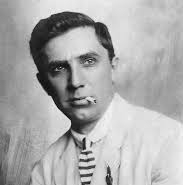
A beautiful woman should break her mirror early from the art of worldly wisdom by Baltasar Gracia.
Look around your home and you'll find a small, peculiar list of ordinary objects capable of triggering deep, instinctual dread.
There's your bed, terrifying simply because it creates an under.
There's the refrigerator at night, glowing like a portal where cold evil originates.
There are old dolls watching with unblinking eyes.
We could add the attic or the basement to this list, But those are locations.
Objects carry a far more intimate kind of horror.
Among them all, the mirror reigns supreme.
No one ever claimed that breaking a fridge brings seven years of bad luck, but mirrors carry centuries of heavy, restless folklore.
Long before they were everyday fixtures, mirrors were viewed not as simple reflective glass, but as windows into the unseen.
In medieval Europe, the practice of catoptromancy, which was divination using reflections, was closely tied to witchcraft and the belief that a mirror reveals the future rather than the present.
Ancient traditions held that a mirror reflected a person's very soul.
A distorted image signalled a corrupted spirit, while soulless entities like vampires cast no reflection at all.
The Romans believed that breaking a mirror trapped a fragment of your soul within the glass, holding it hostage until the body renewed itself in its seven-year cycle.
That superstition endures today as our familiar seven years of bad luck.
Yet this anxiety spans the globe.
Among the Basotho people of southern Africa, it's believed that if a crocodile snaps at a man's reflection in the water, his death will soon follow.
Mirrors have forever captivated our myths, our superstitions and our horror fiction.
But why do these silvered pieces of glass unsettle us so deeply? What is it about our own reflection that makes us afraid to look twice? The technical term for this fear draws directly from ancient languages.
The second is Spectrophobia, from the Latin Spectrum, meaning specters or ghost.
Finally, there is isotrophobia, from the Greek eis meaning into and optikos referring to vision.
The roots of these phobias are pretty easy to trace when you examine the abundance of folklore attached to reflections.
Some of these traditions offer protection, like hanging a brass mirror above an altar in traditional Chinese practice.
This was believed to scare off evil spirits when they caught sight of their own terrifying faces.
The rest of this transcript — segmented and speaker-labeled, so you land on the exact moment something was said
Search every transcript — by keyword, by phrase, or by meaning, across every show Radar indexes
Trends — what is surging across podcasts, measured against its own baseline
Alerts — when a name you follow appears in a newly indexed episode
No account is needed to search Radar.