Jun 25, 2026 · 30 min · 9 segments
Our first episode of Think Change, recorded in March 2022 just after Russia’s invasion of Ukraine…
Ksenia IliukGuest
Sara PantulianoHost
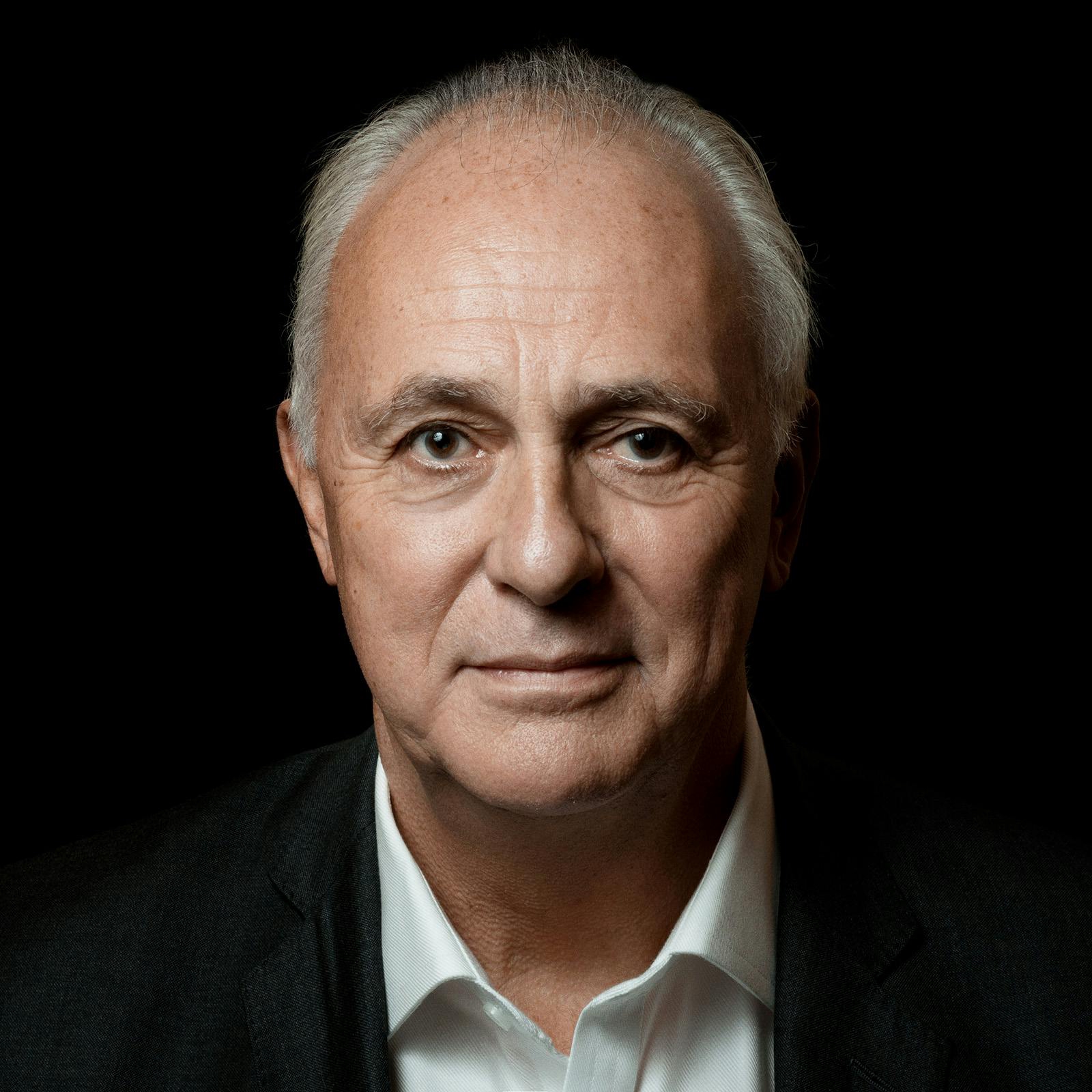
Mark Malloch-BrownGuest
The audience often seems to be consuming entirely different versions of the same conflict.

And we discussed during episode one, I remember, you know, one of the main themes was that disinformation thrives by creating confusion and division, you know, these different versions of the same thing.

false information itself, OECD's growing inability of societies to agree on basic facts.
I always call it the old water cooler moment that we all gather around one place.
And we agree on some certain, we have a common ground, if you like, a meeting place where we agree, say, on the fundamentals.
And now because of this polarization, which is part, as Mark has indicated, but because of the political polarization and polarization really from the far right to the very far left, And so that center ground has been shifting and actually being squeezed.
And Ksenia has sketched out so eloquently the technology behind this and the malign use of technology.
And I think and then add to it artificial intelligence, which has this incomparable ability to blur the difference between fact and fiction and between fakery and fact.
You know, and it's challenging all of us, the BBC, of course, like other broadcasters and new media set up what we call our verify unit to try to.
Is it really in this country? Is it really this date? But we're really living in a time where people not only have their own opinions, they have their own facts, and they hold on to those facts.
But it is a moment that is incumbent upon all of us as journalists, for example, I can only speak as working as a public broadcaster, we have to keep fighting back.
Because as I began this conversation, we have to believe in the power of journalism, holding people account, trying to find out the truth, as difficult as it is of crises, which affect all global crises, which affect all of us, no matter who no matter where we live.
And so to politicians and technologists and think tanks like yours, this is why we're having this kind of discussion to this day.
And if we don't fight this battle, and it is a battle, we may not necessarily win because there's a lot of odds against us.

The audience often seems to be consuming entirely different versions of the same conflict.

And we discussed during episode one, I remember, you know, one of the main themes was that disinformation thrives by creating confusion and division, you know, these different versions of the same thing.

false information itself, OECD's growing inability of societies to agree on basic facts.
I always call it the old water cooler moment that we all gather around one place.
And we agree on some certain, we have a common ground, if you like, a meeting place where we agree, say, on the fundamentals.
And now because of this polarization, which is part, as Mark has indicated, but because of the political polarization and polarization really from the far right to the very far left, And so that center ground has been shifting and actually being squeezed.
And Ksenia has sketched out so eloquently the technology behind this and the malign use of technology.
And I think and then add to it artificial intelligence, which has this incomparable ability to blur the difference between fact and fiction and between fakery and fact.
You know, and it's challenging all of us, the BBC, of course, like other broadcasters and new media set up what we call our verify unit to try to.
Is it really in this country? Is it really this date? But we're really living in a time where people not only have their own opinions, they have their own facts, and they hold on to those facts.
But it is a moment that is incumbent upon all of us as journalists, for example, I can only speak as working as a public broadcaster, we have to keep fighting back.
Because as I began this conversation, we have to believe in the power of journalism, holding people account, trying to find out the truth, as difficult as it is of crises, which affect all global crises, which affect all of us, no matter who no matter where we live.
And so to politicians and technologists and think tanks like yours, this is why we're having this kind of discussion to this day.
And if we don't fight this battle, and it is a battle, we may not necessarily win because there's a lot of odds against us.
The rest of this transcript — segmented and speaker-labeled, so you land on the exact moment something was said
Search every transcript — by keyword, by phrase, or by meaning, across every show Radar indexes
Trends — what is surging across podcasts, measured against its own baseline
Alerts — when a name you follow appears in a newly indexed episode
No account is needed to search Radar.