Joy News File
Jul 18, 2026 · 3 hr · 11 segments
Analysis and discussion of news and current affairs in Ghana with panellists
- Show signals
- SuitabilityLimitedBiasCenterAudience≈1.5M followers
Jul 18, 2026 · 3 hr · 11 segments
Analysis and discussion of news and current affairs in Ghana with panellists
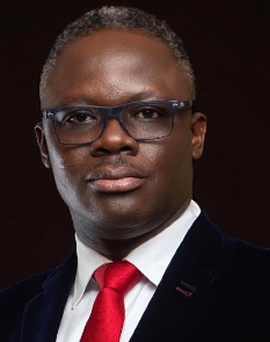
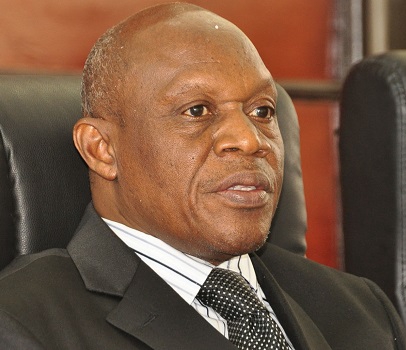
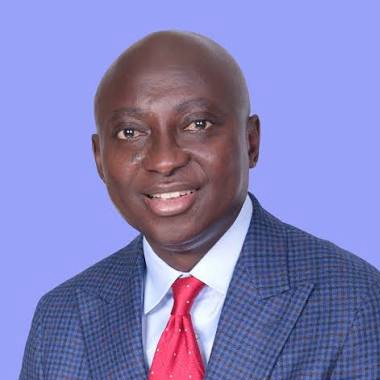
 Samson Lardy AnyeniniHostTheophilus Gyamenga JuniorPanelistJames Kobina Bomfeh JuniorPanelist
 Victoria BrightPanelist
 John Osei KwapongPanelist
 Nana Adjei Baffour AwuahPanelistDennis Adjei DjomoGuest
Indeed, one of the things that the lawyer for Wontumi had been advocating is, um, telecast, live broadcast of, uh, uh, proceedings of court.
This act or the bill has provided a safeguard that the, uh, proceedings at the regional tribunal may be telecast live if it involves, uh, very heavy or high public interest issues.
You see, their problem really has been the history of public tribunals.
So I'm, I'm gonna ask you, bec- because we will get there, when we get to parliament and the issue of the Bank of Ghana governor, I hope you will not argue that that way, too, there is opportunity for it, because if it is may, it means the committee or the court can decide that we'll not broadcast, just like parliament just said.
It is a may, so they decided that the BoG governor will not do it, you know, to the cameras.
Now, the court, the tribunal as it is, you just mentioned that there were, uh, two, 200 suspects of, uh, uh, galamseyers arrested-
And the, the honorable attorney general has said it over and over, that there are persons you arrest today, they are granted bail tomorrow, and the next morning they are back into the pit and they are arrested again and, and brought back, and the system continues.
We have made a pledge to the Ghanaian people to fight galamsey, and we say that this is one way for us to fight galamsey.
Now, there is so much justification and, uh, public, um, safeguard in the bill such that the things of the past that had been there are no more going to be here today.
If you look at the composition of the, of the regional tribunal, go to section 18.
The composition does not really depart from the constitutional provision.
I think that the regional, the, the, the constitutional provisions were lifted almost verbatim into the act, so there's nothing that has so much departed.
If you read Article 1442, which says that there shall be established in each region of Ghana such regional tribunals as the chief justice may determine.
A regional shall- tribunal shall consist of the chief justice, one chairman, such members who may or may not be lawyers.
If you come back here, it's the same thing that is in the bill.
So the idea that there is a parallel system, it's not a parallel system.
It is just what the constitution has asked to be done and the NDC has promised Ghanaians that when we are elected, we are going to bring back and get this to clear backlog of cases.
There are cases that last over five years, and the specific cases, as he said, narcotics, income tax, galamsey, and customs, these are the areas that are specifically carved out for the regional tribunals to deal with.
Now, in order to avoid situations where there will be political interference, et cetera, it says that the appointments shall be in consultation with the judicial council.
So I do not see where, uh, uh, council's, uh, fear and apprehension is about this case.
So the tribunals as it is at the moment, the bill as it is at the moment and passed, is going to create a situation where there will be expeditious trial of cases.
Now, the idea of us having the regional tribunal, that Jakin type of tribunal that existed in 1982 to maybe 1990 will not be there because the safeguards here are stronger than what was in there.
Do you think those guardrails are sufficient? Because he, as he speaks, they may be a bit permissive and things may happen, but you are still making your, your, your-
You, you raised the issue about the OSP and juxtapose it with, uh, Article 142, as he said here.
Now, if that becomes an issue and the bill is passed and assented to, you go to the Supreme Court and challenge its validity to see if that is it.
If the Supreme Court agrees with you that that is unconstitutional, it will be struck out and that part will be...
Now, the guardrails that have been put in place are such that they are supposed to ensure fairness, transparency, expedition, and efficiency in our judicial system.
Now, if we are going to establish more courts, it's the same thing as establishing more tribunals.
Now, we are saying that the power of the legislature- The judiciary is a, is a power that emanates from the people.
Let people be part of the judiciary system such that some of the myth around the judiciary will be removed.
It says that citizens may exercise popular participation in the administration of justice through institutions of public and customary tribunals and the jury and assessor system.
That is why we say that, okay, if we have a tribunal system, panelists must not necessarily be members of la- uh, of the judiciary or must not be lawyers, but ordinary members that will be able to administer justice in the name of the people.
Even recently in the UK, they tried to do away with the jury system.
Uh, the deputy prime minister and the minister for justice, he was so much vocal about removing the jury system, but the lawyers were against it, and the jury system is still back in the U- UK.
The problem here or the issue here is that you are supposed to be tried by your peers.
What I hold in my hand here is the white paper, Report of the Constitution Review Commission of Inquiry, June 2012.
Professor Mills
So you remember that Professor Mills set up the Constitution Review Commission-
You know that in this document, they have spoken to thousands of Ghanaians, including judges and everybody else, and they came to the conclusion that the tribunal system should be done away with that.
Government accepts the recommendation that regional tribunals be abolished and matters handled by them incorporated into the regular court schedule.
Government, however, holds the view that the chairman or the chairman of the regional tribunals, if any, should be absorbed into the judiciary as High Court judges." How do you reconcile this with this position now?
You see, Samson, as at 2012, the issues that we are talking about to be handled by the tribunal system were not prevalent then.
The issues of galamsey, narcotics, et cetera, were not prevalent then.
... and the, and the demands of justice and the pledge we have made to the Ghanaian people that we are going to deal with galamsey and narcotics.
So if the issues of galamsey and the backlogs were as high then as it was in 2012, I believe that the government's white paper would have been different.
But currently, we are saying that the issues we have today call for a different system, and the traditional courts are not able to handle the number of cases we have expeditiously.
Already it is in the constitution, so let us just activate it and get those things up to, to, to, to run together with the court system.
In 2025, this president set up the Professor H. Kwesi Prempeh Committee, Constitution Review Committee.
This is the report, full report, and this report at page 282, recommendation, "The committee recommends that regional tribunals be de-established from the constitution.
The committee notes that the High Court has been handling the caseload of regional tribunals.
The resources to be committed to resuscitating the moribund regional tribunals could be channeled to resource the High Court, as well as the circuit and district courts that the committee now proposes to make part of the regular judiciary.
Moreover, the jurisdiction of the circuit courts could be expanded to take on some of the cases that the regional tribunals would ordinarily hear." Is this sound or not sound?
Samson, that is a recommendation that has-- that the government has-
It is not yet sound to the extent that the government has not commented on what it needs to do with the recommendations of the Constitutional Review Committee.
... to issue its white paper on this current Constitutional Review Committee, this is what the government has pro- has proposed and is dealing with the issues that have been identified in there.
Professor H. Kwesi Prempeh and his team, they did equal, but not as close to this one.
they spoke with thousands of people before the tribunals found its way in the constitution.
They spoke with them, and that w- was, was cut, culminated in, in this.
Indeed, they even spoke to any person of any walk of life, to the extent market women, carpenters, lawyers, everybody, that found its way into this.
Now, the I- the Professor H. K.- H. Yeah, HK Prempeh's issue.
As I indicated, this is yet to be commented on by the government.
And indeed, I think last week or a week or two weeks ago, the Minister for Communication made a statement that very soon the-- this has been debated, I think, or commented on in, uh, cabinet.
So let's, to the extent that the government has not come out on what its position will be in Professor H.K. Prempeh's recommendations, I think that we are done with the Tribunal Bill.
And as it is, that is the position of the government at the moment.
It doesn't in any way negate the fact that the recommendations, the, they are spoken to Ghanaians, and that is the, uh, the government disrespect Ghanaians.
However, it doesn't also mean that everything contained in that document will be what the government will accept.
Indeed, there are certain things in there that yourself you disagree with that they-- we, we shouldn't, we shouldn't come up with.
The Council of State already has even raised concern in certain things.
So it is not about everything that is in that document that the government will be accepting.
Read the full transcript.
Create an account to read the whole episode, search across every transcript, and follow the shows you care about.