EP176: Rethinking How You Make Decisions With AI
Jul 16, 2026 · 35 min · 12 segments
Every marketer and business leader is talking about AI right now, but many companies are stuck. They’ve run the pilots, tried the tools and still can’t turn any of it into real results. In this…
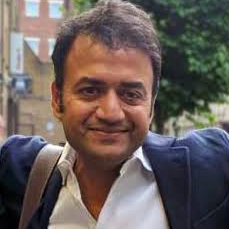
Every marketer and business leader is talking about AI right now, but many companies are stuck. They’ve run the pilots, tried the tools and still can’t turn any of it into real results. In this episode, Tessa Burg talks with Dhiraj Rajaram, Founder and CEO of Mu Sigma, about why that gap between AI hype and AI impact exists. And what it actually takes to close it. Dhiraj breaks down some big ideas in an easy-to-follow—and very entertaining—way, like why every new technology creates a bubble and why AI is no different. He explains why most companies are trying to bolt AI onto old ways of working rather than rethink how decisions are made. If you’ve ever wondered why your company’s AI investment has not paid off the way you had hoped, this conversation will give you a new way to think about the problem. You’ll walk away with practical language and a framework you can bring back to your own team along with a clearer picture of what needs to change before any new technology can really move the needle. Leader Generation is hosted by Tessa Burg and brought to you by Mod Op. About Dhiraj Rajaram: As Founder, Chairman and CEO of Mu Sigma, Dhiraj Rajaram built one of India’s first profitable unicorns. He pioneered decision sciences, digitizing management consulting by mapping decision and perception traces—visionary concepts now critical in an agentic, AI-driven corporate world. Today, Mu Sigma helps over 140 Fortune 500 organizations, including Microsoft, Walmart, Pfizer and Dell, convert technology investments into scalable decision systems. An elite business leader and University of Chicago Booth School of Business Distinguished Alumnus, Dhiraj’s background spans consulting at PwC and Booz Allen Hamilton. He has been recognized by Fortune’s 40 Under 40 and Ernst & Young Entrepreneur of the Year. He can be reached on www.mu-sigma.com. About Tessa Burg: Tessa is the Chief Technology Officer at Mod Op and Host of the Leader Generation podcast. She has led both technology and marketing teams for 15+ years. Tessa initiated and now leads Mod Op's AI/ML Pilot Team, AI Council and Innovation Pipeline. She started her career in IT and development before following her love for data and strategy into digital marketing. Tessa has held roles on both the consulting and client sides of the business for domestic and international brands, including American Greetings, Amazon, Nestlé, Anlene, Moen and many more. Tessa can be reached on LinkedIn or at [Tessa.Burg@ModOp.com](mailto:Tessa.Burg@ModOp.com).
Every marketer and business leader is talking about AI right now, but many companies are stuck. They’ve run the pilots, tried the tools and still can’t turn any of it into real results. In this…