Nov 4, 2026 · 29 min · 12 segments
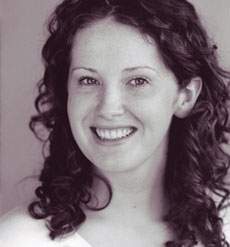
In the series 3 opener we are joined by Milly Sweeney, writer of Water Colour and winner of the The Stage Debut’s Best Writer Award. We talked about how Water Colour came to be, both by inspiration…
Taking, almost, yeah, going right back to beginning, it would be great to hear a little bit more about how it was you got into writing and what was it for writing, for theatre in particular, that you think, yeah, that sung to you, that particular medium? I suppose I've always been interested in
And then sort of alongside that journey I was always interested in drama and acting.
My parents put me in a little amateur drama class in the local community centre when I was five.
And they were really good at supporting and encouraging you to look at other mediums within the theatre industry.
And when I was 15, some friends and I thought that it would be fun to write a play just about our lives in high school.
And we brought it to Steve Lauder-Russell, who's the artistic director of the Glasgow Acting Academy.
It wasn't really until then that I'd kind of realised that I could pair these two passions together.
And I think that it was really formative sort of having the chance to put on a show at such a young age where you're really impressionable and still like learning and yeah to have something go on and it's not a disaster and no one's like chucking tomatoes at you it's like oh I can actually write something and have it on the stage and it can be fine and go well and and then I suppose I continue writing for theatre because I just love it and I'm a fan of it and I guess because I always wrote poems as well when I was younger and I still kind of do write poems just kind of for fun.
I always think plays are, to me anyway, it kind of feels like just one big long poem.
What you're talking about with the Glasgow Arts Academy and having that infrastructure at an early age, as you say, that really helps facilitate that creativity and just, I think, enables you to kind of keep... keep pushing and keep motivating and staying inspired I think the moment you don't necessarily have that outlet and I think you know it's one thing to write something and it's another thing to write something to actually physically have it on and to be motivated because you know it's going to make it to stage and you're going to see it almost to its full journey i think that can be a bit of a motion a motivational blocker for some people if you feel as if well what's actually going to be the end goal in it but it sounds like having that that um as i say as i say that infrastructure at the beginning that was like no this is gonna get to go on stage and i'm gonna get to kind of go and try stuff really early on led led to you to kind of to keep on writing throughout throughout this time
I think that's how so many young writers kind of lose their momentum is kind of feeling like there's not going to be an end point to it or like an end sort of goal, which is why I felt really lucky to have had that.
And then that kind of led as well to me writing more plays for the Glasgow Acting Academy and kind of building a relationship with them as a writer for the young people.
The rest of this transcript — segmented and speaker-labeled, so you land on the exact moment something was said
Search every transcript — by keyword, by phrase, or by meaning, across every show Radar indexes
Trends — what is surging across podcasts, measured against its own baseline
Alerts — when a name you follow appears in a newly indexed episode
No account is needed to search Radar.