Alex Pentland with David Sloan Wilson - Evolving Alignment Podcast
Aug 13, 2026 · 50 min · 10 segments
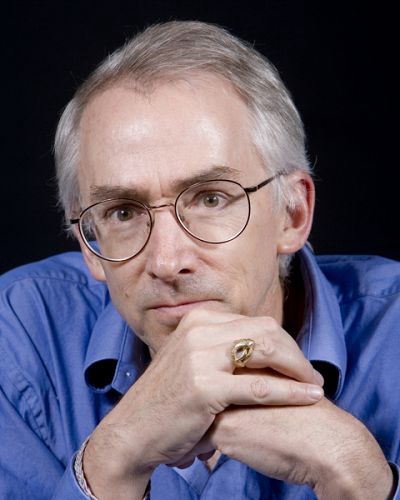
Alex ‘Sandy’ Pentland is a Stanford Human-Centered AI Fellow, MIT Toshiba Professor, and one of the world’s most influential computer scientists. His work has helped pioneer computational social…
Alex ‘Sandy’ Pentland is a Stanford Human-Centered AI Fellow, MIT Toshiba Professor, and one of the world’s most influential computer scientists. His work has helped pioneer computational social science, collective intelligence, and data-driven approaches to understanding how people cooperate, communicate, and make decisions. As artificial intelligence becomes woven into every aspect of society, Pentland argues that its greatest potential is not replacing human intelligence, but strengthening it. David Sloan Wilson and Sandy Pentland explore how AI can help communities solve problems collectively, preserve human agency, and build more democratic and cooperative institutions. Along the way, they discuss cultural evolution, collective intelligence, governance, cities, data cooperatives, and why the future of AI depends less on creating smarter machines than on helping people become wiser together. --- This episode is from the podcast, Evolving Alignment. Evolving Alignment explores one of the central questions of our time: How can humanity and artificial intelligence coevolve in ways that enhance cooperation, creativity, and human flourishing? Hosted by evolutionary scientist David Sloan Wilson, each episode features leading thinkers from fields including evolutionary biology, cultural evolution, artificial intelligence, economics, psychology, philosophy, complexity science, and the social sciences. Rather than focusing on the narrow technical challenge of aligning AI systems with human interests, these conversations examine the broader evolutionary processes that have enabled living systems to solve problems of cooperation at ever higher levels of complexity, producing increasingly sophisticated forms of biological and cultural organization. Can we learn from the deep history of evolution to shape a future in which humans and AI cooperate rather than compete, and develop new forms of collective intelligence we can only begin to imagine today? Evolving Alignment brings together many of the world’s leading researchers to explore these questions—and to consider how the choices we make today may influence the future evolution of intelligence itself. Evolving Alignment is presented by Human Energy, a catalytic hub for evolving collective consciousness. Learn more about Human Energy here, https://www.humanenergy.io/about
Alex ‘Sandy’ Pentland is a Stanford Human-Centered AI Fellow, MIT Toshiba Professor, and one of the world’s most influential computer scientists. His work has helped pioneer computational social…
- Show signals
- Audience≈13k followers