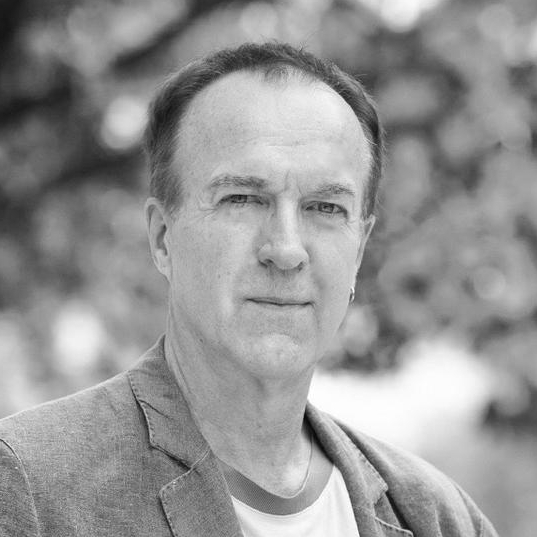
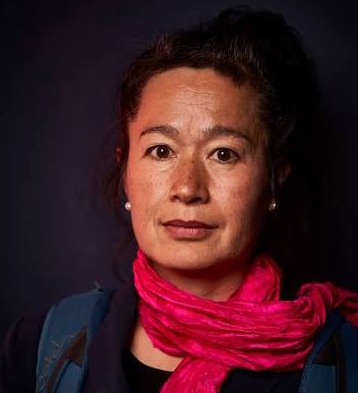
Isabelle CarbonellGuestClark MarcheseHostAs I mentioned at the top of the episode, the full video version is available on YouTube with a link in the episode description.
But I do find it a bit interesting even that we have a podcast episode and an audio version where we're discussing a film whose goal it was to capture what can't be seen.
More and more, we are faced with experiences and perspectives that are mediated on a screen or through a camera.
I think we've become very used to the idea that if something is important or beautiful or significant, then it should be perfectly visible, perfectly captured, and perfectly rendered.
But the way that Biobay resists that offers us the opportunity to pause and think about what visibility really means and what visibility really requires.
At the end just now, when Isabelle mentioned visibility as a sustained ethical attention, visibility in that sense requires a bit of wrestling, whether it's with your shutter speed or with your own understanding of complex realities.
But I think it's all important because, as Isabelle mentioned, a sort of well-packaged visibility influences what humans notice, what we value, emotionally connect to, and ultimately what we're willing to protect.And now that we're seven episodes deep into Green Frequency, you might be thinking as you listen along, wow, this is such a great radio show.
And it is true that we are curious about a lot of things here at Pine Forest Media and this podcast is a place for us to explore them all.
In the last three weeks even, we went from a legal historian researching the colonial courts in the Atlantic rainforest in the 1800s to a marine biologist who has discovered dozens of different species that are swimming out there in the sea and today to an environmental filmmaker in the bioluminescent galaxy of BioBay.
And if you listen to all of those episodes, I think Isabelle's presentation today did a really good job of showing us how those ideas, which on the surface seem to be operating in entirely different universes, still have a very clear through line connecting them all if we look closely for it.
Her film is directly tied to biodiversity and marine ecology and species interactions.
It's connected to colonial legacies that persist today through military occupation and slow violence and how artistry and storytelling are ways that not only help us understand it all, but also shape the way that we do.
There was an intention behind placing these researchers in conversation with each other over the last couple of episodes.
But as we continue growing the show and get practice in learning how different systems work, the episodes could probably come out in any order we randomly choose and we'd still be able to find a way for them to talk to each other.
As I mentioned at the top of the episode, the full video version is available on YouTube with a link in the episode description.
But I do find it a bit interesting even that we have a podcast episode and an audio version where we're discussing a film whose goal it was to capture what can't be seen.
More and more, we are faced with experiences and perspectives that are mediated on a screen or through a camera.
I think we've become very used to the idea that if something is important or beautiful or significant, then it should be perfectly visible, perfectly captured, and perfectly rendered.
But the way that Biobay resists that offers us the opportunity to pause and think about what visibility really means and what visibility really requires.
At the end just now, when Isabelle mentioned visibility as a sustained ethical attention, visibility in that sense requires a bit of wrestling, whether it's with your shutter speed or with your own understanding of complex realities.
But I think it's all important because, as Isabelle mentioned, a sort of well-packaged visibility influences what humans notice, what we value, emotionally connect to, and ultimately what we're willing to protect.And now that we're seven episodes deep into Green Frequency, you might be thinking as you listen along, wow, this is such a great radio show.
And it is true that we are curious about a lot of things here at Pine Forest Media and this podcast is a place for us to explore them all.
In the last three weeks even, we went from a legal historian researching the colonial courts in the Atlantic rainforest in the 1800s to a marine biologist who has discovered dozens of different species that are swimming out there in the sea and today to an environmental filmmaker in the bioluminescent galaxy of BioBay.
And if you listen to all of those episodes, I think Isabelle's presentation today did a really good job of showing us how those ideas, which on the surface seem to be operating in entirely different universes, still have a very clear through line connecting them all if we look closely for it.
Her film is directly tied to biodiversity and marine ecology and species interactions.
It's connected to colonial legacies that persist today through military occupation and slow violence and how artistry and storytelling are ways that not only help us understand it all, but also shape the way that we do.
There was an intention behind placing these researchers in conversation with each other over the last couple of episodes.
But as we continue growing the show and get practice in learning how different systems work, the episodes could probably come out in any order we randomly choose and we'd still be able to find a way for them to talk to each other.
The rest of this transcript — segmented and speaker-labeled, so you land on the exact moment something was said
Search every transcript — by keyword, by phrase, or by meaning, across every show Radar indexes
Trends — what is surging across podcasts, measured against its own baseline
Alerts — when a name you follow appears in a newly indexed episode
No account is needed to search Radar.