Oct 19, 2026 · 43 min · 10 segments
Jen and Blair talk about voting, political parties, Christian conscience, women in politics, and how to engage politically without confusing politics with the gospel. Learn more and about **Nobody…
Um, and something that I really like to talk about, it's something I've written about in the past, is, um, how women got the vote.
You know, f- feminism is such a complicated word in this time, in this c- in our culture, and especially in the church.
Um, they were actually Christian women who were really committed, um, to the imago Dei in everyone, in women, in children, in people of color.
And so, um, actually, first wave feminists and those suffragettes, those women who, um, protested and fought for the right to vote, were very much intertwined with the abolitionists.
So in the, around the mid-1800s, this is when industrialization really took over the United States, and men started to leave, like, the family home and go to work in the factories.
And, um, strong alcohol became readily available to sort of soothe these, um, difficulties.
And so we saw this wave in the mid-1800s of men going to work, women and children being left at home, them working long hours, and then them drinking heavily in the evening.
And so women, to, um, protect themselves and to protect their, their children, this is where we get the temperance movement, or prohibition rose up out of that because women wanted to be able to protect their communities from this alcohol abuse that they saw sweeping their, their neighborhoods.
Um, so these women, because they couldn't, because they were women, they weren't able to vote.
Um, they wanted to change the laws, and the way you change the laws is by participating in politics.
[laughs] And they didn't have a way to participate in politics without the vote, so they, they started to march for the vote and to demonstrate for the vote, and that was very much wrapped up with the abolitionist movement at the same time.
I think this idea was sweeping the country of like, "Wait, all of us are made Imago Dei."
All of us should be able to cast a vote and have a say in this representative government, this democracy that we're a part of.
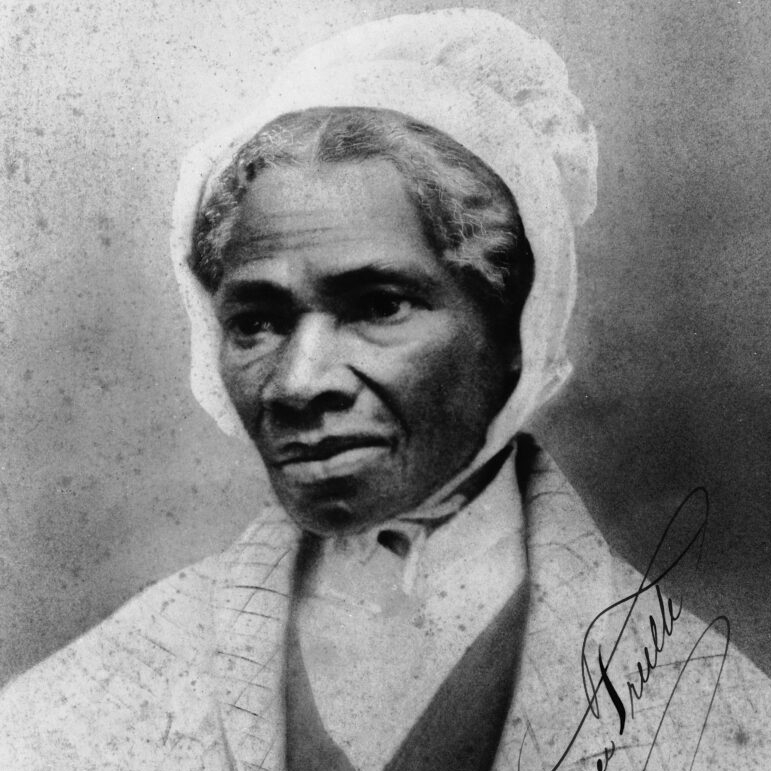
Everybody should have a voice." And so, um, I love to just kinda g- geek out a little bit on that, that history, um, and even see the overlap of some of those, you know, suffragettes and abolitionists like Elizabeth Cady Stanton and Frederick Douglass and Sojourner Truth and the Grimké sisters.
Some of our listeners might be familiar with the Grimkés, but people who were really working hard in both movements.
The rest of this transcript — segmented and speaker-labeled, so you land on the exact moment something was said
Search every transcript — by keyword, by phrase, or by meaning, across every show Radar indexes
Trends — what is surging across podcasts, measured against its own baseline
Alerts — when a name you follow appears in a newly indexed episode
No account is needed to search Radar.