

CONTROVERSIAL1:41
The Painting's "Beautiful Lie"
Jonah challenges the painting's moral facade head-on

Jul 22, 2026 · 23 min · 12 segments
In this episode, we discussed the history of the painting “The Death of Marat”, from the man who the painting depicts, his murderer, the painter, and the historical time period and the political…
 Kanye WestGuest
 Jay JonahGuestMiaHost
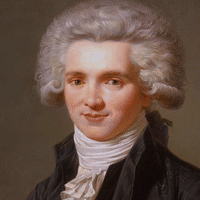
So Marat was a French revolutionist, and he was really famous because he had a little journal in which the newspaper would be called The Friend of the People, and what he would do is he would preach for violence against the old order or violence against the royals, and basically advocated for the poor people to rise up and basically take over the royals using violence.
And so he encouraged this a lot through his writings, and some ideas in his newspapers were actually just the belief that the government should protect the people, and he also thought that a bunch of the royals were corrupt and that they were doing a bunch of corrupt practices to keep power.
He also believed that really in order to be governed, the people had to say that you were allowed to govern them, and those were just a couple of ideas from his newspaper.
And to be honest, a lot of people found him to be kind of this Messiah figure for the French Revolution, in which people looked up to him and they looked up to the fact that he was willing to do so much for the cause and put whatever it took on the line, but his opponents saw him as this bloodthirsty guy who just encouraged so much violence, and that made him really dangerous.
And he actually suffered from a disease, a chronic skin condition that would cause severe itching, painful sores, and he would have to spend most of his time in the bath.
And he really used this part of his, uh, bio- biology to further people to his cause.
People thought that even though he was suffering from such a giant disease, that him continuing to write and encourage the French Revolution and try to bring up the poor people made him this figure who just kept on persevering.
So Marat was a French revolutionist, and he was really famous because he had a little journal in which the newspaper would be called The Friend of the People, and what he would do is he would preach for violence against the old order or violence against the royals, and basically advocated for the poor people to rise up and basically take over the royals using violence.
And so he encouraged this a lot through his writings, and some ideas in his newspapers were actually just the belief that the government should protect the people, and he also thought that a bunch of the royals were corrupt and that they were doing a bunch of corrupt practices to keep power.
He also believed that really in order to be governed, the people had to say that you were allowed to govern them, and those were just a couple of ideas from his newspaper.
And to be honest, a lot of people found him to be kind of this Messiah figure for the French Revolution, in which people looked up to him and they looked up to the fact that he was willing to do so much for the cause and put whatever it took on the line, but his opponents saw him as this bloodthirsty guy who just encouraged so much violence, and that made him really dangerous.
And he actually suffered from a disease, a chronic skin condition that would cause severe itching, painful sores, and he would have to spend most of his time in the bath.
And he really used this part of his, uh, bio- biology to further people to his cause.
People thought that even though he was suffering from such a giant disease, that him continuing to write and encourage the French Revolution and try to bring up the poor people made him this figure who just kept on persevering.
Every episode on Radar is fully transcribed, speaker-labeled, and rich with metadata. Here is a taste of this one. Try Radar for free to see the rest.
3 of 4
The Painting's "Beautiful Lie"
Jonah challenges the painting's moral facade head-on
Revolution Posters to World Wars
Drawing parallels between war posters and Marat
Christ Imagery as Propaganda
Kanye unpacks David's propaganda through Marat iconography
+1 more clip · 5 min 43 sec of audio in all
7 of 25
The rest of this transcript — segmented and speaker-labeled, so you land on the exact moment something was said
All 4 clips — the highlight moments, each cut as its own audio, with a title and a speaker
All 12 segments — the transcript broken into labeled sections, every ad read marked
All 25 topics — jump to every other episode discussing the same subject
Every related episode — other shows Radar links to this one
No account is needed to search Radar.

