Jul 22, 2026 · 1 hr 11 min · 10 segments
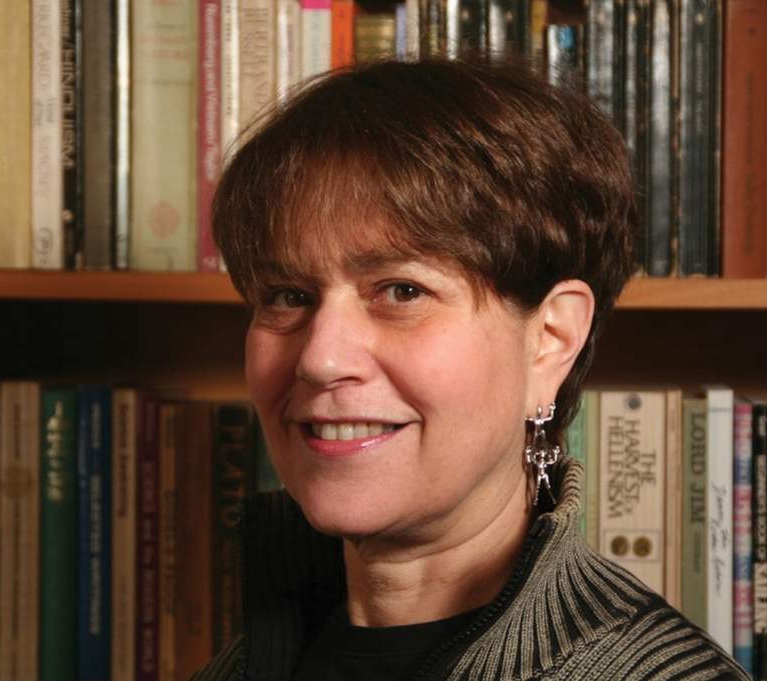
In this episode of *Essential Ethics*, recorded at the 2025 National Paediatric Bioethics Conference, Emeritus Professor Myra Bluebond-Langner…
Myra Bluebond-LangnerGuest
Lynn GillamGuest
John MassieHostit's
that

Does that seem a reasonable way of thinking about it? We don't notice until there's a problem.

There was a set of commentaries published in the Journal of Medical Ethics even before John was editor, if we can imagine that time, in 1985.

It was a case conference that was called, A Father Says, Don't Tell My Son the Truth.

So this is one of the earliest pieces of explicitly ethics writing about telling the truth to children.

It involved a nine-year-old boy with an osteosarcoma of the knee who had a late diagnosis whose prognosis was not good.

Didn't want him to be told that he had cancer, that he might not survive, that an amputation was being considered.

And the case was supplied by a student nurse, and she said that He was initially quiet, but the longer he was in, he began to ask more questions.

And he particularly asked this nursing student, who found it increasingly difficult not to answer his questions.

The consultant and the social worker involved spoke with the parents, but they were adamant that he couldn't be told.

And so there was a general view amongst parents all the clinicians involved, that it was the parents' right to keep it like that.

Then the student nurse actually found this so distressing that she asked to be removed from the ward.

This child found and died without anyone explicitly telling him what was wrong, why the things he was experiencing were happening and what was going to happen next.

Interestingly, the commentaries really focus a lot on the parents and the interaction between doctors and parents and the parents' fear.

And very little is said actually about the child except for the social worker who, Myra, cites your work.
it's
that

Does that seem a reasonable way of thinking about it? We don't notice until there's a problem.

There was a set of commentaries published in the Journal of Medical Ethics even before John was editor, if we can imagine that time, in 1985.

It was a case conference that was called, A Father Says, Don't Tell My Son the Truth.

So this is one of the earliest pieces of explicitly ethics writing about telling the truth to children.

It involved a nine-year-old boy with an osteosarcoma of the knee who had a late diagnosis whose prognosis was not good.

Didn't want him to be told that he had cancer, that he might not survive, that an amputation was being considered.

And the case was supplied by a student nurse, and she said that He was initially quiet, but the longer he was in, he began to ask more questions.

And he particularly asked this nursing student, who found it increasingly difficult not to answer his questions.

The consultant and the social worker involved spoke with the parents, but they were adamant that he couldn't be told.

And so there was a general view amongst parents all the clinicians involved, that it was the parents' right to keep it like that.

Then the student nurse actually found this so distressing that she asked to be removed from the ward.

This child found and died without anyone explicitly telling him what was wrong, why the things he was experiencing were happening and what was going to happen next.

Interestingly, the commentaries really focus a lot on the parents and the interaction between doctors and parents and the parents' fear.

And very little is said actually about the child except for the social worker who, Myra, cites your work.
The rest of this transcript — segmented and speaker-labeled, so you land on the exact moment something was said
Search every transcript — by keyword, by phrase, or by meaning, across every show Radar indexes
Trends — what is surging across podcasts, measured against its own baseline
Alerts — when a name you follow appears in a newly indexed episode
No account is needed to search Radar.