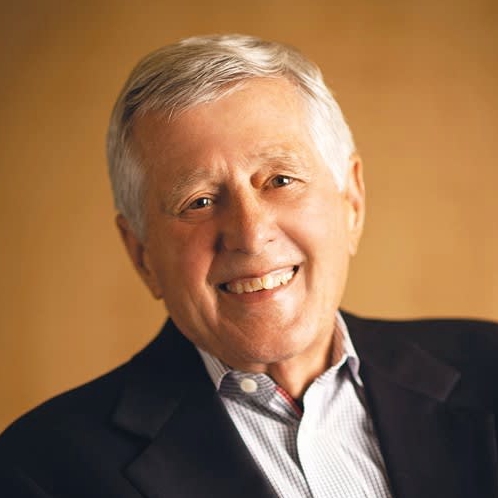
Genetic Mechanic: Stanley Crooke on Fixing Nano-Rare Disease with Oligos
May 27, 2026 · 59 min · 12 segments
In this episode of *Dose of Discovery*, hosts Søren and AJ speak to physician-scientist Stanley Crooke, CEO of the nonprofit n-Lorem Foundation, about how antisense oligonucleotide (ASO) technology…
In this episode of *Dose of Discovery*, hosts Søren and AJ speak to physician-scientist Stanley Crooke, CEO of the nonprofit n-Lorem Foundation, about how antisense oligonucleotide (ASO) technology has evolved into a revolutionary therapeutic modality. Their conversation explores Stan's expansive career journey, from his early days building cancer programs at Bristol Labs and SmithKline to his bold decision to launch Ionis in 1989 when the industry doubted ASO technology. Stan discusses the emotional rollercoaster of biotech drug development, the inefficiencies of traditional small molecule discovery, and what led him to establish the n-Lorem Foundation. He shares how the regulatory frontiers of treating nano-rare genetic conditions “for free, for life” are changing rapidly and why innovations like patient-derived stem cells are driving drug development forward, one patient at a time. In this episode: - 03:41 – Explainer: What are ASOs? - 06:50 – Stanley Crooke’s journey and his journey into biomedicine - 10:31 – Frustrations with big pharma, founding Ionis - 15:05 – Trailblazing on ASO medicinal chemistry - 19:33 – Building company culture amid clinical failure - 22:56 – Spinraza (nusinersen) and the economics of drug pricing - 28:08 – Launching the n-Lorem Foundation for nano-rare diseases - 30:57 – “Free for life” ASO therapies - 36:55 – Impact on n-Lorem’s patients - 39:36 – “Everything we thought we knew about developmental delay is wrong.” - 34:58 – Redefining traditional diseases n-of-1 trial success - 26:12 – “Just tell me what the cause is. I'll fix it.” - 37:22 – 90% success rate for n-of-1 work - 45:08 – Moving beyond animal models with patient-derived iPSCs - 52:23 – Biology is shifting industry toward platforms - 55:55 – Wrap up and key takeaways **About the guest** Physician-scientist Stanley Crooke, founder of Ionis Pharmaceuticals, and founder, chairman, and CEO of the n-Lorem Foundation. Widely regarded as a pioneer of antisense medicine, he helped lead the development and commercialization of the first approved ASO therapies. Today, his work through nonprofit organization the n-Lorem Foundation focuses on creating and providing bespoke ASO treatments to patients suffering from nano-rare genetic conditions (affecting fewer than 30 people worldwide) for free, for life. Crooke studied pharmacy at Butler University and went on to earn his MD and PhD at Baylor College of Medicine. https://www.nlorem.org/wp-content/uploads/2023/08/Stanley-T.-Crooke-M.D.-Ph.D.-Bio.pdf *Dose of Discovery* is cohosted by Søren Hough and Ayokunmi Ajetunmobi (AJ) and produced by Suze Cooper. **LINKS:** Kinds of KANDness: Battling nano-rare disease with oligos by Søren Hough Therapeutic oligos for no profit: A discussion with n-Lorem by Søren Hough ‘For free, for life’: n-Lorem carves path for bespoke treatment by Søren Hough Deep brain penetration by oligos enables Alzheimer’s, Parkinson’s treatment by Søren Hough (ASO treatment for neurodegeneration) Oligo-based therapies lead charge against prion disease by Nnenna Ohaka (Getting ASOs into the brain) Phosphorothioate antisense oligonucleotide induced innate immune activation is attenuated by tryptophan oxidation products (Making safe ASOs by Crooke and colleagues) Establishing a commercial solution for extremely rare genetic diseases (Commercializing ASOs for rare disease by Crooke & Lo) Read more at Bioxconomy, sign up to our newsletter, and don’t forget to check out our upcoming events. You can find a fully annotated transcript of the episode here. * * * Hosted on Acast. See acast.com/privacy for more information.
In this episode of *Dose of Discovery*, hosts Søren and AJ speak to physician-scientist Stanley Crooke, CEO of the nonprofit n-Lorem Foundation, about how antisense oligonucleotide (ASO) technology…
- Show signals
- SuitabilitySafe