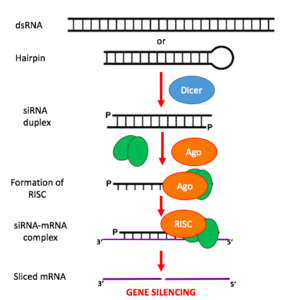
Small interfering RNA
77
MENTIONS
31
EPISODES
25
PODCASTS
Search complete. 77 mentions across 31 episodes found for "Small interfering RNA".
Sep 25, 2026

Sam FazeliHOST
I want to ask Yaron to talk to us a little bit about the Ionis fusion trial success.
Sam FazeliHOST
I mean, company has had some tough times these days with the continued conversation about antisense ASOs versus siRNA and the Lp little a and the, um, situation, uh, the story with AstraZeneca.
Sam FazeliHOST
Talk us through what's going on here, and maybe, maybe Yaron, um, just bracket the Ionis story as it stands today.
Yaron WerberHOST
Yeah, yeah.
Yaron WerberHOST
So it's a great point.
Yaron WerberHOST
So I think one of the challenges for Ionis is the, the conversation, and I'm not faulting it, um, I'm just pointing it out, is still siRNA versus ASOs.
Yaron WerberHOST
And, um, I, I don't know that we agree with that necessarily, uh, that that should be the conversation because each one of these, uh, studies did well or didn't do well by virtue of its own design, where we are in the treatment paradigm in this area, and comparing data necessarily to historical data, um, across different populations is challenging.
Yaron WerberHOST
And now we actually can compare the ASO to the siRNA and SHTG, and they actually look very similar.

Jeff MartinHOST
You've got to find some kind of chemical that will bind to an active site or some kind of kinase domain and inhibit that thing.
Jeff MartinHOST
That can be kind of hard.
Jeff MartinHOST
However, with these new modalities like targeted protein degraders, molecular glues, siRNAs, not super new, but still the same concept applies, you can just pick a target and just degrade the thing.
Jeff MartinHOST
And it makes that second step way, way, way easier.
Jeff MartinHOST
So once you find the perp, you can just shoot him in the head.

Phillip SharpGUEST
And that was critical for treatment of transthyrethin.
Phillip SharpGUEST
It's an amyloid disease when there's a mutation there and And you deliver these siRNAs, that gene was expressed in the liver, and you could silence it.
Phillip SharpGUEST
And then we've developed the technology for other liver-based diseases, Nylum has, and then many others.
Phillip SharpGUEST
I think it's got six approved products now.

Gabrielle MasonPANELIST
They're a California company, and they're hoping to raise around $318 million at around $16 per share.
Gabrielle MasonPANELIST
So that's a pretty sizable IPO, and that money will go towards fueling the biotech's pipeline of siRNA candidates.
Gabrielle MasonPANELIST
I'm excited to see, you know, when they actually hit the market, if they kind of fit into that upsized financing trend that we've been seeing so far for a lot of other biotechs this year.
Jeff AxtHOST
Yeah, I was gonna say that is a big number, but we've seen it this year before.

Soren HoughHOST
So just to give listeners a little bit of a snapshot of mRNA technology, you may be familiar with mRNA through the vaccine.
Soren HoughHOST
You also may have heard us talking about mRNA earlier in the podcast, particularly in our siRNA episode, because obviously the focus there is on silencing mRNA.
Soren HoughHOST
But mRNA is really this transient, temporary message that comes from our DNA that encodes a gene.
Soren HoughHOST
So once a gene is transcribed into RNA, that's the mRNA that exists in the cytoplasm and gets converted into proteins.

Paul BananosPANELIST
They did, yes, uh, early this morning, pointing to another offering in roughly the same range, three hundred and fifty million.
Paul BananosPANELIST
That company is an siRNA focused organization with three clinical candidates.
Paul BananosPANELIST
I don't see a timeline yet on Nasdaq's website, but usually if you have terms by Monday morning, it's likely to get out later in the week.
Paul BananosPANELIST
So, you know, we'll watch.

Katalin KarikóGUEST
So these are the major important RNA.
Katalin KarikóGUEST
Beside that, we have small inhibitory, small siRNA.
Katalin KarikóGUEST
We have microRNA and snow RNA that will direct modification.
Katalin KarikóGUEST
We have small nuclear RNA and many different small type of RNA present in our body.

Ben ComerHOST
Welcome back to the Business of Biotech.
Ben ComerHOST
I'm your host, Ben Comer, Chief Editor at Life Science Leader, and today I'm speaking with Alex Arivanis, MD, PhD, CEO at Moonwalk Biosciences, a company developing new therapies targeting adipose tissue or body fat that aim to improve upon currently available treatments for obesity, namely GLP-1s, using siRNA therapies.
Ben ComerHOST
Alex was previously a co-founder and the head of R&D at Grail.
Ben ComerHOST
He was chief technology officer at Illumina and also worked as VP of development and chief science officer at Sapphire, a company that made crude oil out of algae.
8 MINS LATER
Ben ComerHOST
I mentioned that in the intro as well.
Ben ComerHOST
You're working in a red-hot therapeutic area where you have some formidable competitors in Eli Lilly and Novo Nordisk.
Ben ComerHOST
What made you, Alex, want to tackle obesity with an siRNA therapy?
Alex AravanisGUEST
Yeah.

Thomas DayspringGUEST
The, uh, livodeserin is either gonna be once or twice a year, so that's kind of interesting that, again, if their trials are successful and it comes out.
Thomas DayspringGUEST
And there's another, uh, S-I-R-N-A, but they're looking for funding, so phase three hasn't been entered yet.
Thomas DayspringGUEST
Zero deserin, I think it's called.
Thomas DayspringGUEST
And then we have a very intriguing oral drug.

Nick GalakatosGUEST
It was a great company.
Nick GalakatosGUEST
SIRNA is a Nobel-winning technology that is transformational.
Nick GalakatosGUEST
Alnylam had, at that point, a couple of million dollars in sales on products at the time.
Nick GalakatosGUEST
It was a commercial company, but most people looked at it as a R&D organization with a very large R&D budget, a lot of promise, but nevertheless, they were very anxious to see, many investors were anxious to see Alnylam become a profitable company, a real pharmaceutical company.
21 more episodes mention Small interfering RNA.
Create an account to see the whole feed, search across every transcript, and follow the entities you care about.