Congressional Record Daily Digest
Jul 28, 2026 · 5 min · 6 segments
Get a clear, unbiased look into Capitol Hill's activities through concise, factual summaries of the Senate and House of Representatives' sessions. Our content comes directly from the official…
The Senate introduced eight new bills and continued work on several major legislative priorities.
One of the day's notable actions was the unanimous passage of a resolution commemorating Juneteenth National Independence Day, recognizing June 19, 1865, as the date news of the end of slavery reached enslaved people in the southwestern United States.
The resolution honors the historical significance of the holiday and its importance to communities across the nation.
The Senate also began consideration of the fiscal year 2027 National Defense Authorization Act.
This annual defense bill authorizes funding for the Department of Defense, military construction projects, Department of Energy defense activities, and military personnel levels.
The legislation will directly affect active duty service members, National Guard and Reserve personnel, military families, defense contractors, and communities that support military installations.
Attention also remained on national security leadership as the Senate advanced the nomination of Walter Clayton to serve as Director of National Intelligence.
Senators voted 51 to 43 to limit debate on the nomination, setting up a final confirmation vote for the following day.
The Senate also began considering a resolution that would allow certain executive branch nominations to be considered together, a procedural change intended to streamline the confirmation process for federal leadership positions.
Beyond floor action, Senate committees reported numerous bills for future consideration.
These measures address prescription drug regulation, hospital and insurer price transparency, pharmaceutical supply chain labeling, passport services through public libraries, energy and mineral security, geothermal development, and a wide range of foreign policy and national security issues involving Taiwan, Syria, the Arctic, Sudan, Iran, China, Latin America, and the South China Sea.
Members introduced 30 public bills and six resolutions, but no legislation was debated or voted on.
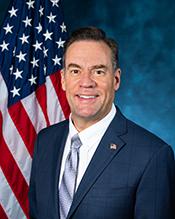
Representative Russ Fulcher was appointed to serve as Speaker pro tempore for the day.
No committee hearings were held, and no reports were filed.
As a result, the House's activity focused primarily on introducing new legislation for future consideration rather than making legislative decisions.
The Senate introduced eight new bills and continued work on several major legislative priorities.
One of the day's notable actions was the unanimous passage of a resolution commemorating Juneteenth National Independence Day, recognizing June 19, 1865, as the date news of the end of slavery reached enslaved people in the southwestern United States.
The resolution honors the historical significance of the holiday and its importance to communities across the nation.
The Senate also began consideration of the fiscal year 2027 National Defense Authorization Act.
This annual defense bill authorizes funding for the Department of Defense, military construction projects, Department of Energy defense activities, and military personnel levels.
The legislation will directly affect active duty service members, National Guard and Reserve personnel, military families, defense contractors, and communities that support military installations.
Attention also remained on national security leadership as the Senate advanced the nomination of Walter Clayton to serve as Director of National Intelligence.
Senators voted 51 to 43 to limit debate on the nomination, setting up a final confirmation vote for the following day.
The Senate also began considering a resolution that would allow certain executive branch nominations to be considered together, a procedural change intended to streamline the confirmation process for federal leadership positions.
Beyond floor action, Senate committees reported numerous bills for future consideration.
These measures address prescription drug regulation, hospital and insurer price transparency, pharmaceutical supply chain labeling, passport services through public libraries, energy and mineral security, geothermal development, and a wide range of foreign policy and national security issues involving Taiwan, Syria, the Arctic, Sudan, Iran, China, Latin America, and the South China Sea.
Members introduced 30 public bills and six resolutions, but no legislation was debated or voted on.
Representative Russ Fulcher was appointed to serve as Speaker pro tempore for the day.
No committee hearings were held, and no reports were filed.
As a result, the House's activity focused primarily on introducing new legislation for future consideration rather than making legislative decisions.
The rest of this transcript — segmented and speaker-labeled, so you land on the exact moment something was said
Search every transcript — by keyword, by phrase, or by meaning, across every show Radar indexes
Trends — what is surging across podcasts, measured against its own baseline
Alerts — when a name you follow appears in a newly indexed episode
No account is needed to search Radar.