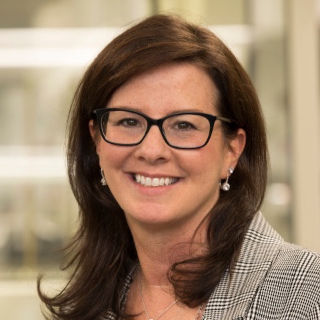
Ellen YezierskiGuestMelissa ColliniHostI, for me as an educator, I think the summer is a really important time to rest and sort of recharge, because it can be so draining to teach, but also to get this opportunity to be innovative.
So, like, one of the things I'm really excited about BCCE this year is going to workshops, going to these community conversations, and getting ideas to bring back to my teaching while I still have a little bit of time or capacity to incorporate it before I get, you know, into the weeds [laughs] of the semester, where you're like, "I don't, I can't do anything right now." [laughs] So I'm really excited about that, and I like the way that you framed it that way, of like getting ideas.
Something else that you said I kind of want to pull out is you said you want us to make evidence-guided decisions as scholarly teachers.
I think like, oh, we're teaching science, so let's also be scientific about our approach to teaching.
Let's be scientists about our teaching and our science, you know? That's important to me, for sure.


So it's an opportunity to start to read in those areas and get to know that, um, and then apply that to, to the classroom.

What, um, what's interesting there is that a lot of that kind of domain general background on human learning and teaching is typically part of the education of a secondary teacher.

Um, but it's not typically part of the education of, of a college instructor.

And so, um, it's, it's great because at BCCE, we've got people who are teaching chemistry at all levels, and the community conversations format is perfect because now you have people cross-talking and, and sharing.

And so we think that this topic is gonna be hot stuff because it'll make the most of all the expertise that will be in the room.
Yeah, I often think about that, that high school educators have a leg up on university educators [laughs] a lot of whom, I mean, not all of them, I think if you're at BCCE, you're probably excited about teaching, and probably if you're listening to this podcast.
And so it's so interesting that we have this huge emphasis on learning all about how to teach well for the high school level, but not for the university level.
So when I do go to conferences like that, I try as much as possible to talk to high school educators so that, because they have so much to teach me.
I also think about, like, as someone who wants to be scholarly in my teaching, but also is now in the weeds of I don't have as much time as I want, and I think even high school teachers have less time than they want, you know, how do you balance this pursuit of scholarly education, scholarly teaching with my curriculum is full, the, my work hours are full, I'm exhausted, I don't have the time or energy to be innovative? What are your thoughts on that?

Yeah, so whenever we talk about teaching and learning, and we talk about innovation, improvement, growth, time as a limitation always comes up.

And I think we have to remember that we are never going to be able to make more time.
I, for me as an educator, I think the summer is a really important time to rest and sort of recharge, because it can be so draining to teach, but also to get this opportunity to be innovative.
So, like, one of the things I'm really excited about BCCE this year is going to workshops, going to these community conversations, and getting ideas to bring back to my teaching while I still have a little bit of time or capacity to incorporate it before I get, you know, into the weeds [laughs] of the semester, where you're like, "I don't, I can't do anything right now." [laughs] So I'm really excited about that, and I like the way that you framed it that way, of like getting ideas.
Something else that you said I kind of want to pull out is you said you want us to make evidence-guided decisions as scholarly teachers.
I think like, oh, we're teaching science, so let's also be scientific about our approach to teaching.
Let's be scientists about our teaching and our science, you know? That's important to me, for sure.


So it's an opportunity to start to read in those areas and get to know that, um, and then apply that to, to the classroom.

What, um, what's interesting there is that a lot of that kind of domain general background on human learning and teaching is typically part of the education of a secondary teacher.

Um, but it's not typically part of the education of, of a college instructor.

And so, um, it's, it's great because at BCCE, we've got people who are teaching chemistry at all levels, and the community conversations format is perfect because now you have people cross-talking and, and sharing.

And so we think that this topic is gonna be hot stuff because it'll make the most of all the expertise that will be in the room.
Yeah, I often think about that, that high school educators have a leg up on university educators [laughs] a lot of whom, I mean, not all of them, I think if you're at BCCE, you're probably excited about teaching, and probably if you're listening to this podcast.
And so it's so interesting that we have this huge emphasis on learning all about how to teach well for the high school level, but not for the university level.
So when I do go to conferences like that, I try as much as possible to talk to high school educators so that, because they have so much to teach me.
I also think about, like, as someone who wants to be scholarly in my teaching, but also is now in the weeds of I don't have as much time as I want, and I think even high school teachers have less time than they want, you know, how do you balance this pursuit of scholarly education, scholarly teaching with my curriculum is full, the, my work hours are full, I'm exhausted, I don't have the time or energy to be innovative? What are your thoughts on that?

Yeah, so whenever we talk about teaching and learning, and we talk about innovation, improvement, growth, time as a limitation always comes up.

And I think we have to remember that we are never going to be able to make more time.
The rest of this transcript — segmented and speaker-labeled, so you land on the exact moment something was said
Search every transcript — by keyword, by phrase, or by meaning, across every show Radar indexes
Trends — what is surging across podcasts, measured against its own baseline
Alerts — when a name you follow appears in a newly indexed episode
No account is needed to search Radar.