Bedtime Biographies for Sleepy Time
Oct 12, 2026 · 5 hr 28 min · 12 segments
**🎁 FREE GIFT: Get "The Life of Elon Musk" ebook for 100% off using code FREEMUSKBOOK at checkout (includes a free subscription to our special offers newsletter!) 👉**…
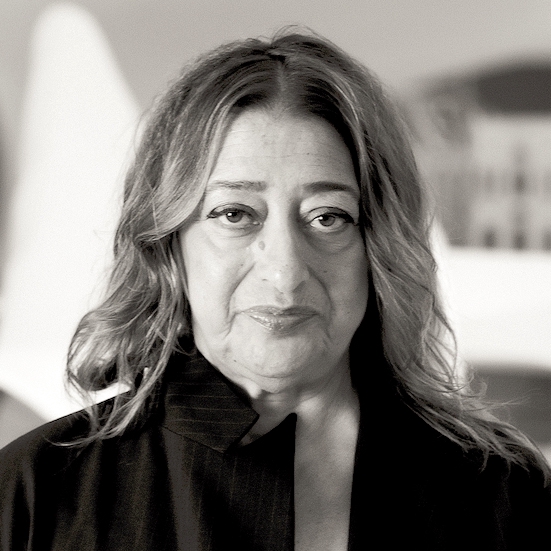
The Tigris moves through the city the way it has moved for six thousand years, unhurried, carrying with it the silt of empires that rose and fell along its banks.
Akkad, Babylon, the Caliphate of Harun al-Rashid, and on the last day of October in 1950, in a spacious house not far from that river, a girl is born into a family that will teach her before she can even form the words for it that the world is not fixed.
It bends.
It curves.
It can be remade.
Her name is Zaha.
In Arabic, it means something close to brightness, luminosity, a kind of radiant clarity.
And though no infant grows into her name by design, there will come a day, decades from now, when the world will look at the buildings she conjures out of steel and concrete and glass, buildings that seem to have arrived from some other physics entirely, and understand that the name fit.
But that day is far away.
For now, she is simply a baby in a nursery in a wealthy, cultured household in Baghdad, in a country that, in this particular decade of the twentieth century, is experiencing one of the strange, fragile windows in its long history when it looks outward with hope rather than inward with fear.
The Iraq of 1950 is a kingdom, still young as a modern nation-state, its borders drawn only three decades earlier by men in London hunched over maps after the collapse of the Ottoman Empire.
It is a country of extraordinary contradiction, ancient beyond ancient, home to the ziggurats of Ur and the cuneiform tablets of Sumer, and yet also newly modern, flush with oil wealth, its capital filling with new construction, new universities, new ideas imported from Cairo and Beirut and London and Paris.
It is a country where a person can stand in the ruins of the world's first cities and then drive within the same afternoon past buildings designed by some of the great modernist architects of Europe, because Baghdad, in these years, is commissioning work from Frank Lloyd Wright and Walter Gropius and Alvar Aalto, inviting the future to build itself into the world's oldest urban landscape.
This is the Baghdad that Zaha Hadid is born into, and her family sits close to its very center.
Her father is Mohammed Hadid, and to understand the house Zaha grows up in, you must first understand him.
He is not a man who inherited his standing passively.
He built it through conviction as much as commerce.
Educated at the London School of Economics in the 1930s, immersed there in the political and economic debates of a Europe still finding its footing after one war and edging, blind and stumbling, toward another, Mohammed Hadid returns to Iraq with ideas that are, for the region and the era, strikingly progressive.
He is an industrialist, yes.
He will go on to build one of the country's most successful manufacturing enterprises, cement and other materials, the literal stuff that nations are constructed from.
But he is also a political reformer, one of the founders of the National Democratic Party, a movement committed to constitutional government, secular civic life, and a vision of Iraq that is modern, pluralistic, and self-determining.
Neither beholden to old feudal hierarchies nor content to be a satellite of foreign interests.
He will, in the years ahead, serve as finance minister.
He will spend a portion of his life in prison for his convictions and a portion of it in exile because reformist politics in the Iraq of the mid-20th century is a dangerous vocation, practiced always in the shadow of coups and counter-coups.
The Tigris moves through the city the way it has moved for six thousand years, unhurried, carrying with it the silt of empires that rose and fell along its banks.
Akkad, Babylon, the Caliphate of Harun al-Rashid, and on the last day of October in 1950, in a spacious house not far from that river, a girl is born into a family that will teach her before she can even form the words for it that the world is not fixed.
It bends.
It curves.
It can be remade.
Her name is Zaha.
In Arabic, it means something close to brightness, luminosity, a kind of radiant clarity.
And though no infant grows into her name by design, there will come a day, decades from now, when the world will look at the buildings she conjures out of steel and concrete and glass, buildings that seem to have arrived from some other physics entirely, and understand that the name fit.
But that day is far away.
For now, she is simply a baby in a nursery in a wealthy, cultured household in Baghdad, in a country that, in this particular decade of the twentieth century, is experiencing one of the strange, fragile windows in its long history when it looks outward with hope rather than inward with fear.
The Iraq of 1950 is a kingdom, still young as a modern nation-state, its borders drawn only three decades earlier by men in London hunched over maps after the collapse of the Ottoman Empire.
It is a country of extraordinary contradiction, ancient beyond ancient, home to the ziggurats of Ur and the cuneiform tablets of Sumer, and yet also newly modern, flush with oil wealth, its capital filling with new construction, new universities, new ideas imported from Cairo and Beirut and London and Paris.
It is a country where a person can stand in the ruins of the world's first cities and then drive within the same afternoon past buildings designed by some of the great modernist architects of Europe, because Baghdad, in these years, is commissioning work from Frank Lloyd Wright and Walter Gropius and Alvar Aalto, inviting the future to build itself into the world's oldest urban landscape.
This is the Baghdad that Zaha Hadid is born into, and her family sits close to its very center.
Her father is Mohammed Hadid, and to understand the house Zaha grows up in, you must first understand him.
He is not a man who inherited his standing passively.
He built it through conviction as much as commerce.
Educated at the London School of Economics in the 1930s, immersed there in the political and economic debates of a Europe still finding its footing after one war and edging, blind and stumbling, toward another, Mohammed Hadid returns to Iraq with ideas that are, for the region and the era, strikingly progressive.
He is an industrialist, yes.
He will go on to build one of the country's most successful manufacturing enterprises, cement and other materials, the literal stuff that nations are constructed from.
But he is also a political reformer, one of the founders of the National Democratic Party, a movement committed to constitutional government, secular civic life, and a vision of Iraq that is modern, pluralistic, and self-determining.
Neither beholden to old feudal hierarchies nor content to be a satellite of foreign interests.
He will, in the years ahead, serve as finance minister.
He will spend a portion of his life in prison for his convictions and a portion of it in exile because reformist politics in the Iraq of the mid-20th century is a dangerous vocation, practiced always in the shadow of coups and counter-coups.
The rest of this transcript — segmented and speaker-labeled, so you land on the exact moment something was said
Search every transcript — by keyword, by phrase, or by meaning, across every show Radar indexes
Trends — what is surging across podcasts, measured against its own baseline
Alerts — when a name you follow appears in a newly indexed episode
No account is needed to search Radar.