Jul 10, 2026 · 56 min · 11 segments
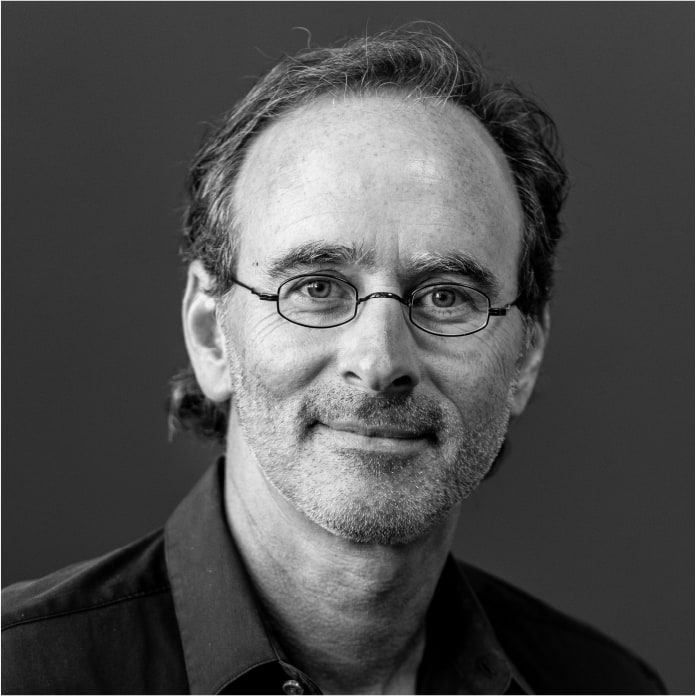
Eric Lefkofsky, Founder and CEO of Tempus AI, joins Dr. Sanjay Juneja and Dr. Doug Flora to explore how artificial intelligence, real-world data, genomic sequencing, and emerging technologies like…
Eric LefkofskyGuest
Sanjay JunejaHost
Doug FloraHost
And I think the best place to start is really what first got not only my interest, but my passion, which was this concept of cancer care almost looking like a global data coordination problem that's maybe disguised as a medical problem.

Eric, I'm curious, what do you think the healthcare system fundamentally misunderstood for decades about the role of data as it relates to oncology and cancer care delivery?

I think that the challenge in health care more broadly, but certainly in cancer care more granularly, is that we just have never needed – to bring technology or data science or big data into the practice of medicine because it really served no core function.

So first of all, up until cancer in the US, there weren't very, very large multimodal data sets that could be interpreted to really dramatically improve care.

It took a variety of drugs that were influenced by that molecular data and a kind of vastness of potential permutations.

that made it so that, hey, if I had technology or big data or data science, it could actually help steer patients in a better path than without that.

And I think up until this moment of time, you could argue that just really wasn't necessary.

The practice of medicine was either far more of an art that rested on kind of experience or that the guidelines and pathways were known by people with expertise.

Or it involved kind of the deep biology and chemistry disciplines that are kind of studied in medical school.

Or it involved a series of like mechanical practices like surgery that again are like you learn it and you can do it and it has an outcome.


And the combination of that data and that freedom mean we have the ability to actually use AI and other machine learning tools to help steer patients to the right therapeutic path.

And unfortunately, the wrong therapeutic path, which could be wrong for a variety of reasons, typically it's just no one knows it's the wrong path.

But the patient being on the wrong path, we think accounts for about, give or take, roughly, let's say 20% of all fatalities in the U.S., So maybe you could save 100,000 people, 120,000 people a year from dying if we had a system that was using all the information we had and routing people to the right therapeutic, closing care gaps, ensuring the people who should be on trials were on trial, and all that good stuff.

If you had that system, we think you can probably eliminate maybe one in every five cancer deaths.

And I think the best place to start is really what first got not only my interest, but my passion, which was this concept of cancer care almost looking like a global data coordination problem that's maybe disguised as a medical problem.

Eric, I'm curious, what do you think the healthcare system fundamentally misunderstood for decades about the role of data as it relates to oncology and cancer care delivery?

I think that the challenge in health care more broadly, but certainly in cancer care more granularly, is that we just have never needed – to bring technology or data science or big data into the practice of medicine because it really served no core function.

So first of all, up until cancer in the US, there weren't very, very large multimodal data sets that could be interpreted to really dramatically improve care.

It took a variety of drugs that were influenced by that molecular data and a kind of vastness of potential permutations.

that made it so that, hey, if I had technology or big data or data science, it could actually help steer patients in a better path than without that.

And I think up until this moment of time, you could argue that just really wasn't necessary.

The practice of medicine was either far more of an art that rested on kind of experience or that the guidelines and pathways were known by people with expertise.

Or it involved kind of the deep biology and chemistry disciplines that are kind of studied in medical school.

Or it involved a series of like mechanical practices like surgery that again are like you learn it and you can do it and it has an outcome.


And the combination of that data and that freedom mean we have the ability to actually use AI and other machine learning tools to help steer patients to the right therapeutic path.

And unfortunately, the wrong therapeutic path, which could be wrong for a variety of reasons, typically it's just no one knows it's the wrong path.

But the patient being on the wrong path, we think accounts for about, give or take, roughly, let's say 20% of all fatalities in the U.S., So maybe you could save 100,000 people, 120,000 people a year from dying if we had a system that was using all the information we had and routing people to the right therapeutic, closing care gaps, ensuring the people who should be on trials were on trial, and all that good stuff.

If you had that system, we think you can probably eliminate maybe one in every five cancer deaths.
The rest of this transcript — segmented and speaker-labeled, so you land on the exact moment something was said
Search every transcript — by keyword, by phrase, or by meaning, across every show Radar indexes
Trends — what is surging across podcasts, measured against its own baseline
Alerts — when a name you follow appears in a newly indexed episode
No account is needed to search Radar.