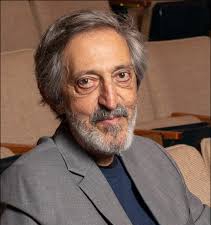
The 'Useless' Theory Behind Modern SNARKs (ft. Gödel Prize Winner Noam Nisan)
Aug 13, 2026 · 1 hr 15 min · 15 segments
More than 30 years ago, Gödel Prize Winner Noam Nisan helped develop a proof technique that he never expected anyone to use in the real world. At the center of that breakthrough was the sum-check…
More than 30 years ago, Gödel Prize Winner Noam Nisan helped develop a proof technique that he never expected anyone to use in the real world. At the center of that breakthrough was the sum-check protocol — an elegant technique that emerged from Noam Nisan’s early work on interactive proofs. At the time, even Nisan assumed ideas like these were far too theoretical to become practical technology. Today, sum-check sits at the heart of some of the fastest modern SNARKs, proof systems that are increasingly important to blockchains and verifiable computation. In this episode of First Principles, a16z crypto Head of Research Tim Roughgarden and research partner Justin Thaler sit down with Noam Nisan to trace the unlikely journey from theory to infrastructure. They explore how interaction and randomness changed the very definition of a mathematical proof; the deceptively simple “two into one” insight behind sum-check; the rapid sequence of discoveries that culminated in IP = PSPACE; and why Justin believes sum-check may be close to the optimal tool for building practical SNARKs. But Nisan’s career also tells a broader story about how research responds to technological change. When the web arrived in the 1990s, he deliberately left a field in which he was already a leading researcher to understand a new problem: How do you get independent actors on the internet to cooperate when they have different incentives? That question helped give rise to algorithmic game theory — and, decades later, brought Nisan back to questions around blockchain fees, token economics, and protocol design. Highlights 0:00 — Intro 1:28 — Noam Nisan and the origins of verifiable computation 2:58 — Why Noam Nisan left complexity theory 7:52 — POPcorn, distributed computing, and early blockchain-like ideas 11:10 — The birth of algorithmic game theory 16:14 — Justin Thaler discovers the sum-check protocol 25:05 — From arithmetization to LFKN 27:06 — The story behind IP = PSPACE 30:40 — Why sum-check matters for modern SNARKs 31:15 — What is a SNARK? 38:52 — The key idea behind sum-check: turning two into one 44:03 — When SNARKs went from theory to practice 46:03 — Why blockchains were the breakthrough use case 50:36 — Noam Nisan’s move into blockchain economics 56:15 — EIP-1559, transaction fees, and efficient blockspace 1:02:07 — From theoretical computer science to real-world systems 1:08:49 — Boiling down the sum-check protocol: Two become one 1:10:58 — Is the sum-check protocol optimal? About First Principles First Principles is a series from a16z crypto exploring the foundational ideas behind modern computing, cryptography, and blockchains through conversations with the researchers who developed them — and the people extending those ideas today. Hosted by Simplecast, an AdsWizz company. See pcm.adswizz.com for information about our collection and use of personal data for advertising.
More than 30 years ago, Gödel Prize Winner Noam Nisan helped develop a proof technique that he never expected anyone to use in the real world. At the center of that breakthrough was the sum-check…