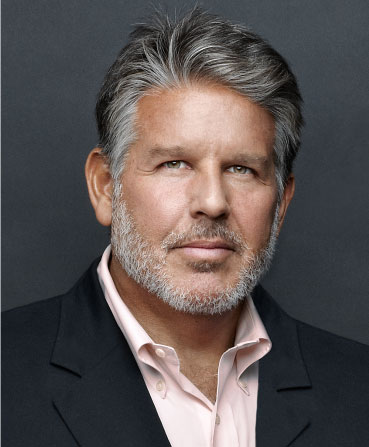
William D. Cohan
American writer
60
APPEARANCES
20
PODCASTS
Sep 16, 2026


Jim HerlihyHOST
Tell us about Eli Black, his career trajectory, and the relationship that he had with his son, Leon.

William D. CohanGUEST
Well, of course, this family was like the American, not only American success story, but also a story of immigration that is sort of classic in a way.
William D. CohanGUEST
In the family, Eli Black was very studious, and that was clear from the outset.
William D. CohanGUEST
I think he went to the Shiva's up by Columbia, which required lengthy commutes each day.
18 MINS LATER
Jim HerlihyHOST
But talk to us about the private equity days when that was the primary business for Apollo.

Bill CohanGUEST
Why would somebody with Leon Black's reputation for, uh, financial shrewdness be paying Jeffrey Epstein, a guy who didn't even, you know, barely graduated high school, an autodidact, for financial advice? It just blew everybody's mind.
Bill CohanGUEST
So on quarterly analyst calls, uh, uh, Leon e- has started getting questions from research analysts about his relationship with Epstein.
Bill CohanGUEST
Uh, I think some sort of institutional investors were getting nervous about that relationship and wanted to know the extent of it.
6 MINS LATER


William D. CohanGUEST
I think there's a risk that the architecture of Apollo right now, which has also been basically copied by KKR and Brookfield Asset Management.
William D. CohanGUEST
But basically, the architecture of the private credit industry now, as epitomized by Apollo, is that they created Athene, this insurance company that provides annuities.
12 MINS LATER
speaker_4UNKNOWN
And

William D. CohanGUEST
I think there is a risk that the architecture of Apollo right now, which has also been basically copied by KKR and Brookfield Asset Management.
William D. CohanGUEST
But basically, the architecture of the private credit industry now, as epitomized by Apollo, is that they created Athene, this insurance company that provides annuities.
15 MINS LATER
speaker_6ADVERTISER
the only person who introduced him to Bill Gates was

William D. CohanGUEST
I think there's a risk that the architecture of Apollo right now, which has also been basically copied by KKR and Brookfield Asset Management.
William D. CohanGUEST
But basically, the architecture of the private credit industry now, as epitomized by Apollo, is that they created Athene, this insurance company that provides annuities.
15 MINS LATER
speaker_5ADVERTISER
the only person who introduced him to
Bill CohanGUEST
And you add that to, what, our $40 trillion of debt, our 6% annual, uh, de- uh, deficits on the budget.
Bill CohanGUEST
As Ron and I were talking before, bond rates are going up steadily, and this is just going to add to th- This is never gonna happen, first of all, 'cause this is another one of his ridiculous promises that he makes that people actually believe, and nobody seems to care whether he delivers on it or not.
Bill CohanGUEST
Who cares whether he does it or not? But if he were to do it, bond yields would, you know, crater, and, I mean, IE go up-
29 MINS LATER


William D. CohanGUEST
And he made those, uh, his company that he, uh, ran, uh, owned, uh, made those, uh, p- paper tops to the milk, glass milk bottles, which of course now of course don't even exist, even in fossil form.
William D. CohanGUEST
You know, conglomerates were really big in the '70s, '60s and '70s, you know, whether it was ITT or GE or, or any of the other big conglomerates.
William D. CohanGUEST
Well, he created one called United Brands, the, the big centerpiece of which was United Fruit, which was the largest importer of bananas.
8 MINS LATER


Saagar EnjetiHOST
What, throughout your work, struck you about Leon Black's, uh, his rise and his fortune and his relationship with Jeffrey Epstein?
William CohanGUEST
Well, I mean, uh, first of all, yes, I agree that, uh, everybody, if they know him at all, they know him because of his relationship with, uh, Jeffrey Epstein, which is, of course, uh, I mean, uh, Jeffrey Epstein's behavior is reprehensible in e- every way, as we all know, and Leon's relationship, uh, is sordid, uh, at worst, uh, maybe even, uh, uh, potentially, uh, uh, criminal, although he's certainly not been, uh, found to have, uh, any, uh, criminal engagements with him.
William CohanGUEST
Um, but it certainly is reflective of poor judgment, which he and Leon and I talked about.
William CohanGUEST
Uh, but again, the, the story of, of Leon, uh, and his father and his family and, uh, you know, and I mean, Jeffrey Epstein is really the last portion of all of this.
William CohanGUEST
Uh, uh, you know, it, it began with, uh, his, uh, f- his famous father, uh, committing suicide when, uh, Leon was, uh, in his second year at Harvard Business School, which he didn't even wanna go to, but his father, uh, basically, uh, insisted that he do that.
William CohanGUEST
Uh, and then, uh, after his father's death, realizing that he had to become the family's breadwinner, uh, and he figured out that the best way to do that was to go to Wall Street.
William CohanGUEST
Uh, turned out that he was very, very good at, uh, what Wall Street did, especially advising, uh, companies on mergers and acquisitions.
18 MINS LATER
Julie PinheiroSOUNDBITE_SPEAKER
Hmm.


Caleb SilverHOST
So what did Leon Black and Apollo take from that generation? What did Milken do? What did he teach them that sort of turned finance on its head?
William D. CohanGUEST
Well, I, I mean, I- as we all know, I mean, Mike Milken was one of the true genius innovators on Wall Street.
William D. CohanGUEST
The fact is that there's really not a whole lot of innovation on Wall Street, um, when you cut through it all.
William D. CohanGUEST
I think Paul Volcker, the former Fed chairman, once said that the, you know, biggest innovation on Wall Street was the ATM machine, which, uh, was a nice line and, uh, obviously is a great thing, uh, to be able to get your money through a machine without having to go to the teller.
William D. CohanGUEST
But Mike Milken and Lew Ranieri, who you mentioned, and, uh, and others who created, uh, the whole market for, you know, credit default swaps, um, were real innovators on Wall Street, with Milken probably being the biggest and most important innovator.
William D. CohanGUEST
And, um, he essentially realized that, uh, you know, financing companies with less-than-stellar credit ratings, uh, could be lucrative to investors because they got, uh, a higher rate of interest and a higher yield, and the default rates were not particularly much higher than if you, uh, you know, bought investment-grade debt.
William D. CohanGUEST
Uh, and, you know, for a long time, access to, uh, the debt markets was limited to a very few companies, uh, and they had to go to insurance companies or the banks.
7 MINS LATER

Joe RileyHOST
What was Lazard like when you got there in 1989? The offices, first of all, you're struck
William CohanGUEST
by the offices because at that time they were in One Rock, One Rockefeller Center, and they were the same offices that...
William CohanGUEST
Lazard had taken over from General Dynamics or something, a company that was in those offices in the 60s and 70s and then went bankrupt and had to jettison those offices.
William CohanGUEST
And Lazard just took them over the way they were and didn't do any upgrades to them.
William CohanGUEST
And by the time I got there, whatever it was, 20 or 30 years later, the carpet was... stained corridors, smelled cigar smoke.
8 MINS LATER

15:49

It seems like almost, I don't know how you think about it in terms of the development of the firm, but reading the book, it seems like that was the thing that really set them apart and also has fueled a lot of their recent growth, at least.
William CohanGUEST
I mean, I think you have to make sure you understand the context for this, which is the financial crisis in 2008 and the new regulations from Dodd-Frank and the Fed that basically restricted...
William CohanGUEST
the big Wall Street banks who many in Washington believe and I think correctly, you know, exacerbated the financial crisis and many of them as we discussed almost failed and would have failed if not for the bailouts and of course Lehman failed.
William CohanGUEST
So, out of that crisis, out of those ashes rose what became a new architecture.
William CohanGUEST
See, One of the major problems, as I'm sure you're well aware, with a fractional banking system and depository institutions is that, number one, the money that we deposit there is not at the bank.
William CohanGUEST
Because in a fractional banking system, they are allowed to take the money that we put in the bank, our money, and for which we get very little interest.

Bill CohanGUEST
Uh, private equity billionaires or hundred millionaires are kind of a dime a dozen these days.
Bill CohanGUEST
I don't think there's a better business you could have been in that is both legal and can make you as much money as private equity did for the last forty years.
20 MINS LATER

Kara SwisherHOST
How do you square that with his financial acumen in making claims like these? Because it's obviously hurt his reputation, I think probably fatally.
Bill CohanGUEST
I, I mean, I think what, what, what is having a-an effect Is that, you know, these data centers are, um, designed to keep the AI boom going, and may be a requisite part of the AI boom.
Bill CohanGUEST
And who are the beneficiaries of the AI boom? Uh, essentially, you know, billionaires and trillionaires, uh, who, um, you know, are already plenty rich.
Bill CohanGUEST
So they're, like, moving forward to get even more, uh, rich without really, um, stopping at all and pausing at all.
Bill CohanGUEST
And I think that's the purpose of this, uh, legislation and, and what's been going on here, to, to have people pause and really consider some of the consequences of these huge data centers, which use tremendous amounts of water and electricity, obviously, uh, destroy the landscape that was existing there and that will probably never be restored.
Bill CohanGUEST
Um, uh, I read, uh, somewhere that, you know, calves in, uh, uh, in, in, uh, in some states are being born stillborn bec- because of proximity to the data centers.
Bill CohanGUEST
So, you know, I think that people are really upset with the consequences, to say nothing of the potential job loss, 'cause we all know that, uh, AI at least is, uh, rumored, uh, to, or expected to cause job losses.

Peter HambyHOST
Will they not be able to accomplish their speedy development, their goals, their products, their LLMs, whatever? Will they not be able to build if they don't have the data centers to support compute? Are they worried about that?
Bill CohanGUEST
They're not making any more of it, and if you can afford to buy it, you want it, 'cause it's not gonna lose value.
Bill CohanGUEST
Now, historically, the rules have been that you couldn't, uh, have private equity ownership in there.
Bill CohanGUEST
I was gonna say that, you know, you couldn't really have corporate ownership, but you know, that's not really true.
14 MINS LATER
Bill CohanGUEST
One third on the spending is going to AI is new capital spending going to AI is kind of unprecedented.
Bill CohanGUEST
And frankly, if I may quote the great late Yogi Berra, I mean, to me, it feels like deja vu all over again.
Bill CohanGUEST
You know, what Wall Street likes to do is spend, spend, spend, you know, or provide capital to all sorts of funky ideas, uh, like mortgage backed securities as we did leading up to the 2008 financial crisis, like, uh, uh, building out, uh, the internet and, and, uh, uh, new telephone lines and data lines leading up to the crash of 2000 in the NASDAQ crash.
Bill CohanGUEST
So to me, this feels like just sort of wanton, crazy capital spending, $500 billion going to NVIDIA.
Bill CohanGUEST
I mean, it makes no sense, and I don't have any explanation yet for what all this capital is going for and why we need it and why it has to happen so quickly now.

Antonia HiltonHOST
who are trying to prepare for or AI-proof their lives, their jobs, what should they be concerned about?


Ian MastersHOST
So Bill, that sounds quite reasonable, but I guess the question really is, is David Ellison really in control or is his father, Larry Ellison, who has the money?
William CohanGUEST
well obviously it is larry not only has he agreed to pony up 47 and a half billion dollars of equity He's also agreed to put more equity in if needed to sell the debt, which is going to end up being around $80 billion on this company.
William CohanGUEST
So he's on the hook for a lot of money, more money than most human beings have.
William CohanGUEST
And of course, now they've agreed to, in a sense, delay the closing until potentially June of next year.
William CohanGUEST
And that's going to cost Larry Ellison another $650 million a quarter to Warner Brothers shareholders in a so-called ticking fee, because they actually thought they were going to close the deal by September 30th.
William CohanGUEST
And so as part of the negotiation for the merger, he agreed to this ticking fee of $650 $50 million a quarter, which is going to approach another $2 billion by next June.
6 MINS LATER
Bill CohanGUEST
Uh, and then Paramount obviously came in and offered more money, and the merger agreement with Netflix was rescinded, and one was signed with Paramount.
Bill CohanGUEST
So even before that happened, uh, Paramount was trying to restrict, uh, what, uh, Zaslav, uh, and Warner Brothers could do between the s- between the signing of the merger agreement and closing.
Bill CohanGUEST
And, and as you remember, you know, um, some on the Paramount side thought that that closing could be, you know, July 15th.
Bill CohanGUEST
So all of a sudden, you know, w- what those operating covenants are between signing and closing become much more relevant because if the deal's now not gonna close till the earlier of, uh, a- adjudication of this antitrust issue, which could go to the Supreme Court, which means it could take forever, or, or, or June of twenty twenty-seven, then, you know, that's alm- that's, like, 11 months that David needs to continue to operate this company as an independent, publicly traded company, uh, with its own board and, you know, uh, but he's basically ha- has to ask permission from the Ellisons really to do anything of substance-
12 MINS LATER


William CohanGUEST
Well, what we're in, uh, is an AI valuation bubble, and we're in a capital, uh, expenditure bubble.
William CohanGUEST
Um, so there's way too much money being, uh, invested, uh, in, uh, AI and AI-related things, whether it's chips or data centers.
6 MINS LATER
Peter HambyHOST
But what did George have to say? Is this the dot-com bubble all over again or is it like something else, another recent historical analogy?
Bill CohanGUEST
Um, maybe a few weeks ago, I had, uh, written a piece about how some investors were likening it to sort of the infrastructure build that was done in the creation of the internet back 25-plus years ago, you know, with the Ciscos of the world and all the emerging telecom companies, and how basically, uh, Cisco didn't go bankrupt, but all those emerging telecom companies did, like Global Crossing and McLeod and all the rest of them.
Bill CohanGUEST
But that we ended up with, uh, what we needed, which was the infrastructure, the actual, you know, pipes in the ground.
Bill CohanGUEST
Even though the companies behind them all went pretty much kaput, the pipes in the ground, uh, became very useful and valuable.
Bill CohanGUEST
And, you know, whether this AI infrastructure build, the data centers and all that, the companies behind them or the companies that have lent money to them will end up taking hits on those loans and there might be some bankruptcies, but the infrastructure that is being built will end up being useful.
Bill CohanGUEST
I think there's a, a similarity between the two there, although it's obviously early days in the AI infrastructure build, although unbelievable amounts of money have been spent and are continuing to be spent, in fact, much more than, you know, what was needed to build the, uh, pipes for the internet.
William CohanGUEST
But yes, look, they really, you know, they were the last big Wall Street firm to go public.
William CohanGUEST
And that was a competitive disadvantage, even though they were still Goldman Sachs.
William CohanGUEST
It was a competitive disadvantage because other firms that were public had cheaper, less expensive forms of capital.
Jim HerlihyHOST
Talk to me about how Lloyd was able to steer Goldman Sachs through that tempest and get to the other side almost unscathed.

Bill CohanGUEST
We saw it with the, you know, internet 1.0. We saw it with the emerging telecom companies that built the infrastructure to power the internet.
Bill CohanGUEST
And of course, the interesting thing is, of course, we still use that infrastructure, and it's important infrastructure.
6 MINS LATER

Stephanie RuhleHOST
Bill, what is your take? Because to me, this seems like another example of the president giving big business a whole lot more power, which is one of the reasons he's getting so much support from corporate America.
Bill CohanGUEST
Well, the, uh, you know, the five guys who pulled off Bending Spoons, which is some sort of crazy name that could only fly in a very frothy IPO market, especially, you know, uh, an Italian company, uh, with that name.
Bill CohanGUEST
And as you say, a collection of, uh, you know, sort of one-time great and now pretty much irrelevant internet companies.
Bill CohanGUEST
I mean, it is generating a bunch of EBITDA and a bunch of cash flow, uh, so I kinda get that.
Bill CohanGUEST
I mean- I guess there are still people who use, uh, AOL to dial up to the internet.
10 MINS LATER
Bill CohanGUEST
I think he's wanted to tell his version of what happened between him and Jeffrey Epstein for a long time.
Bill CohanGUEST
He spent several years, uh, the past several years spending a lot of time with me telling me his version.
Bill CohanGUEST
And, you know, you alluded to his opening statement, uh, and I didn't find anything in there that, um, surprised me or is anything much different than he's told me, uh, over the last few years.
Bill CohanGUEST
So I think he's there to, uh, explain himself, explain $158 million that he spent, uh, giving Jeffrey Epstein, uh, over the years.
Stephanie RuhleHOST
I'm pretty sure Mark Zuckerberg was sitting an arm's length from Donald Trump at the UFC fight a week ago.
Peter HambyHOST
What are your big thoughts on why this is happening, and is the bottom not even here yet?
Bill CohanGUEST
Well, uh, you know, who knows w- with a speculative asset like Bitcoin, you know, why it goes up, why it goes down.
Bill CohanGUEST
I mean, you need somebody to come along, Peter, and buy your Bitcoin at a higher price, or else it's not gonna happen.
Bill CohanGUEST
In other words, there's no income statement, there's no balance sheet, there's no future cash flows that you can discount back to try to arrive at some sort of valuation for Bitcoin.
Bill CohanGUEST
And having just done a documentary on this called Finding Satoshi, where we really plumb the depths of all of this.
William CohanGUEST
Maybe it's a moment to take a pause and reflect on what it means to have one single man be worth, on paper, anywhere, anyway, in excess of one trillion dollars.
William CohanGUEST
I, I believe today, given that SpaceX's stock is up another 13% and that company is now worth 2.3 trillion, uh, given all of Elon's other holdings, he's now listed at around 1.1 trillion.
William CohanGUEST
I mean, I think many of us, Bianna, are struggling as it is to get our minds around, you know, billionaires.
William CohanGUEST
I mean, we've been living with billionaires now for 30 or 40 years, uh, and the amount of billions that has, have accumulated in the hands of, say, the top 10 people, wealthiest people in the world, uh, is hundreds of billions of dollars.
7 MINS LATER

Bianna GolodrygaHOST
Is that more dangerous, do you think, th- the power that one man wields versus an institution like Goldman Sachs?
Scroll for more appearances