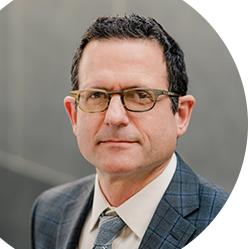
Will Rust
Will Rust, Ph.D. is co-founder and CEO of Seraxis, a Maryland biotech developing stem cell-derived islet replacement therapy for type 1 diabetes.
3
APPEARANCES
3
PODCASTS
Oct 13, 2026


Will RustGUEST
So we're creating these little mini organs for transplant, essentially, is what we're doing, right? That's the magic of it.
Will RustGUEST
It's a little easier than actually a giant, you know, full pancreas that's vascularized and it's got many other components.
Will RustGUEST
It's simpler, but it's still a little organ because there are clusters of cells that secrete all of the hormones needed to regulate blood glucose.
11 MINS LATER


Will RustGUEST
I can, uh, uh, tell you some of the excitement about, uh, how come bringing these technologies together, uh, can really provide a functional cure, right? Um, when you think about islet replacement, a lot of people just have an abstract vision [chuckles] of what that is, right? Cells secrete insulin to replace the ones that are lost.
Will RustGUEST
We need to create a pancreas, an endocrine pancreas, outside of the regular pancreas, right? Need to-- Somewhere in the body, we have to make another pancreas outside of the pancreas.
Will RustGUEST
And, um, clinically, where it has worked most successful is the liver, right? Again, you have to imagine what that's like.
Will RustGUEST
S-someone punctures a hole, uh, through the, through the back, actually, and, uh, injects a catheter into this blood vessel that feeds the liver, right? And they, they drip in slowly over time the islets.
Erin HarrisHOST
So these two programs fitting together, talk us through them, and what will we learn from them as you, as you work on them together?

Will RustGUEST
Because if you submit a package to the FDA, what they really wanna see [laughs] is, "Show us that it's safe using a study that's powered enough that it provides statistical confidence." So it has to be enormous, and it has to, it has to meet the standards of good, good laboratory practice, right? And that is far more intense than, than people realize, right? [laughs] Every action has to be recorded, and it has to be observed being recorded to be sure that it is, that it is accurate and true.
Will RustGUEST
And these have to be done by independent third parties, right, to be sure that it is thorough and complete, right? So those things take time, and they're expensive.
Will RustGUEST
But the other thing is, uh, the manufacturing, you're right, [laughs] it's one thing to make a handful of cells that secrete insulin.
Will RustGUEST
But the next challenge is to make a billion of them, and to do it 20 times in a row, and make sure that those billion are consistent across every 20 manufacturing batches.
Will RustGUEST
So that is more difficult than making cells that secrete insulin, I can guarantee you, right? And, uh, you need to define what the character of those cells are, and you need to set upper and lower limits, and then validate those limits as being relevant to what you're trying to accomplish in the clinic, and, and then demonstrate consistency.
52 MINS LATER