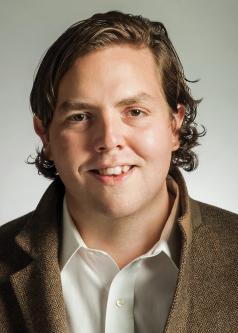
William Baude
American legal scholar
5
APPEARANCES
3
PODCASTS
Oct 6, 2026


Will BaudeGUEST
And so this, uh, I mean this, my participation in this paper grew in part out of a seminar I taught here at Chicago on the original meaning of the privileges of immunities clause, which is just something I, you know, there've been a lot of books by, you know, Randy Barnett and Chris Green and Kurt Lash, all set different things.
Will BaudeGUEST
And I said, well, why don't we just get, get together and try to read them all and figure out what's going on.
Will BaudeGUEST
And, you know, one – I mean, there are several fascinating things about just trying to dive into this, all of which, you know, you know well, which is, you know, everybody kind of recounts a lot of the same pieces and then emphasizes different parts of them and there are sort of weird contradictions.
Will BaudeGUEST
But one of the contradictions that really baffled me for a while was that you had on the one hand people saying – It's really, really important that we pass the 14th Amendment, among other things, because of the Privileges of Immunities Clause, because we need it to constitutionalize the Civil Rights Act and establish a basis of rights, especially for the newly freed African Americans.
26 MINS LATER
Anthony SandersHOST
Is there something that you came away with? maybe people miss usually when they read these debates or something that You should keep in mind when you're trying to figure out figuring out what was going on


Gregg NunziataHOST
So what's going on in that case? What's that issue? And what do we know? if anything, about where the court's coming out on that at this
William BaudeGUEST
point? Yeah, the short answer is we don't know a lot yet, right? So the president issued an executive order containing a sort of sweeping set of instructions to the executive branch about what he wants them to do to safeguard or steal the midterms, depending on your perspective.
William BaudeGUEST
And the Supreme Court said the current challenges that it was dealing with were unripe and or the plaintiffs had no standing because we just didn't really know where we were yet.
William BaudeGUEST
And I mean, in plain terms, I mean, one view people often have about standing doctrine, especially applied by the Supreme Court, is that it's kind of a dodge.
William BaudeGUEST
It's just really a cloak for saying we could rule on this case, but instead we're going to tell the plaintiffs to go away.
William BaudeGUEST
That's not my view as a photographic professor, although we can talk about that.
William BaudeGUEST
But a different part of it might just be to say, look, we just don't quite know what to fight about yet.
28 MINS LATER

Sarah IsgurHOST
So why in the year our Lord 2026, am I seeing one of the most conservative justices on the court talking about substantive due process still?
Will BaudeGUEST
The day has not yet come when the court has recognized that the Slaughter-House Cases were wrongly decided and that it should re-recognize the privileges or immunities of citizens of the United States, that day may, that day may yet come.
Will BaudeGUEST
I will say, I don't know that it's totally fair to say that the point of originalism was to get rid of substantive due process.
Will BaudeGUEST
Originalism existed long before Robert Bork and Antonin Scalia started practicing it, uh, and it exists long after they've died.
Will BaudeGUEST
But it is true that there was a sort of a fundamental rise of the conservative legal movement that was excited about originalism, in part because it seemed like a way to say what was wrong with a bunch of things the Warren Court was doing and the Burger Court, and it is true that now that those justices are in power, they are doing the things the Warren Court and the Burger Court were doing, sometimes different, sometimes better, sometimes frankly worse.
Will BaudeGUEST
A friend of many of these podcasts, Richard Ray, has written about this in a couple of contexts, calling it, you know, a legal realignment, uh, the way there are political realignments.
Will BaudeGUEST
And I think what we can say is, in a sense, it was predictable that once there was a conservative majority of the Supreme Court, they would not be as wedded to judicial restraint as they had been before, and there are defenses of what they, uh, are doing that we talk about in the business of precedent, but in a sense, this was predictable, but I did not think it was gonna happen so fast.
13 MINS LATER
Andy LipkaGUEST
So I think you might have been too quick even, too nice to the court to say that you could easily reconcile Dobbs and Bonta on sort of history and tradition grounds, because one of the big problems the court confronted is what you might call the level of generality problem

Sarah IsgurHOST
than a court that uses originalism to help the president win cases and then finds excuses not to use it against him." Will you unpack that for us? Because there's a lot of wisdom and thoughtfulness, I think, in there that doesn't fall easily along any, um, any one sort of stereotype on the legal ideological framework.
Will BaudeGUEST
Yeah, well this is obviously one of my least popular bits because, uh, some people don't like the part where I suggest that the court might be capable of being principled at all, and other people don't like the part where I suggest that it's not, uh, all, you know, roses and James Madison pictures from here to the, uh, end of the U.S. reports.
Will BaudeGUEST
So one is, this came up in the context of the court... case the court heard a argument on last week, uh, Trump v.
Will BaudeGUEST
Um, which to my mind is one of the least troubling cases that the Supreme Court is hearing right now for the Trump administration.
35 MINS LATER
William BaudeGUEST
The thing he thought that got in the m- the most hot water was he was convinced that James Madison fraudulently altered his records of the Constitutional Convention to smuggle in Madison's own preferred reading of the Constitution in various ways.
William BaudeGUEST
And almost everything we know about the convention comes from Madison's notes, because he was the only person, uh, he was the only person who realized he should take notes on the whole conspiracy.
8 MINS LATER

David FrenchHOST
... what is it that a modern originalist can learn from Kroski? What, what is it that we're missing that he, that he caught?