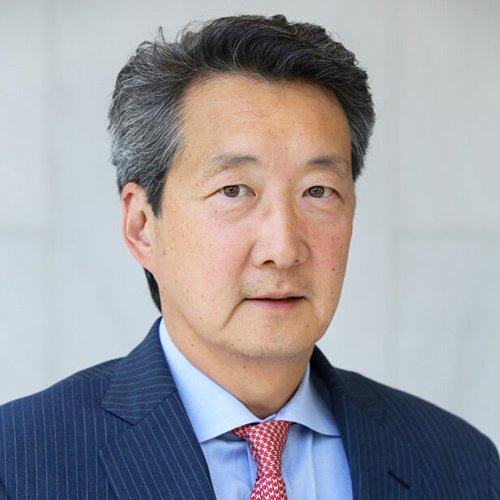
Victor Cha
American political scientist
19
APPEARANCES
14
PODCASTS
Sep 25, 2026


Jonathan CorradoHOST
How has this relationship between North Korea and Russia affected North Korea's view of on things in terms of its willingness to engage in diplomacy with the US, inter-Korean relations, how has this all been affected?

Victor ChaGUEST
I mean, I think the big I mean, if we think about what is the biggest change, as Susan said, there's a lot that stays constant around the geopolitics of the Korean peninsula and its neighbors.
Victor ChaGUEST
And the biggest change by far has been this relationship since, you know, 2022 between North Korea and Russia, now a full blown military alliance situation.
Victor ChaGUEST
And for the United States, it means that if the two were to re-engage, it's on very different terms.
Victor ChaGUEST
In the first Trump administration, as Susan said, North Korea was under heavy, heavy sanctioning.
11 MINS LATER


Alex WittHOST
But what are the implications for that region? Is this a signal to Kim that Trump is not happy with South Korea? And if so, what could North Korea do with that interpretation?
Victor ChaGUEST
Well, certainly in that Oval Office room briefing, he did say a lot of bad things about South Korea and about the alliance with South Korea.
Victor ChaGUEST
So the president's clearly upset that he's not getting help on a I mean, I think what it means for the region more broadly is that the president clearly wants to try to shift the focus of both the headlines and the diplomacy away from Iran, which is a bit of a quagmire to a new issue, and that is with Kim Jong-un.
Victor ChaGUEST
For the South Koreans, while they did get dissed in that press briefing, overall, if there is dialogue between the United States and North Korea, that's something the South Korean president wants.
Alex WittHOST
Do you think, Victor, that that type of message will make Iran more resolute in pursuing its nuclear ambitions no matter the damage from this war?


Fareed ZakariaHOST
So I mean, is there any reason to be, is there a thaw that you see that, you know, maybe this is di- directed toward?
Victor ChaGUEST
I would say there are two things that have changed from the general situation with North Korea.
Victor ChaGUEST
Uh, the first and probably the most, uh, significant is this relationship that Kim Jong Un has created with Vladimir Putin.
5 MINS LATER


Victor ChaGUEST
So the North Korean volley of missiles, these short range missiles, I think were largely in response to these annual exercises that the U.S. and South Korea hold.
Victor ChaGUEST
For President Trump, I think that's just water off his back because he's never really cared about the short range ballistic missiles.
Victor ChaGUEST
He's always focused on the intercontinental ballistic missiles that could theoretically reach North.
Victor ChaGUEST
So again, I think, you know, they're both positioning to try to set up some sort of dialogue when they talk about the fall or the end of the year.

Victor ChaGUEST
The war in Ukraine and Russia's need for ammunition coincided with North Korea coming out of its three-and-a-half-year lockdown, no trade with China for three and a half years.
Victor ChaGUEST
And it was actually Kim Jong Un who proposed the idea to Vladimir Putin of, you know, "We can send you ammunition, we can send you troops." And Putin initially demurred, but then later, you know, he, he needed ammunition, and the only country in the world that was willing to provide him ammunition was the North Koreans.
Victor ChaGUEST
It wasn't very good ammunition in the beginning, but it got better and better as they got their, uh, ammunition factories up and running again.
Victor ChaGUEST
And we estimate at CSIS the value of what Russia has given in return is probably somewhere on the order of eight to $10 billion worth of everything from medicine to food to energy to weapons has been provided to, to the North Korean leader.
13 MINS LATER

Patrick SandersHOST
So- How serious is this now, and where would you put them in terms of technology and their competitiveness?

Gurnel ScottCORRESPONDENT
What was, uh, President Truman's reasoning for really getting involved in this?
Victor ChaGUEST
Well, I certainly don't think it was a war that he initially planned or wanted to get involved in.
Victor ChaGUEST
As I said, standard US strategy at the time defined a defense perimeter that did not include Formosa and that did not include Korea.
Victor ChaGUEST
You know, the United States was winding down from a wartime economy during World War II.
Victor ChaGUEST
They had to reduce defense spending in order to create jobs and to build housing and all of these sorts of things.
5 MINS LATER

Victor ChaGUEST
... uh, match at the 1956 Melbourne Olympics, um, where the USSR was playing against, uh, Hungary.
Victor ChaGUEST
And so this was much more than just about a water polo match, and there was a lot of headbutting and other things taking place.
Victor ChaGUEST
I mean, for American hockey fans out here, the 1980 Lake Placid Olympics, the so-called Miracle on Ice, that's been, movies have been made about this, where an amateur at that time, an amateur US Olympic team, uh, beat the heavily favored Soviet team.
21 MINS LATER


35:11

And then I want to talk about your ideas for how we might, as you said, attenuate that relationship.
Victor ChaGUEST
So, I mean, it's not the nicest way of putting it, but I think in many ways, the Ukraine war was like Christmas morning for North Korea.
Victor ChaGUEST
And the reason I say that is when Putin invaded Ukraine, that was just as North Korea was coming out of its three and a half year COVID lockdown.
Victor ChaGUEST
They locked down a year longer than everybody else, a year and a half longer than South Korea, just because they're very vulnerable at home.
Victor ChaGUEST
Again, they devoted all their national resources to building their weapons program.
Victor ChaGUEST
And for that reason, their health infrastructure, their population is malnourished, everything.
14 MINS LATER


Bonny LinHOST
And talking a little bit about what we might expect from a Trump-Kim meeting, do you think that would be, I guess, where would the location of that be? Would it be Singapore again? Would it be on the Korean Peninsula? And then you had mentioned you have very low expectations of that meeting, right? But is there anything? So I guess if you have low expectations of the meeting, how can it in many ways dilute the Russian influence? Like what would China need to come out of the Trump-Kim meeting in order to dilute the Russian influence? Like, is there any possibility that a Trump-Kim meeting could lead to rollback of sanctions on North Korea? Or do you think that's still very far into the future?
Victor ChaGUEST
I mean, the main thing, again, my guess is just to increase the levels of mistrust between Kim and Putin.
Victor ChaGUEST
It would be useful for the United States, too, frankly, to see more mistrust or Putin's concerns about, like, what are they talking about? What are they agreeing on? I mean, I imagine in a meeting that Trump would say something about the support that North Korea has been giving to Russia, even though he doesn't seem very committed to Ukraine.
Victor ChaGUEST
... his strong leadership and, and of course, the agreement is to be, the one and a half pages is to be initialed, um, uh, later, later this week in Geneva.
Victor ChaGUEST
Um, on Ukraine and Russia, you know, uh, I think as, as, um, Phil said, you know, uh, very important statements with regard to unity on, uh, sanctions on Russia with regard to, in particular, oil exports, unwavering support, in quotation marks, for territorial integrity and freedom of Ukraine.
Victor ChaGUEST
Um, uh, Macron invited Zelensky to come to Evian and to help set up a meeting with Trump.
Victor ChaGUEST
I, I think the, the one thing to me that was interesting is the, the... there's an inherent dilemma in the sense that all the G7 members were in favor of harsher sanctions on Russia now that the Strait of Hormuz is open.
Victor ChaGUEST
Uh, but at the same time, even though the Strait of Hormuz is open, every country is going to be trying to reduce dependence on the Strait of Hormuz, you know, potentially with oil supplies through other parts of, of the area, like Central Asia, which still then involves Russian equity.
20 MINS LATER
Will TodmanHOST
Um, does that indicate that the G7 format doesn't make sense, but it does when it's expanded? Like how, how, how do you view the bigger picture question about the future of the G7 and whether or not it's still fit for purpose?
Victor ChaGUEST
One of them you already mentioned, which is China and Russia are working together in the Security Council.
Victor ChaGUEST
As you said, they've just, uh, vetoed a resolution about Iran in the Strait of Hormuz, but that's not the only case.
Victor ChaGUEST
There have been, I think, um, at least fifteen to twenty different resolutions or draft resolutions that were considered by the UN Security Council that have a- all not materialized because of China and Russia opposition.
Victor ChaGUEST
So they've effectively emasculated the UN Security Council as an institution of global governance, full stop.
Victor ChaGUEST
And this was even admitted to by the Se- UN Secretary General a couple of years ago when he said the UN Security Cou- he ca- they cannot act on the most important issues of the day.
14 MINS LATER
Will TodmanHOST
So now that it has happened, what's your assessment? How do you think it, it went and, and what really came out of it?

Victor ChaGUEST
Yeah, so to me, this was the most interesting part of the summit, uh, outcome, was the lack of any mention of n- nuclear weapons or denuclearization, which contrasts directly with the White House readout of the meeting between Trump and Xi Jinping, where at least the White House said they explicitly discussed and agreed on denuclearization of North Korea.
Victor ChaGUEST
So from a North Korean perspective, this unsaid, this unsaid deliverable, if you will, was probably for them the, uh, the objective of the visit.
Victor ChaGUEST
In addition to the material things, improving trade, opening civil aviation again, railway transport, um, the fact that the North Koreans were able to sit with the Chinese and not talk about denuclearization achieves the objective of de facto international acceptance of North Korea as a nuclear weapon state.
Victor ChaGUEST
And as if to accentuate the point, in the run-up to President Xi's arrival in North Korea, uh, we have, as you see, these pictures that were released of Kim Jong Un in- inspecting the newest, uh, centrifuge facility used for spinning, um, aluminum tubes to make weapons-grade uranium for nuclear weapons.
Victor ChaGUEST
And then Kim Jong Un's younger sister, Kim Yo Jong, made a statement about the irreversibility of North Korea's nuclear path.
Victor ChaGUEST
All of this within 48 to 72 hours of Xi Jinping arriving, kind of putting China in a box on this particular issue.
13 MINS LATER

François PicardHOST
Uh, Victor Cha, looking at those images, uh, how isolated is Kim today, and how much contact does he have with the outside world?

2:34

We have so many other headaches from Ukraine to Iran and the South China Sea dispute, not to mention Taiwan.
Victor ChaGUEST
So I, I would answer your question first in a historical context, which is every time historically the United States has ignored or pushed North-- uh, the Korean Peninsula to the side for other more proximate, uh, urgent issues, it has come up and, uh, bitten us in the rear end.
Victor ChaGUEST
Um, at the turn of the 20th century, um, we were very focused on holding our position or establishing a position in the Philippines, um, and therefore were, uh, uh, de-deprior-deprioritized Korea.
Victor ChaGUEST
It's, this, uh, uh, eventually led to the Japanese Empire taking over the Korean Peninsula as the first step to taking over the entire region and eventually leading to the, the Pacific War.
Victor ChaGUEST
Um, in, uh, 1950, uh, we made a decision not to include Korea in our defense perimeter, the famous speech by Dean Acheson in 1950, um, and then that became the signal for North Korea with the tacit support of the Soviet Union and eventually the active support of China to try to take over the Korean Peninsula in the Korean War.
Victor ChaGUEST
So, um, to me, like every time we ignore or push the North Korean problem to the back burner, the Korea problem to the back burner, it, it can come up and bite us, uh, really badly.
31 MINS LATER
35:26
Again, I know we don't wanna predict, and this is a hazardous, but are we cautiously more optimistic this time that paradoxically a more emboldened North Korea may feel more comfortable to make some, uh, important, not concessions, but find some sort of a potential détente or cold peace with the US?

Victor ChaGUEST
Yeah, I mean, it, it would certainly be a big deal in the sense that Trump will do something dramatic, uh, you know, meet him on an aircraft carrier or, you know, go, go into the heart of Pyongyang as opposed to just stepping into North Korea.
Victor ChaGUEST
Um, I mean, I think from a US perspectiveGiven the fact that we are pretty busy now and we have a lot of enemies, uh, around the world that we're at war with, in conflict with, either directly or indirectly, um, it doesn't hurt for him to keep a tab on this particular issue.
Victor ChaGUEST
So, you know, we have this data that shows correlation between periods of US-DPRK diplomacy and a reduction in North Korean missile demonstrations and nuclear tests and military provocations.
Victor ChaGUEST
Um, what is interesting about the Trump-- So Trump is an outlier to that because, um, we have seen, you know, no dialogue between the two.
Will TodmanHOST
But what are the most important shifts in that strategic landscape in your mind, Victor, in recent years?
Victor ChaGUEST
Um, [clears throat] so one way of looking at it is there is a, a railway crossing between North Korea and Russia called the Tumangan Kasen Railway, Railway Crossing.
Victor ChaGUEST
And in a project we did on, uh, over ten years ago on unification, we looked at the three Chinese railway crossings and the two Russian railway crossings, uh, uh, with, with, uh, uh, with North Korea.
Victor ChaGUEST
And of course, there's a lot of activity on the Chinese ones, particularly, um, the Sinuiju-Dandong corridor.
Victor ChaGUEST
But in this Tumangan Kasen, it looked like it was unchanged from the end of the Korean War.
Victor ChaGUEST
If you look at it today, there are new buildings being built, uh, new structures, new monuments.
Victor ChaGUEST
Um, I just did a call with a Bloomberg reporter who was looking at satellite imagery of this area and wondering why it's being built up so much.


Dan Kurtz-PhelanHOST
I'm curious what you made of that experience, how that changed your sense of, of the problem and the, and, and the country that you'd been studying from afar for so long.
Victor ChaGUEST
I mean, I would say, um, the first is that, uh, I became fully aware because I was on the inside of the extent to which the United States government was committed to diplomacy and trying to get rid of these weapons in a peaceful way.
Victor ChaGUEST
I know that President Bush had the reputation of, um, wanting to carry out regime change, uh, because of the actions in Iraq, also because he put North Korea in the axis of evil in the State of the Union speech.
Victor ChaGUEST
But in spite of this, um, it was always my view that we were fully committed to the diplomacy and had come up with a framework that was puttingThe country that we thought had the most leverage on North Korea, that is China, putting them in the driver's seat, actually having them chair and host the meetings, um, which means that they have the pen when we're writing the documents, which is very important in any negotiation.
Victor ChaGUEST
So we were actually conceding that to China, not because, um, we thought we couldn't do it, but we thought that was the most effective way.
20 MINS LATER


Bill ReinschHOST
Can you give us a story or two or an example of what they've done to individual companies? What has the company done that merits the attention of Xi Jinping, for example?
Victor ChaGUEST
And basically, we have a list of 470 companies that basically cover every continent on the globe except Antarctica.
Victor ChaGUEST
So there's been lots of sanctions and coercion against U.S. defense companies that are involved in arms sales to Taiwan.
Victor ChaGUEST
I guess the level of discrimination that they will go to in terms of writing what they see as an offense, I really did not appreciate until we pulled together this dataset.
6 MINS LATER

Victor ChaGUEST
now?I think at, at the core, the basic strategy is to continue the use of threat of tariffs to try to stave off China using critical minerals, you know, trying to weaponize critical minerals.
Victor ChaGUEST
Um, and this is kind of a holding pattern because the idea is eventually that the United States and like-minded countries will be able to develop to the best they can independent critical mineral supply chains, um, so that they're no longer, uh, prone to, uh, Chinese threats of economic coercion.
Victor ChaGUEST
I think that's sort of the game plan right now, and so when we go into this summit, uh, this spring, um, there'll probably be a similar sort of ratcheting up of threats on both sides in the run-up to the meeting and then some sort of, um, uh, interim agreement that might last for another year or so.
Victor ChaGUEST
But the last meeting basically bought a year, uh, where China said, we said we would not raise tariffs further, and they said that they would not hit on, um, critical minerals.
Victor ChaGUEST
In the long term, we've gotta, you know, shore up these mineral, critical mineral supply chains.

Brian KilmeadeHOST
And number two, they seem obsessed with taking it, and that would certainly hurt our na- that, that certainly not be in our national interests.
Victor ChaGUEST
I think at, at the core, the basic strategy is to continue the use of threat of tariffs to try to stave off China using critical minerals, you know, trying to weaponize critical minerals.
Victor ChaGUEST
Um, and this is kind of a holding pattern because the idea is eventually that the United States and like-minded countries will be able to develop, to the best they can, independent critical mineral supply chains, um, so that they're no longer, uh, prone to, uh, Chinese threats of economic coercion.
Victor ChaGUEST
I think that's sort of the game plan right now, and so when we go into this summit, uh, this spring, um, there'll probably be a similar sort of ratcheting up of threats on both sides in the run-up to the meeting, and then some sort of, um, uh, interim agreement that might last for another year or so.
Victor ChaGUEST
But the last meeting basically bought a year, uh, where China said-- we said we would not raise tariffs further, and they said that they would not hit on, um, critical minerals.
Victor ChaGUEST
In the long term, we've got to, you know, shore up these mineral- critical mineral supply chains.
Brian KilmeadeHOST
Number one, their claim isn't authentic, they've never had the island, and number two, they seem obsessed with taking it, and that would certainly hurt our na- that, that certainly not be in our national interests.