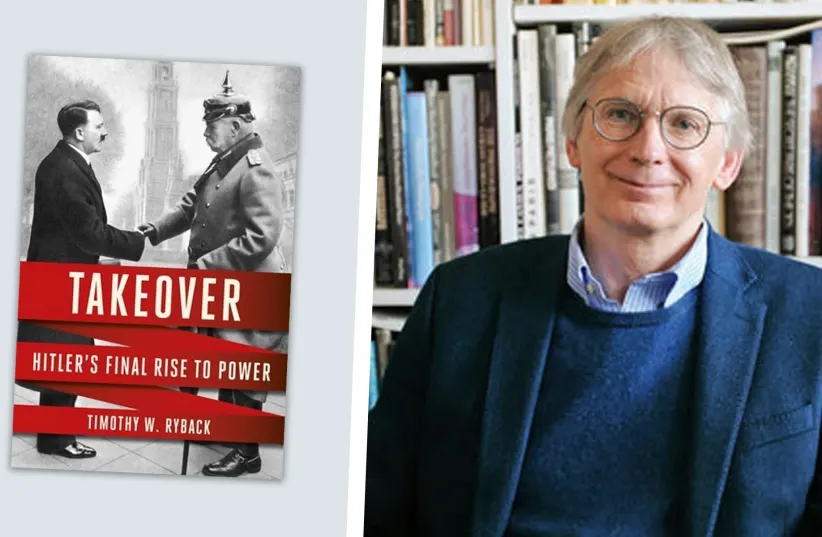
Timothy W. Ryback
Historian
40
APPEARANCES
8
PODCASTS
Oct 14, 2026

Misha GlennyMODERATOR
How important was their role in what happened? And are there any parallels that you see with today?

Timothy RybackGUEST
But what I will say, when everyone looks at this comparison between Trump and Hitler, Hitler, Trump, to what degree, I think one of the more interesting pieces that I came across in looking at this was actually the Democrats following Kamala Harris's loss in the presidential election in November of 2024. when you look at the Social Democrats, the analysis of what happened after their elections when Hitler was in his sentencing, when the Nazis were basically storming the polls.
Timothy RybackGUEST
And there was a man named Emil Gumbel, who was a statistician, a friend of Albert Einstein's, one of the leading commentators on these issues of the day.
Timothy RybackGUEST
And he said, you know, the problem was we, this is the Social Democrats, we were warning about the threat of Hitler to civil liberties, to rule of law, the Nazis as a threat to democracy.
Timothy RybackGUEST
Does that sound familiar? However, what we missed was the fact that the Nazis were talking about to people about the alltagsorgen, the everyday worries, inflation, housing, unemployment, public security.
18 MINS LATER
Misha GlennyMODERATOR
If that is the case, how could Hitler have been stopped between November 1932 and the beginning of 1934?


Timothy RybackGUEST
Two of the great mysteries, one is the Reichstag fire, what actually happened, but the other is what really motivated Hindenburg.
Timothy RybackGUEST
He even said when he appointed him, he said, I don't expect this guy to last six weeks.
5 MINS LATER

5:25
And you end your book with a quote saying from the introduction to Goebbels collected writings The big joke on democracy is that it provides its mortal enemies the means to its own destruction isn't this how Hitler performed in gaining absolute power by basically playing the weaknesses within democracy against democracy.
Timothy RybackGUEST
It's really about how Hitler almost didn't dismantle democracy or how he failed to.
Timothy RybackGUEST
And I think that what I did try to do in the book is to not only show what the man did, but the obstacles he faced because, you know, and I think of this book, you know, there have been 120,000 books written on Hitler and there's brilliant books, but most of them show sort of present this inexorable rise or is just unstoppable.
Timothy RybackGUEST
And I think what I've introduced into 53 Days is looking, or they introduced themselves, I would say, through the research, but really the obstacles that he faced going in.
15 MINS LATER
21:38
I wonder if you could discuss with us how the corporate sector and the bankers collaborated to fund Hitler.


Gregg NunziataHOST
And this is in the first, first year of Hitler's chancellorship, is that right?
Timothy RybackGUEST
Um, the first deaths in-- What happened was-- Yeah, I mean, this, you know, comes to the rule of law.
17 MINS LATER
Gregg NunziataHOST
W-who, who stood out for you in that story in partic- in, in those stories in particular?


Todd WarnerHOST
So can you just say a little bit for those who are unlettered in the Weimar Republic, what is this soup in which Hitler and the Nazis are stewing?
Timothy RybackGUEST
We know that the famous German Kaiser, Germany had been ruled as a monarchy until November 1918, when the monarch was toppled and a German republic was a federated constitutional republic.
Timothy RybackGUEST
And that existed, committed to democratic values, borrowed a lot from the US Constitution, borrowed from the Swiss federated system, the British parliamentary system.
7 MINS LATER
Todd WarnerHOST
So Tim, just how canny was Adolf Hitler politically and how much of a success was rooted in powerful people failing to see that?

ZazaHOST
But what was the infamous Enabling Act and how was Hitler able to pass a piece of legislation that in effect was the death knell of the Weimar Republic? Because despite of the Reichstag fire, Germany wasn't in the middle of a terrible war or a natural disaster or fighting for its survival in some other way.
Timothy RybackGUEST
You keep in mind, we're talking about the aftershocks of the huge crash of 1929, and the whole world melts down.
8 MINS LATER
ZazaHOST
Which makes me wonder, was there any mass civil unrest accompanying the passing of the Enabling Act? Please tell me, at least my beloved Berlin showed up in this regard.

Margaret TalbotMODERATOR
well,

Timothy W. RybackGUEST
I think everyone knows this famous story about Hitler being rejected by art school and how different history would have been had he become a landscape painter instead of a politician.
Timothy W. RybackGUEST
No, Hitler understood sort of the importance of culture as a foundation for the identity of the people.
Timothy W. RybackGUEST
And the most concrete example would be, which I should say the most glass and steel example I can give, is this thing called the Bauhaus.
Timothy W. RybackGUEST
I don't know how many of you have heard of it, but we're both sitting on Bauhaus chairs here.
10 MINS LATER
Margaret TalbotMODERATOR
But what do you think are the key, what do you think are the analogies that worry you? And what do you think are the differences that may save us?


Tim RybackGUEST
Nacht und Nebel means night and fog, and it relates to what was called the Nacht und Nebel Erlass, which was a decree issued by Hitler himself, and it was instituted specifically to avoid the judicial systems that were in place.
Tim RybackGUEST
The, the countries around Germany were occupied by the Wehrmacht, by the German military.
Tim RybackGUEST
The German military had its own court system, so that if there were resistance fighters, y- they would...
Tim RybackGUEST
And they were caught, they would be placed before a, a, a German military court.
Tim RybackGUEST
But Hitler wanted to forgo that system and instituted th- his own process, this Nacht und Nebel Erlass, this, um, night and fog decree, as it were, which simply had people disappear.


John BatchelorHOST
What is Hugenberg thinking that morning? Can he keep this from happening? Does he want more for joining the coalition? What are his thoughts?
Timothy RybackGUEST
He also knows that he is he has he's the one man with the power to make or break Adolf Hitler at that moment.
Timothy RybackGUEST
Why? He in the November 6 election, he ended up with a million votes that Hitler had lost, which means Hugenberg had 40 seats in the Reichstag.
John BatchelorHOST
What does Schleicher want at this point? What does he tell Hindenburg his options are?
Timothy RybackGUEST
What Schleicher had manipulated the situation first brought Poppin into power as his puppet.
Timothy RybackGUEST
Then when he saw the, this was in the spring of 32, when he saw the opportunity to remove Poppin and replace Poppin with himself, he did this in December of 3032 so suddenly Schleicher finds himself both as Minister of Defense and as Chancellor so head of the military and head of the government you know simply after the president the most powerful man in the country with all the key levers of power.
7 MINS LATER
John BatchelorHOST
What is their hope, Tim? Why do they throw their resources into Lippy? What's happened?
Timothy RybackGUEST
So they are... not only are they losing votes, there's a break with Strasse where they're hemorrhaging membership of the party, and most consequentially, they are millions and millions of Reichsmarks in debt.
John BatchelorHOST
What does Strasser and Schleicher talk about? How are they representing their futures? Has Strasser decided to betray Hitler? What is his thinking at this moment, Tim, after the Lippid setback?
Timothy RybackGUEST
But after the election, Poppen... calls Hitler because he knows the Nazis have lost two million votes and he thinks maybe Hitler has softened up poppin himself remains to this day the most unpopular Chancellor in German history poppin is head of government Hindenburg is president And Hindenburg is basically saying to Poppen, I want a coalition government.
5 MINS LATER
John BatchelorHOST
"In four weeks," he predicts, "on October 6th, we will be victorious." What is that airplane for? How does he campaign, Tim?
Timothy RybackGUEST
Um, Hitler was certainly the first German political figure to use an airplane, um, possibly the first figure in Europe.
Timothy RybackGUEST
Um, what happened was Hitler did not have access to radio the way other people could and reach...
Timothy RybackGUEST
I should also mention, he also, in the mainstream press, he was basically cut out, was not getting his message through.
5 MINS LATER
John BatchelorHOST
What is the general opinion in Germany of how democracy is working after replacing the monarchy?
Timothy RybackGUEST
Well, actually, the, for all the flaws of the Weimar Constitution, um, the Reichstag basically functioned fairly well for the first 12 years.
Timothy RybackGUEST
There's, you know, the, the, the, the crazy inflation, you know, in, in 1924.
Timothy RybackGUEST
You mentioned the, the name of the party is the National Socialist Workers' Party, and there's... those two words are key.
John BatchelorHOST
Did Hindenburg know that when he made that construction, that this would lead to Hitler rejecting it, or did he think he was charming him in some fashion?
Timothy RybackGUEST
Um, the, the first time [chuckles] Hitler came in, um, they had a meeting, and Hitler lectured, as you said, this young, relatively young Austrian, this forty-something Austrian, lectured for forty-five minutes, this, um, iconic eighty, you know, eighty-something leader of, of Germany.
Timothy RybackGUEST
And, um, after the meeting, Hitler walked out, and Hindenburg said, "Who was that man?" And he said, "Never [chuckles] bring someone like that to me again." Um, they then did have several subsequent meetings, um, so the two men had known each other.
Timothy RybackGUEST
Um, there was a certain amount of sparring involved, but, um, Hindenburg did not like Hitler for many, many reasons.
Timothy RybackGUEST
Um, first of all, um, because of Hit-- most important, I think, because of Hitler's divisive politics.
John BatchelorHOST
What is it that holds Hindenburg back from offering him the chancellorship, the opportunity to form a coalition? Is it Hitler's insistence that I will have total control? Is that what-- why Hindenburg hesitates?
John BatchelorHOST
What is Hugenberg's thinking that morning? Can he keep this from happening? Does he want more for joining the coalition? What are his thoughts?
Timothy RybackGUEST
He also knows that he is-- he has-- he's the one man with the power to make or break Adolf Hitler at that moment.
Timothy RybackGUEST
Why? He-- in the November sixth election, he ended up with a million votes that Hitler had lost, which means Hugenberg had forty seats in the Reichstag.
John BatchelorHOST
What does Schleicher want at this point? What does he tell Hindenburg his options are?
Timothy RybackGUEST
What Schleicher had manipulated the situation first brought Papen into power as his puppet.
Timothy RybackGUEST
When he saw the opportunity to remove Papen and replace Papen with himself, he did this in December of thirty, thirty-two.
Timothy RybackGUEST
So suddenly Schleicher finds himself both as Minister of Defense and as Chancellor, so head of the military and head of the government, you know, uh, simply af-after the president, the most powerful man in the country with all the key levers of power.
8 MINS LATER
John BatchelorHOST
What is their hope, Tim? Why do they throw their resources into Lippe? What's happened?
Timothy RybackGUEST
John, you mentioned the Thuringia vote, where they lose twenty-five percent again.
Timothy RybackGUEST
Not only are they, um, losing votes, um, there's a break with Strasser where they're hemorrhaging membership of the party, and most consequentially, they are millions and millions of Reichsmarks in debt.
John BatchelorHOST
What does Strasser and Schleicher talk about? W-what-- How are they represented-- representing their futures? Has Strasser decided to betray Hitler? What is his thinking at this moment, Tim, after the Lippe setback?
Timothy RybackGUEST
Um, I guess in German politics, maybe in all politics, everybody smells blood.
Timothy RybackGUEST
But after the election, um, Papen calls Hitler because he knows the Nazis have lost two million votes, um, and he thinks maybe Hitler has softened up.
Timothy RybackGUEST
Papen himself remains to this day the most unpopular chancellor in German history.
5 MINS LATER
John BatchelorHOST
"In four weeks," he predicts on October sixth, "we will be victorious." What is that airplane for? How does he campaign, Tim?
Timothy RybackGUEST
Um, Hitler was certainly the first German political figure to use an airplane, um, possibly the first figure in Europe.
Timothy RybackGUEST
Um, what happened was Hitler did not have access to radio the way other people could and reach-- He was basically banned from the airwaves.
Timothy RybackGUEST
I should also mention, he also, in the mainstream press, he was basically cut out, was not getting his message through.
Timothy RybackGUEST
They produced these little, um, vinyl records with Hitler giving speeches that were distributed by the tens of thousands, um, to, to get word out there.
5 MINS LATER
John BatchelorHOST
What is the general opinion in Germany of how democracy is working after replacing the monarchy?
Timothy RybackGUEST
Well, actually, the, for all the flaws of the Weimar Constitution, um, the Reichstag basically functioned fairly well for the first twelve years.
Timothy RybackGUEST
There's, you know, the, the, the, the crazy inflation, you know, in, in nineteen twenty-four.
Timothy RybackGUEST
You mentioned the, the name of the party is the National Socialist Workers' Party, and there's those two words are key.
John BatchelorHOST
Did Hindenburg know that when he made that construction, that this would lead to Hitler rejecting it? Or did he think he was charming him in some fashion?
Timothy RybackGUEST
Um, I think, you know, Hindenburg had met with Hitler on several previous occasions.
Timothy RybackGUEST
Um, the, the first time [laughs] Hitler came in, um, they had a meeting, and Hitler lectured, as you said, this young, relatively young Austrian, this forty-something Austrian, lectured for forty-five minutes, this, um, iconic eighty, you know, eighty-something leader of, of Germany.
Timothy RybackGUEST
And, um, after the meeting, Hitler walked out, and Hindenburg said, "Who was that man?" And he said, "Never [laughs] bring someone like that to me again." Um, they then did have several subsequent meetings.
John BatchelorHOST
What is it that holds Hindenburg back from offering him the chancellorship, the opportunity to form a coalition? Is it Hitler's insistence that I will have total control? Is that why, why Hindenburg hesitates?
John BatchelorHOST
What is Hugenberg thinking that morning? Can he keep this from happening? Does he want more for joining the coalition? What are his thoughts?
Timothy RybackGUEST
He also knows that he is, he has, he's the one man with the power to make or break Adolf Hitler at that moment.
Timothy RybackGUEST
Why? He, in the November 6th election, he ended up with a million votes that Hitler had lost, which means Hugenberg had 40 seats in the Reichstag.
Scroll for more appearances