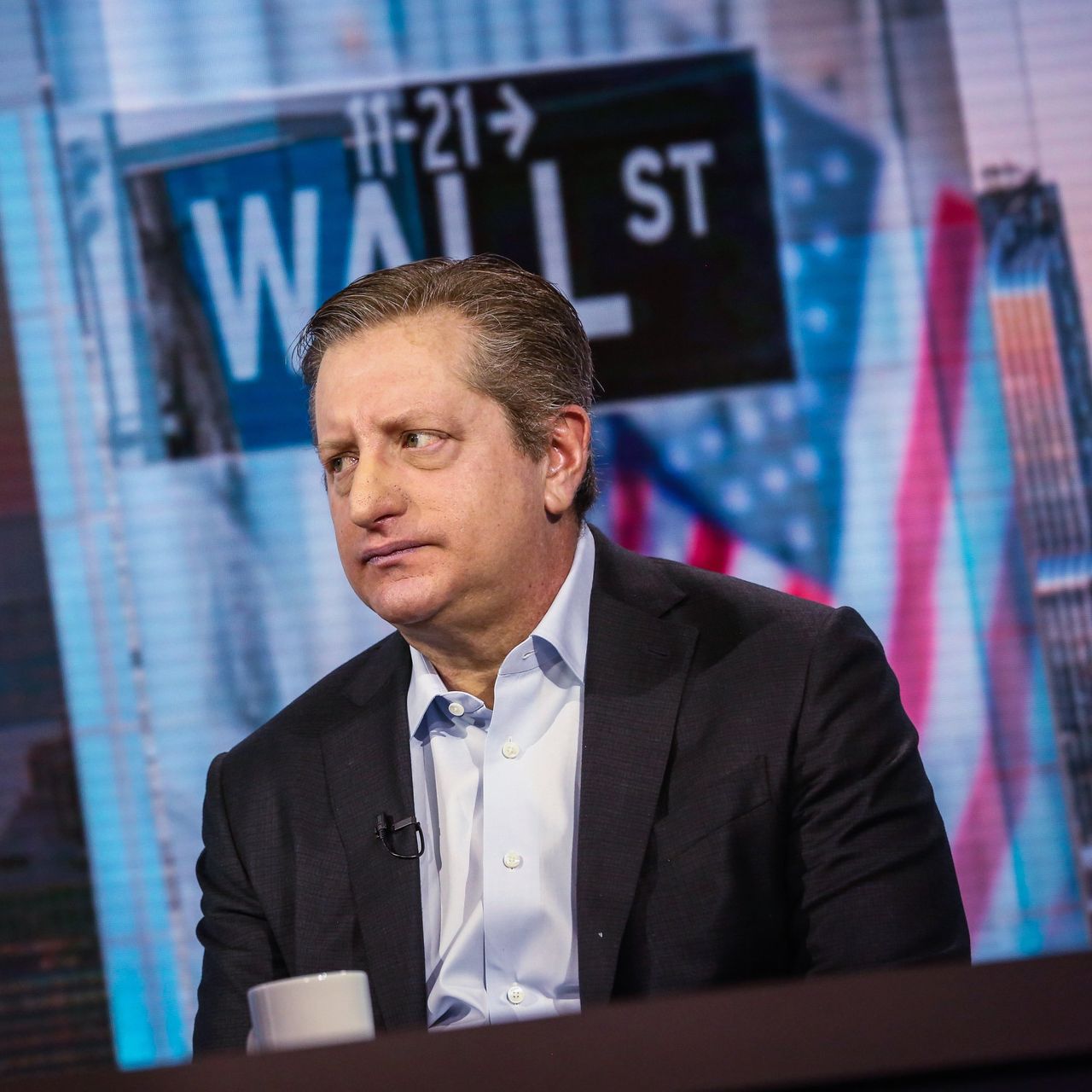
Steve Eisman
American investor
23
APPEARANCES
12
PODCASTS
Oct 19, 2026

speaker_1HOST
soup question, is it?

Steve EismanGUEST
So if you take a step back and someone said to me, why don't you analyze this software company? Forget about what it does.
Steve EismanGUEST
And if it turned out that the company had thousands of customers, That would be great.
Steve EismanGUEST
If it turned out the company only had two customers, you'd say, I don't want to invest in that because if something bad happens to one of those customers, this company is dead.
20 MINS LATER
speaker_1HOST
I

Steve EismanGUEST
So, uh, my thesis as to why they've done this is that, um, Dario Amodei and Sam Altman right now are petrified.
Steve EismanGUEST
So for those of you who don't know, token maxing was basically people who did, who run software and enterprises were ordered by their companies to use AI 24/7.
15 MINS LATER


Amber KanwarHOST
This is a message, though, that I think is starting to sink in, right? People need to understand the S&P is maybe not as diversified as it was five, 10 years ago.
Steve EismanGUEST
Um, then add on top of it companies that are not technically in InfoTech, but you would think of as being techy, which would be, uh, I'll just name a few.


Ed ElsonHOST
Would you not say that in 2008 you did have a, a, an understanding of what was priced into the market, specifically that there was a lot that, that wasn't priced in?
Steve EismanGUEST
They had, they had, like, this fixed income fund that blew up in May of 2007, and what that fund had done was invest in subprime paper.
Steve EismanGUEST
And I remember there was a sell side analyst who I was very friendly who, um, he worked at a firm that was very heavily involved in subprime paper.
Steve EismanGUEST
And so he asked me what was going on, and I said, "Well, why don't you just get in the elevator, go down two floors, and go talk to your own desk?" A- and what I realized was that w- w- w- the reason that the, that the equity people didn't know what was going on, because it wasn't an equity story.


Steve EismanGUEST
The way I sort of see the entire AI story is that Nvidia sells chips to hyperscalers.
Steve EismanGUEST
70% of hyperscaler AI revenue is from Anthropic and OpenAI, and that equates to about 25% to 35% of their cloud revenue.
Steve EismanGUEST
If you look at just Oracle, um, 50% of its $600 billion backlog is just from OpenAI.
Steve EismanGUEST
So in a sense, the way I think about this is the entire AI ecosystem food chain is dependent upon the future health and success of Anthropic and OpenAI.
Steve EismanGUEST
And, and by the way, that also means that the US economy hinges upon the f- the, the health and future success of Anthropic and OpenAI.
10 MINS LATER


Steve EismanGUEST
[laughs] Um, the hyperscalers are making lots of revenue, but their free cash flow is, has deteriorated dramatically.
Steve EismanGUEST
The issue is, to me, that s- something like 70% of all AI revenue from Microsoft, Amazon, Google, Oracle, is from Anthropic and OpenAI, period.
Steve EismanGUEST
And then if you dig down even further, it's 70% of AI revenue, it's 25 to 35% of their cloud revenue.
Steve EismanGUEST
So m- Michael and I both had the same thesis, which was underwriting, mortgage underwriting standards have deteriorated dramatically.
Steve EismanGUEST
And then what was good about the thesis was every single month, securitization data came out showing credit quality of hundreds upon... and, and billions upon billions of mortgages.
Steve EismanGUEST
And so you could see, you could actually see the deterioration every single month.
Steve EismanGUEST
You had a, you had a, a data set that was incredibly robust that came out every single month and said to you, "You're right" [laughs] that, that...

speaker_0UNKNOWN
Yeah.
Steve EismanGUEST
But, um, I mean, I just take for example, uh, you know, the investment banks all reported the numbers were really great.
Steve EismanGUEST
But, you know, why were they great? They were great because they're doing a lot of AI financing.
Steve EismanGUEST
So it's not like, you know, if you bought Goldman Sachs, you're diversifying your portfolio away from AI.
Steve EismanGUEST
Um, I, I, I think the biggest news is that a y- a year-- If we were sitting here literally a year ago, the entire debate on AI would be, "It's all, it's all great.
speaker_0UNKNOWN
How big?
Steve EismanGUEST
But, um, there's no question in my mind that, that the business has become capital intensive-No moats.
Steve EismanGUEST
And the other thing that's happening behind the scenes is that until now, um, companies have been charging for tokens way below the cost of tokens, and that's actually starting to change.
Steve EismanGUEST
And if you go on the Reddit boards, you're seeing that there's a lot of pushback.

Steve EismanGUEST
You know, private credit funds were originally created for institutional money, and that makes a lot of sense because you're talking about long-term illiquid loans, and institutions know what they're getting.
Steve EismanGUEST
They're getting a higher yield in exchange for less liquidity, and that's fine.
Steve EismanGUEST
Um, after private credit basically sold their funds to every single institution on planet Earth, they looked around and they say, "Okay, now who do we sell it to?" And they said, "Let's sell it to retail." The problem is that with retail, you have to create l- liquidity.
Steve EismanGUEST
So what they did was they created mostly what I like to call the illusion of liquidity or semi-liquidity.
9 MINS LATER
Ed ElsonHOST
I guess the q- the, the final question before I let you go here is, you know, i- if this occurs, if the credit cycle, it does occur here, uh, how bad would it be? Uh, what would that recessionary moment look like, and how much better would it be compared to, say, 2008?

Scott GallowayHOST
Are there any risks below the surface that you don't think people are-- risks that there's asymmetric, uh, downside in terms of the attention they're getting? What are the risks you see that people aren't pricing into the markets right now?
Steve EismanGUEST
I think the two biggest long-term risks to the market by far are related to AI and related to private equity and private credit.
Steve EismanGUEST
You know, in terms of AI, the risk that I don't think is realistic is, is some nightmare scenario where you're gonna wake up one day and everybody's gonna stop buying Nvidia chips.
Steve EismanGUEST
And the reason why that's not possible is just because, you know, last year, all of AI infrastructure spend was four hundred and fifty billion dollars, and this year, if you just look at Amazon, Google, Meta, and Microsoft, just those four is six hundred and fifty billion dollars.
8 MINS LATER
speaker_5HOST
[laughs]
Steve EismanGUEST
So in June, I was diagnosed with breast cancer, which breast cancer is not rare.
6 MINS LATER

Steve EismanGUEST
Um, and, um, they did as, about as good a job as they could do with one major mistake.
Steve EismanGUEST
I, I, I think the biggest mistake the Obama administration made was that nobody went to jail.
Steve EismanGUEST
The fraud, and this is the biggest fraud in human history, was this; when you're a Wall Street firm, you have a relationship with subprime lenders from whom you're buying mortgages to create a securitization.

Michael LewisHOST
I speak with many of the characters that I followed back when I was writing the book, people like the hedge fund manager Steve Eisman.
Steve EismanGUEST
But after the meeting, like, you know, guys thought, said, "What do you think?" I said, "What do I think? Somebody just told me how to make a gazillion dollars.

speaker_5HOST
Yep.
Steve EismanGUEST
For bank analysts, the, the, the, the, the real determination of how profitable you are is the return on assets, because that's all the money you're lending out.
Steve EismanGUEST
The leverage is just math, how much equity you have to have against those assets.
Steve EismanGUEST
So the first question you ask is, what's the return on assets of a bank? So Citigroup, which has underperformed for years, has a return on assets of less than 1%.
Steve EismanGUEST
JP Morgan, which is a great bank, has a return on assets that's probably something like one and a half, 1.6% of assets.
1 HR 5 MINS LATER
Dan IvascynSOUNDBITE_SPEAKER
am I going to ask

Dan NathanPANELIST
Steve, anywhere in the equity markets that you see unusual exuberance, just something that maybe it's a concentrated trade in and around AI or something that you'd really want to keep dry?

Becky QuickHOST
But they do think it kind of shrugs it off next year and the economy is back and growing at a normalized pace.
Steve EismanGUEST
So look, if we reach deals with all these countries and there's no trade war, I'm very positive in the U.S. economy long term, and I would be very positive on the markets.
Steve EismanGUEST
And it reminds me a little bit about all the books I've read in life about World War I.
speaker_0ADVERTISER
when the

Steve EismanGUEST
And I think th- what they all miss is that the entire f- like I hinted at before, the entire financial system of planet Earth runs on Treasuries.
Steve EismanGUEST
You've got a multi-trillion dollar repo market where banks lend to each other overnight.
Steve EismanGUEST
You're- you're a sovereign wealth fund in Norway and you need to park your money in some medium-term notes.
25 MINS LATER
Steve EismanGUEST
There's trillions upon trillions of repos happen in the banking system every single night on treasuries.
Steve EismanGUEST
So if there was an alternative to treasuries, I might be worried more about the deficit because I'd say, well, if we don't balance our budget, then people will sell our treasuries and buy something else.


Steve EismanGUEST
I think people need to realize that in terms of the negotiation position that the United States has versus other countries in terms of changing the terms of trade, the US is in the best negotiating position, by far.
Steve EismanGUEST
That's about the lowest percentage in the world of any significant country.Uh, if we go country by country, China officially is at 20%.
Steve EismanGUEST
That's if you Google it, but that's really not accurate because China ships so much to countries like Vietnam and Cambodia that skirt, uh, US tariffs.

Megyn KellyHOST
Mr. Eiseman says Mr. Clinton was right about GDP growth, but dead wrong about it would mean for American workers.

Steve EismanGUEST
And I made speeches all over the country to various kinds of organizations and to lots of universities.
Steve EismanGUEST
And I got to travel, lots of, lu- parts of this country that I had never really traveled before.
Steve EismanGUEST
And what I saw in the, uh, big parts of the South and the Midwest is that, you know, not only did people lose their jobs...... because of what Clinton had accomplished.

Steve EismanGUEST
So I, I think what President Trump is arguing, and you can disagree or, or agree, I have great sympathy for it, is that we really screwed a whole, half the country because of free trade.
Steve EismanGUEST
Now, it ushered in an enormous bull market with fits, you know, with some fits and starts, but generally since 1994 it's been a bull, a s- it's been a, a tremendous bull market where people like me and others of my socioeconomic class have made a lot of money.
Steve EismanGUEST
But the other half of the country got obliterated, and we didn't even retrain these people.
15 MINS LATER

Nicole LapinHOST
So what, what, in what ways do you think that this moment is similar or dissimilar to '08?
Steve EismanGUEST
I think part of the problem, I've been watching your show, everybody else's show, and people are getting on the show, they're almost in hysterics.
Steve EismanGUEST
And that was drummed into everybody's heads with such force that it's a paradigm that now you have a president of the United States who doesn't seem to accept that paradigm.
