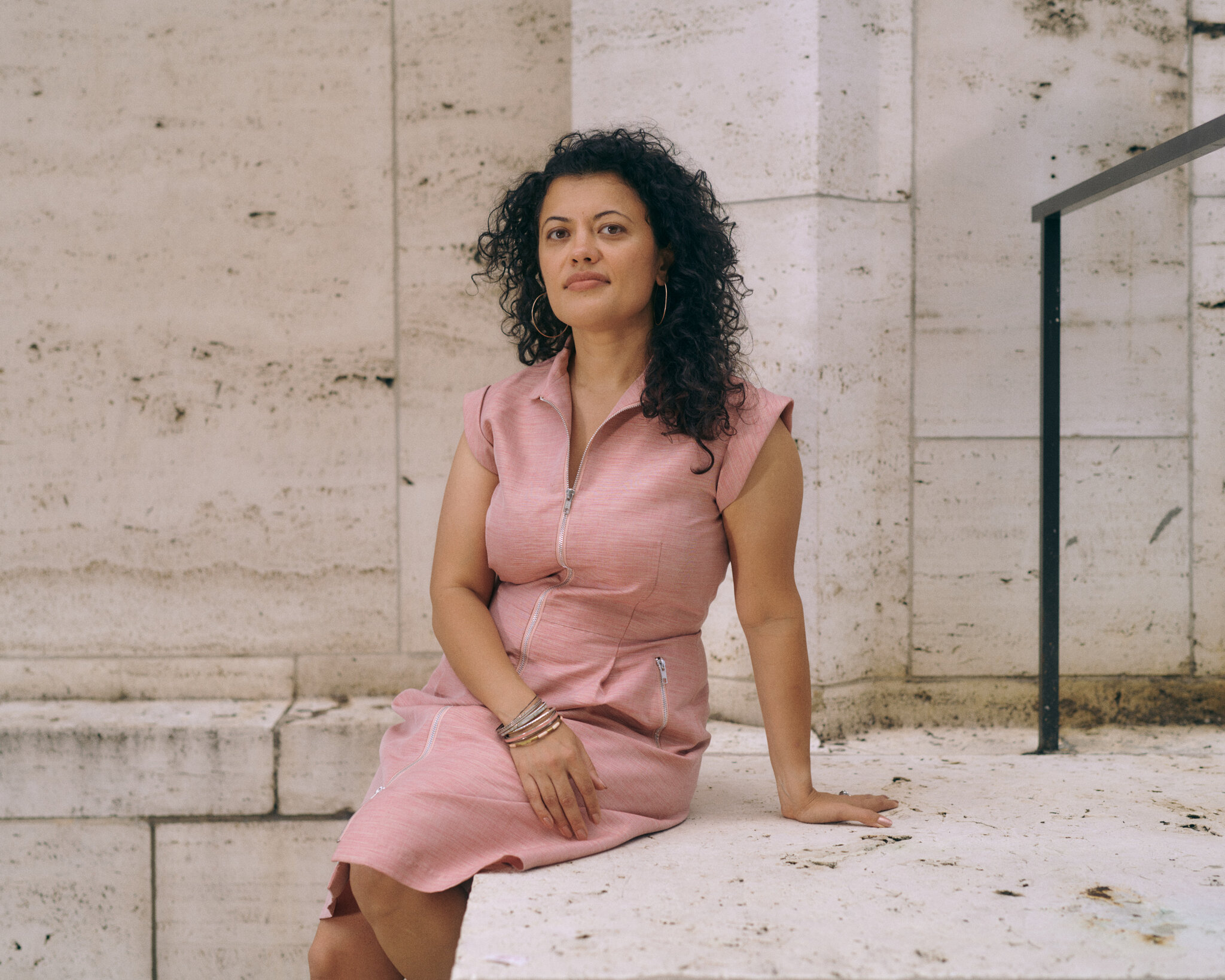
Shanta Thake
Theatre director
17
APPEARANCES
12
PODCASTS
Sep 16, 2026


Tiokasin GhosthorseGUEST
And this, it allows me to speak from that heart of that little boy and yet use words that are foreign to me in this English and try to convey what I was feeling then and throughout my life.

Shanta ThakeGUEST
You know, I grew up next to an amusement park, so I always like the sound of a roller coaster, actually.
Shanta ThakeGUEST
I worked at this amusement park holiday world for five or six years of my childhood, since I was 14 years old.
Shanta ThakeGUEST
So I have many, many sense memories of roller coaster, the sound of the clicking up of a roller coaster.
Shanta ThakeGUEST
The sights and sounds, the sense of acres of corn and soy fields and what that is like, the sound of a football game, a Friday night football game, which animated most of my high school life, marching bands, all of those like very, I think, they feel very uniquely American, but it certainly was a huge part of my childhood.

Aug 19 · 57m
Shanta ThakeGUEST
I think Lincoln Center is multiple stages, I think probably over three dozen stages across 16 acres.
Shanta ThakeGUEST
And then we have this beautiful plaza, you know, when you walk up or down Columbus Avenue to the west is these grand stairs that lead to this beautiful campus and that's the visual i think that most people have when they think of lincoln center is this beautiful fountain in the center and these three gorgeous buildings and it feels you know it's new york's biggest plaza and it feels very vibrant and beautiful and two things one is that in the summer we really take that plaza and we transform it into a dance floor so this idea of also interrupting what people's notion of Lincoln Center is because it can also feel quite severe and like a space that you have to, it's very aspirational, which is a great thing.
Shanta ThakeGUEST
You know, I think it holds this idea that something important is happening there, but And I think it also holds an idea that, oh, maybe I don't know the rules to what happens there.
8 MINS LATER
Aug 19 · 57m
Mia FunkHOST
Just give us a top five, a top 10 of these really fulfilling experiences where you learned a lot and then you grew as a community and collective.
Shanta ThakeGUEST
It also runs Shakespeare in the Park in Central Park, one of the first large free Shakespeare offerings in the country in that way, where people line up and see the best of acting and directing and in the middle of, of the park for free.
21 MINS LATER
Mia FunkHOST
We've scraped enough, and we can almost do it a- almost on our own [laughs] with maybe a overall director.

Shanta ThakeGUEST
And started working at Alvin Ailey, which is, of course, you know, one of the great dance companies of all time.
Shanta ThakeGUEST
And seeing the people, feeling this energy, and then, of course, seeing Alvin Ailey.
9 MINS LATER

Aug 19 · 21m
Mia FunkHOST
Sorry for the long question, but I'm just wondering what your reflections on this and how we get back to the, the deep waters of who we are and why we're here.
Shanta ThakeGUEST
I mean, that's so many beautiful noticings I, I feel like I'm gonna wanna spend some time with, too.
Shanta ThakeGUEST
[piano music plays] That is also one of the gifts of performance when you're seeing something with other people, is the gift of pause and contemplation.
Shanta ThakeGUEST
And sometimes, you know, when people go to see a symphony, I don't need or want or expect that they're gonna spend that time thinking about Dvorak.

Shanta ThakeGUEST
I think Lincoln Center is multiple stages, I think probably over three dozen stages across 16 acres.
Shanta ThakeGUEST
And then we have this beautiful plaza, you know, when you walk up or down Columbus Avenue to the west is these grand stairs that lead to this beautiful campus and that's the visual i think that most people have when they think of lincoln center is this beautiful fountain in the center and these three gorgeous buildings and it feels you know it's new york's biggest plaza and it feels very vibrant and beautiful and two things one is that in the summer we really take that plaza and we transform it into a dance floor so this idea of also interrupting what people's notion of Lincoln Center is because it can also feel quite severe and like a space that you have to, it's very aspirational, which is a great thing.
Shanta ThakeGUEST
You know, I think it holds this idea that something important is happening there, but And I think it also holds an idea that, oh, maybe I don't know the rules to what happens there.
8 MINS LATER

Shanta ThakeGUEST
I think Lincoln Center is multiple stages, I think probably over three dozen stages across 16 acres.
Shanta ThakeGUEST
And then we have this beautiful plaza, you know, when you walk up or down Columbus Avenue to the west is these grand stairs that lead to this beautiful campus and that's the visual i think that most people have when they think of lincoln center is this beautiful fountain in the center and these three gorgeous buildings and it feels you know it's new york's biggest plaza and it feels very vibrant and beautiful and two things one is that in the summer we really take that plaza and we transform it into a dance floor so this idea of also interrupting what people's notion of Lincoln Center is because it can also feel quite severe and like a space that you have to, it's very aspirational, which is a great thing.
Shanta ThakeGUEST
You know, I think it holds this idea that something important is happening there, but And I think it also holds an idea that, oh, maybe I don't know the rules to what happens there.
8 MINS LATER

Aug 19 · 21m
Mia FunkHOST
Sorry for the long question, but I'm just wondering what your reflections on this and how we get back to the, the deep waters of who we are and why we're here.
Shanta ThakeGUEST
I mean, that's so many beautiful noticings I, I feel like I'm gonna wanna spend some time with too.
Shanta ThakeGUEST
That is also one of the gifts of performance when you're seeing something with other people, is the gift of pause and contemplation.
Shanta ThakeGUEST
And sometimes, you know, when people go to see a symphony, I don't need or want or expect that they're gonna spend that time thinking about Dvořák.

Mia FunkHOST
Just give us a top five, a top 10 of these really fulfilling experiences where you learned a lot and then you grew as a community and collective.
Shanta ThakeGUEST
It also runs Shakespeare in the Park in Central Park, one of the first large free Shakespeare offerings in the country in that way, where people line up and see the best of acting and directing and in the middle of, of the park for free.
21 MINS LATER
Mia FunkHOST
We've scraped enough, and we can almost do it a- almost on our own with maybe a overall director.
Aug 14 · 18m
Shanta ThakeGUEST
[gentle music] Lincoln Center is multiple stages, I think probably over three dozen stages across 16 acres.
Shanta ThakeGUEST
And then we have this beautiful plaza that lead to this beautiful campus, and that's the visual I think that most people have when they think of Lincoln Center, is this beautiful fountain in the center, and these three gorgeous buildings.
Shanta ThakeGUEST
You know, it's New York's biggest plaza, and it feels very vibrant and beautiful.
Shanta ThakeGUEST
In the summer, we really take that plaza, and we transform it into a dance floor.
Shanta ThakeGUEST
So this idea of also interrupting what people's notion of Lincoln Center is because it's a space that it's very aspirational, which is a great thing.
Shanta ThakeGUEST
And the more that I've grown older, and I thought, "You know, oh, I've always felt outside," or grow up and you think, "Oh, I've never f- really fit in," and now I realize that almost everyone has that feeling at some point.

Mia FunkHOST
Just give us a top five, a top 10 of these really fulfilling experiences where you learned a lot, and then you grew as a community and collective.
Shanta ThakeGUEST
It also runs Shakespeare in the Park in Central Park, one of the first large free Shakespeare offerings in the country in that way, where people line up and see the best of acting and directing and in the middle of, of the park for free.
21 MINS LATER
Mia FunkHOST
We've scraped enough, and we can almost do it a- almost on our own [laughs] with maybe a overall director.

Mia FunkHOST
Just give us a top five, a top 10 of these really fulfilling experiences where you learned a lot and then you grew as a community and collective.
Shanta ThakeGUEST
It also runs Shakespeare in the Park in Central Park, one of the first large free Shakespeare offerings in the country in that way, where people line up and see the best of acting and directing and in the middle of, of the park for free.
21 MINS LATER
Mia FunkHOST
We've scraped enough, and we can almost do it a- almost on our own with maybe an overall director.
Shanta ThakeGUEST
[piano music] Lincoln Center is multiple stages, I think probably over three dozen stages across 16 acres.
Shanta ThakeGUEST
And then we have this beautiful plaza that lead to this beautiful campus, and that's the visual I think that most people have when they think of Lincoln Center, is this beautiful fountain in the center and these three gorgeous buildings.
Shanta ThakeGUEST
You know, it's New York's biggest plaza, and it feels very vibrant and beautiful.
Shanta ThakeGUEST
In the summer, we really take that plaza, and we transform it into a dance floor.
Shanta ThakeGUEST
So this idea of also interrupting what people's notion of Lincoln Center is because it's a space that it's very aspirational, which is a great thing.
Shanta ThakeGUEST
And the more that I've grown older, and I thought, "You know, oh, I've always felt outside" or grow up and you think, "Oh, I've never really fit in," and now I realize that almost everyone has that feeling at some point.
Shanta ThakeGUEST
And started working at Alvin Ailey, which is, of course, you know, one of the great dance companies of all time.
Shanta ThakeGUEST
And seeing the people, feeling this energy, and then, of course, seeing Alvin Ailey.
9 MINS LATER


Shanta ThakeGUEST
So [laughs] I pivoted, um, but I found myself, you know, very fortunately in, uh... at the Public Theater, which was a theater that I had grown up loving.
Shanta ThakeGUEST
I had seen Bring in the Noise, Bring in the Funk on Broadway, which really changed my entire perception of what theater was and what it could be.
Shanta ThakeGUEST
And I ended up getting a job in George Wolfe's office, who was the artistic director of the Public Theater at the time, and I was his, essentially his second assistant, uh, in a job that had been a full-time job and it was made an internship post-9/11 when really the entire economy was shrinking in the arts in particular.
Shanta ThakeGUEST
I loved being with George, um, who is just this massively creative figure in my life and in the world, and was creating at such an insane level, making all these beautiful projects that I got to see happen and come into life.


Monica HoltHOST
What does that mean in practice? How does that differ from maybe traditional arts leadership or empresario model of artistic directorship at organizations? And what does it mean for you in the day-to-day? The day-to-day...
Shanta ThakeGUEST
Well, I'll say another, something that I learned at Joe's Pub really was that, you know, Joe's Pub, we did about, you know, somewhere between 700 and 800 shows a year there.
Shanta ThakeGUEST
And there is no possible way for me to have programmed all of those shows because I don't have taste that's that expansive.
Shanta ThakeGUEST
I can't possibly be seeing that many shows in the city, all over in the singer-songwriter community, the jazz community, the classical community.
Shanta ThakeGUEST
And so you end up being in a different kind of conversation with your artist community, with the staff.
14 MINS LATER
Monica HoltHOST
Can you just talk us through a little bit about what that project is and the conversations that led to that moment of deciding to move forward?


Shanta ThakeGUEST
And what you get is the chance to walk in and see our festival orchestra of Lincoln Center and see that magnificent orchestra playing Beethoven.
Shanta ThakeGUEST
And then walk outside and hit the dance floor and be, and do a silent disco with another 1,400 of your favorite New Yorkers listening to hip hop, you know? So it's this, it's this chance to, of course, see people in your own community, but it's also a chance to break out of that and get to know new neighbors and new individuals that wouldn't cross your path normally.
Shanta ThakeGUEST
We're really trying to make sure that we're representing the different backgrounds, all of the folks that live in New York, and make sure there's a place for everybody to find themselves within the program.