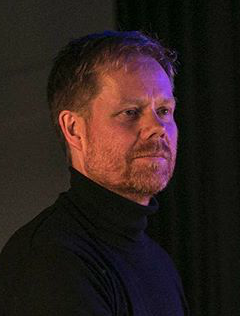
Max Richter
German-British composer and pianist
11
APPEARANCES
9
PODCASTS
Nov 8, 2026


Max RichterGUEST
Very cerebral, very kind of high modernist, serious classical music in the proper way that you're supposed to.
Max RichterGUEST
And he basically sort of picked apart my sort of edifice of academic justifications for writing this material and just talked about why I was even doing music, what was it for, really fundamental questions, which I hadn't really asked myself for a long time.
Max RichterGUEST
And so I came to the realization that really what I wanted to be doing is talking to people.

Max RichterGUEST
listen, difficult to, very cerebral, very kind of high modernist, serious classical music in the proper, you know, proper way that you're supposed to.
Max RichterGUEST
I went to study with Berio in Italy, who is a, you know, very eminent, brilliant man.
Max RichterGUEST
And he basically sort of picked apart my sort of edifice of academic justifications for writing this material and just talked about why I was even doing music, what was it for, really fundamental questions, which I hadn't really asked myself for a long time.
Max RichterGUEST
And so I came to the realization that really what I wanted to be doing is talking to people.

Max RichterGUEST
As a composer, I, in a way, sort of coexist with a continuous stream of music, which is just sort of happening to me mentally at all times.
Max RichterGUEST
Just at that time, you know, I thought these sort of musical fragments, ideas, melodies, but I thought of them like I thought of my other toys, just, you know, my building blocks or whatever it was, or my drawings, that I would just sort of play with these bits of music mentally.
Max RichterGUEST
And then, you know, later on, I found out that that was called composing and that you could do that as a thing to do.
Max RichterGUEST
I feel very lucky, in a way, to be able to make my life inhabiting this language, which I fell in love with in early childhood.

Max RichterGUEST
As a composer, I, in a way, sort of coexist with a continuous stream of music, which is just sort of happening to me mentally at all times.
Max RichterGUEST
Just at that time, you know, I thought these sort of musical fragments, ideas, melodies, but I thought of them like I thought of my other toys, just, you know, my building blocks or whatever it was, or my drawings, that I would just sort of play with these bits of music mentally.
Max RichterGUEST
And then, you know, later on, I found out that that was called composing and that you could do that as a thing to do.
Max RichterGUEST
I feel very lucky, in a way, to be able to make my life inhabiting this language, which I fell in love with in early childhood, and that I found a way to integrate that with music My other occupations, my other sort of life concerns, which are to do with really, you know, trying to interrogate the bigger questions of our lives.

Max RichterGUEST
Yeah, that piece came out of a series of conversations I had with Julia, my partner, I suppose more than 10 years ago now.
Max RichterGUEST
I was touring in the States and she was back in Berlin and listening in to concerts that were being live-streamed.
Max RichterGUEST
And obviously this was in the middle of the night for her, you know, sort of three or four in the morning.
Max RichterGUEST
And she said to me that, you know, this is a very specific and extraordinary state to be listening to a piece of music in.
Max RichterGUEST
You're emotionally very wide open and it affects you very deeply in a special way.
Max RichterGUEST
And we talked about that and that this might be an interesting space to explore as a piece of music, as an object in its own right.
Max RichterGUEST
As a composer, I, in a way, sort of coexist with a continuous stream of music, which is just sort of happening to me mentally at all times.
Max RichterGUEST
Just at that time, you know, I thought these sort of musical fragments, ideas, melodies, but I thought of them like I thought of my other toys, just, you know, my building blocks or whatever it was, or my drawings, that I would just sort of play with these bits of music mentally.
Max RichterGUEST
And then, you know, later on, I found out that that was called composing and that you could do that as a thing to do.
Max RichterGUEST
I feel very lucky, in a way, to be able to make my life inhabiting this language, which I fell in love with in early childhood.


Max RichterGUEST
And the first was that I had this feeling that there was a sort of, some sort of strange overlap between this sonic object and the experience of sunlight.
Max RichterGUEST
It wasn't exactly synesthesia, but there was this sort of, I experienced the music as kind of sunlight in a way.
Max RichterGUEST
And the other thing was that while I was listening, obviously followed the melodies and, you know, loved what was happening in the music.
Max RichterGUEST
But I also had this intuition that there was something else behind these sounds, a grammar, something which caused them to add up to more than just sounds.
7 MINS LATER

David George HaskellGUEST
But even in that connection, in that grief, there's a remembrance that I think is really important and really human.

Max RichterGUEST
I think what's interesting about young artists is you get the kind of, you know, like the first album is like all the things they've been thinking about for their entire life up to that moment.
Max RichterGUEST
Which is why the second album is so hard, right? Because it's like, oh, well, I've spent, you know, 18 years thinking about this music for the first album and now, 18 months later, I'm supposed to deliver another one.
Max RichterGUEST
I think with classical music, because it's composer-performers are not so much the norm, you know, it's more about just making the piece and And then the piece in a way lives its own life, actually.
1 HR 19 MINS LATER

Rick RubinHOST
That seems more like the alternative, not the thing you would be taught in school.

Laura EasonGUEST
But like everything, and like all technology, I think there's probably huge pros and huge cons.
Max RichterGUEST
I mean, I think the thing about AI is AI creative work made by these systems, um, I mean, obviously they're a variable quality.
Max RichterGUEST
Generally speaking, because of the way that over decades, I guess, you know, research dollars have gone into sort of speech recognition and language models, they're probably more advanced than the sort of compositional things.
Max RichterGUEST
But I think there's a bigger question because going back to this idea of other minds, creative work is about how a human being encounters reality and how they respond to that, and it's a way to share the experience of one human being with another human being.


Neil C. HughesHOST
... how did that philosophy completely change the way people think about capturing content?
Max RichterGUEST
You know, th- that, you already talk about, I would say the most convincing reasons for people to actually consider 360 camera, which is really that shoot first, frame later, which completely reverse the way of doing photography, right? Because you always had point and shoot cameras, so now you have shoot and, and frame later cameras.
Max RichterGUEST
And you know, at the beginning though, when we started to, to, with our first products like the Insta360 Nano, it was not very clear about this yet.
Max RichterGUEST
You know, we were in a space that, that was actually quite heated with competition.
18 MINS LATER
Neil C. HughesHOST
So how do you guys stay innov- innovative in such a, a crowded market without simply just reacting to what your competitors are doing? How do you continue to lead the way here?


Shahidha BariHOST
Is having set parameters in the way that you do frustrating or is it disciplining and helpful for you to have kind of a criteria almost for
Max RichterGUEST
I mean, for me, I really appreciate the particular properties of the different disciplines.
Max RichterGUEST
You know, a solo project, that's just me, you know, just trying to sort of follow the material.
Max RichterGUEST
A concert music commission, yeah, you know, if somebody commissions a... violin concerto, they're not going to want a brass band piece.
7 MINS LATER
Shahidha BariHOST
Tell us a little bit about how that project came about and what you wanted for it.