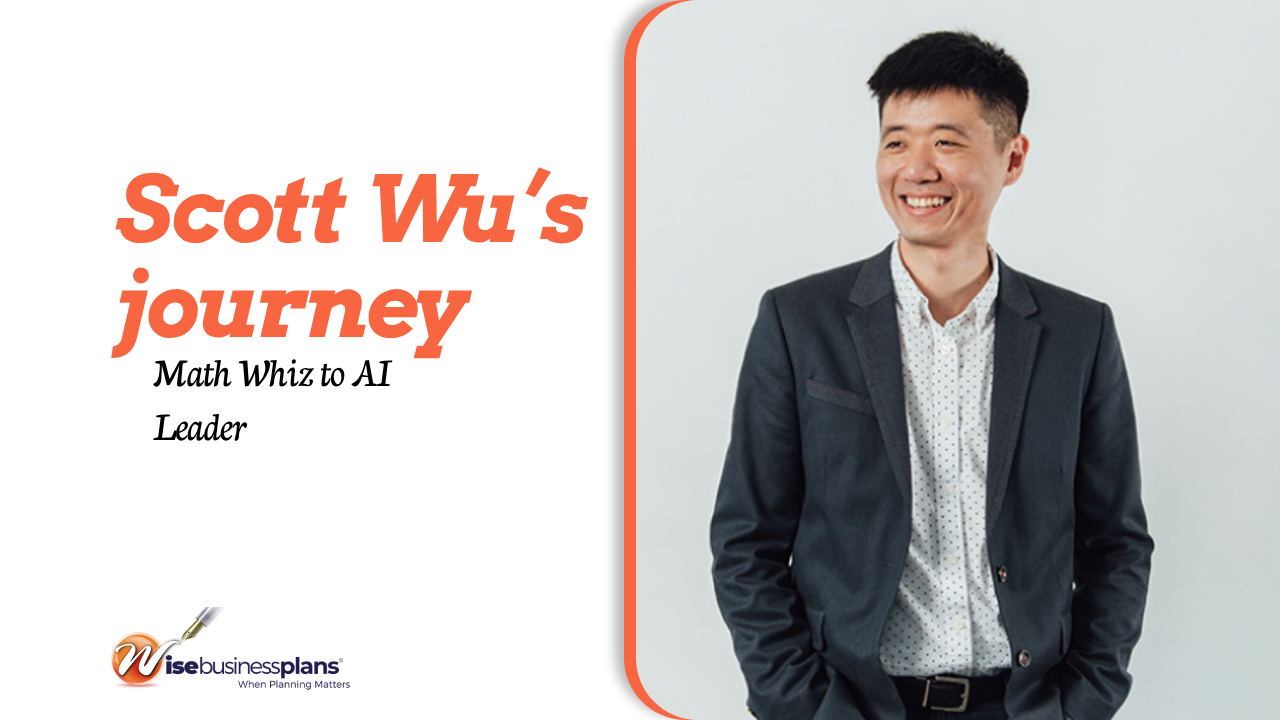
Scott Wu
Entrepreneur
13
APPEARANCES
7
PODCASTS
Sep 8, 2026


John CooganHOST
Have we always been in the orchestration era or is this a new era? Is this a new meaningful change? Are there new disciplines that need to be explored in the world of orchestration?

Scott WuGUEST
I think there's definitely a lot of like, what's the word? There's definitely a lot of kind of like, misconceptions, I think, out there about it.
Scott WuGUEST
I will say that there's a sense that people get of like, oh, if you just say the magic words to the model, it will suddenly become 15% smarter or something like that.
Scott WuGUEST
That's much less of a thing, especially now because the models are all RLs on very specific capabilities and these kinds of tasks and so on.
Scott WuGUEST
I think what is much more the case is if you, number one, if you go and bring in all of the context and the information and the systems that you need, for example, in coding, a very simple example is like, A model and an agent that can go and test its own code and click through its website by itself and then go and look and say, okay, that was right, that part was wrong, let me go fix that, is obviously going to be way more capable than something that can one-shot it on its own.
Scott WuGUEST
A model that can go, an agent that can go look up in the Datadog what went wrong in the logs is much more powerful than something that can't.
John CooganHOST
So that optimization problem, is that sticking around forever? Is that what you want to build the core of Cognition around, nailing that?

speaker_1HOST
So can you bring us back to that moment and how M&A has played a role in the growth?
Scott WuGUEST
[laughs] Um, but um, so we, um, and by the way, it's kind of topical because I think recently, you know, there's, there's similar news with Cursor.
Scott WuGUEST
Um, uh, you know, we at the time kind of heard this news roughly around the same time as everyone else that, hey, this company, Windsurf, which was building a really great IDE, um, that a lot of folks used, individuals, companies, and so on, um, the, some of the team was going to Google, right? And so there was kind of like a, you know, a acqui-hire deal almost where, where a number of the researchers on the team were going to Google, right? And there was a company kind of behind, um, that, uh, um, you know, that still had all the customers, that still had a ready-to-go go-to-market team, a lot of the platform engineering, the product itself, you know, all, all, all the details there.
Scott WuGUEST
Um, but obviously it kind of like, [laughs] you know, was, was trying to figure out what to do, and that was announced that Friday afternoon.
Scott WuGUEST
And, you know, we at Cog, at Cognition, we were talking about that internally, and we were kinda, kinda joking about it at first, and like, "Kinda interesting," like is there...
19 MINS LATER


Scott WuGUEST
So now we're gonna get into a philosophical discussion of what it means to be a programmer or a software engineer, right? And I, I think like, you know, if you go all the way back it's, you know, there, there was a time where programming was like using the vacuum tubes, like plugging all those in and having it do the, the machine, do the arithmetic, right? Like the ENIAC was, um, you know, when the first, in some sense, the, the first computer out there, although it's obviously very different.
Scott WuGUEST
Or it would've been like, you know, filling out the punch cards and like setting up the, or, or writing, you know, the, like putting down assembly, you know, or writing in Basic or something, right? So, so we've gone through a lot of generations already, is my point.
Scott WuGUEST
And what does it look like, you know, going forward? When you talk about programming, all it really comes down to is like, how do you tell your computer what to do? And like every single piece of software that you use, if you're using, you know, Instagram or TikTok or YouTube or whatever, like that's a piece of software that somebody or like some, you know, in these cases, some pretty big teams of engineers came together and thought through all these details of, "Okay, here's what I want it to do.
Scott WuGUEST
Here's how I wanna architect it." Every single little decision obviously was made by somebody, but the, the computer itself is then executing it accordingly to, to what the wishes of its creators was, right? And I think what we'll start to see is that abstraction will continue to climb, right? And like, you know, we kinda see this already, like at this point, you don't need to know a programming language.
22 MINS LATER

Scott WuGUEST
First of all, um, you know, the growth that we've seen in the business has been incredible and, and I think really across the board what we're seeing is that AI is doing real work at real companies everywhere.
Scott WuGUEST
Um, and, you know, every company in 2026 is a software company, and so we work with, for example, the t- top five health insurers in the United States.
Ed LudlowHOST
... you know, how do you see that changing the field? Um, data is so critically important, right? And, and who you are beholden to.
Scott WuGUEST
Um, and, and so I, I think there's like, um, there, there's one thing when prices go down because, you know, the demand's just not there anymore, and obviously you can get into weird cycles, and all that can happen.
Scott WuGUEST
But it's a totally different thing if prices go down because we've just gotten way better at supplying things, and that's when you get Jevons Paradox, and that's when you get, you know, just mass consumer surplus, and so on.
Scott WuGUEST
Um, and so at a, at a high level, I know, I mean, I think there's, a- a- all the customers that we work with, you know, banks, and health insurers, and private equity, and, and so on, I mean, the- they're, um, they're, they're obviously like a lot of these base migration, modernization projects that they can go and take on immediately.
Scott WuGUEST
But the very next thing that they say is then, like, "Okay, how do I pull the rest of my roadmap forward," right? "How do I build even more and get even more out to people?" Um-
Scott WuGUEST
I think-... [chuckles] I think there's a lot of value in reading code now, and certainly at Cognition, we still do a lot of reading a- at the code, even if we are not the ones like, you know, writing the next line of code, because instead we, we write the English prompt for that.
JohnHOST
(laughs)
Scott WuGUEST
On the weekend that we did the Windsurf deal, we, um ...Obviously, I mean, it, it was a pretty substantial commitment from us in terms of Windsurf.
Scott WuGUEST
We- we- we explicitly needed board approval, but also, you know, wanted to give our investors an update and kind of hear what they thought and so on.
Scott WuGUEST
And so, you know, we were on with the founder's fund team, with Napoleon and Peter, and, and getting their thoughts on, on what they thought makes sense.
JohnHOST
Yep.
JordiHOST
But, uh, are we there yet? Is it still a ways out? What do you think?
Scott WuGUEST
I, I think in general, I think async will continue on as a paradigm, even as the models get faster and faster.
Scott WuGUEST
One of the reasons that it, it should, by the way, is because there are a lot of real world, uh, thresholds that start to matter.
Scott WuGUEST
Like at some point, you're actually spending less time on token generation, um, in the Devin life cycle, and you're spending more time on every time Devin runs the command to go install packages or Devin running the unit tests or like Devin pulling up the front end by itself or, or, or, or things like that, that obviously take real world time, right? Um, I think we are honestly getting closer and closer to that threshold.
Scott WuGUEST
But yeah, so, so long story short, I, I think like, um, in the asynchronous mode, uh, yeah, these things will get faster.
Scott WuGUEST
You know, we'll see those gains where we'll be able to spend a lot more time, for example, thinking about a single, um, um, problem relative to the amount of like real world clock time that gets spent.

Scott WuGUEST
I'm Scott from Cognition.AI, and I'm gonna tell you guys a little bit about, um, you know, the, the early makings of Devin.
Scott WuGUEST
We're still super, super early on, and, and also a little bit about kind of the space as a whole and, and what's coming next.
Scott WuGUEST
Uh, it sounds like some of you guys have, have already seen some of the videos, but I brought a nice custom one here for the World's Fair today, um, so I'll just show that quickly.
1 HR 51 MINS LATER
Kevin HouGUEST
I hope that you all learned something about how we're building at Windsurf, and enjoy the rest of the conference.
speaker_3UNKNOWN
(laughing)
1 HR 20 MINS LATER


Scott WuGUEST
The, the answer I would give today, which is, which is, uh, I mean, the biggest thing that we've been thinking about in the last few days since this deal, is really in figuring out what is that combined experience of IDE and agent, because I think there really is something here.
Scott WuGUEST
To what we said earlier, you know, I think years from now, all these systems will look so different, you know, and, and we may not even have the same terms for them.
Scott WuGUEST
But I think in, in, in, in the immediate future, I, I think both IDEs and agents will be an important part of a developer's workflow.
Scott WuGUEST
And you can imagine all sorts of things of, "Hey, I wanna go and plan out a task in the IDE.
Scott WuGUEST
I wanna be able to use the intelligence and the retrieval and, you know, dev and search and, you know, read on the wiki to understand exactly what, what decisions I need to make or what parts of the code this is gonna touch and, and what things I need to plan out.
JordyHOST
Mm-hmm.
Scott WuGUEST
Um, a- and, and it's an amazing product and there's a lot to do and a lot to build together.
Scott WuGUEST
And, and so I think as we started talking about it, we found that there were just so many natural ways to partner.
Scott WuGUEST
You know, uh, uh, both in terms of obviously the customers and, and customers would love, you know, are, are, are super excited to have a solution that, that basically combines both the IDE and the agent.
Scott WuGUEST
Um, a- and, and, and then the technology itself, which is, you know, I, I think we at De- at Devin, you know, building Devin have always focused on this kind of remote background agent as the thing that we've kind of done.
Scott WuGUEST
Um, whereas, uh, uh, you know, Windsurf is, is really focused on the agentic IDE.
Scott WuGUEST
And, and I think there's a lot of kind of things that play in there, um, all the way down again to, to the kind of the, the fit of the, the, the relative teams and the team strengths and so on, so-
JohnHOST
Yup.
Scott WuGUEST
It's been the core bet of our entire company, basically, for the last year and a half.
JohnHOST
Mm-hmm.


Lenny RachitskyHOST
What's something that you guys debated a lot as you were des- designing and building Devin?
Scott WuGUEST
You know, one I would say is, um, yeah, a question of I'll, I'll call it, like, how opinionated we should be.
Scott WuGUEST
You know, we had the workflows that we used to Devin for, which was very much as you can see, for, you know, basically integrating to our Slack and GitHub and making pull requests, uh, for us in our repos, responding to issue reports or, or things like that.
Scott WuGUEST
And naturally, you know, we've, we've had certainly a lot of other, you know, kind of different things that have come up that folks have tried.
Scott WuGUEST
I mean, uh, we have, we have folks who, like, order their DoorDash with Devin, for example, even.
Scott WuGUEST
[chuckles] And we have folks who, who, who certainly, you know, a, a lot of people who, who are kind of building cool, cool websites from scratch or, or, or working on things like that.
25 MINS LATER
Lenny RachitskyHOST
What's maybe the most counterintuitive thing you've learned so far building Devon that maybe goes against startup wisdom, common startup wisdom?