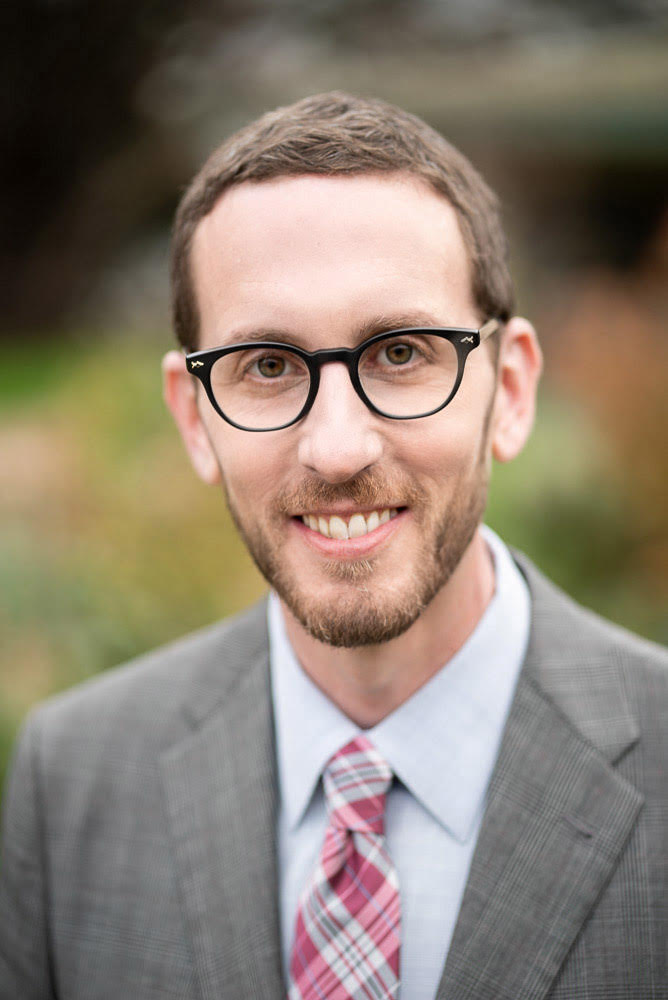
Scott Wiener
Member of the California State Senate
10
APPEARANCES
10
PODCASTS
Jul 8, 2026

Michael LevyHOST
At its core, and I don't know if you would refer to yourself as an abundance movement politician or not, but at its core, what problem is the abundance movement or you are trying to solve when it comes to housing?

Scott WienerGUEST
I mean, it really, and I got involved in pro-housing advocacy long before the word abundance was used and even before the word YIMBY was created.
Scott WienerGUEST
And for me, we have all these words, abundance, YIMBY, zoning, CEQA, which is our environmental law that gets used to block housing, permits, all these technical words and terms.
Scott WienerGUEST
But fundamentally, it's about human beings and whether people can afford housing, whether people have access to housing, whether people can live near where they work, whether young people can live in communities where they grew up.
Scott WienerGUEST
Whether teachers can live near where they teach, whether folks who are very low income have an apartment or are living on the street or in a homeless shelter, it's very much about human beings.
25 MINS LATER
Michael LevyHOST
Can you talk a little bit about why you were interested so early in AI policy? What problems were you trying to solve at the time? And why did you and the governor part ways on the enactment of the legislature?


Clarissa KripkeGUEST
What do you think the impact of HR one is going to be on access to health care for people with developmental disabilities?
Scott WienerGUEST
It's devastating for anyone on Medicaid, what we call Medi-Cal in California, and 40% of Californians are on Medi-Cal.
Scott WienerGUEST
And we know that many are going to lose their coverage because of hr1 which specifically targeted uh medicaid nationally um and that of course hits folks with developmentally both developmental disabilities particularly hard uh because uh so many are do rely on medical uh for their health care um and because it one of the really evil things that hr1 did was to put all sorts of administrative and paperwork obstacles in front of people just to be able to stay on.
Scott WienerGUEST
And so for folks who are already have challenges in their lives and so many things to deal with, this is one more thing.
Scott WienerGUEST
In addition, they targeted the Affordable Care Act, what we call Covered California in California.
Clarissa KripkeGUEST
um i other other people who struggle to access health care are transgender people autism is the most common developmental disability and transgender and non-binary people are up to six times more likely to be autistic and 10 to 25 percent of autistic people are transgender Can you talk a little bit about efforts in California to ensure access to treatment for transgender people?

Clarissa KripkeMODERATOR
Yes, I think with HR1 where California could lose $30 billion a year in funding for Medi-Cal every year, what do you think the impact of HR1 is going to be on access to healthcare for people with developmental disabilities?
Scott WienerGUEST
It's devastating for anyone on Medicaid, on Medi-Cal in California, and 40% of Californians are on Medi-Cal.
Scott WienerGUEST
And we know that many are going to lose their coverage because of hr1 which specifically targeted uh medicaid nationally and that of course hits folks with developmentally with developmental disabilities particularly hard uh because uh so many are do rely on medical uh for their health care um and because it one of the really evil things that hr1 did was to put all sorts of administrative and paperwork obstacles in front of people just to be able to stay on.
Scott WienerGUEST
And so for folks who are already have challenges in their lives and so many things to deal with, this is one more thing.
Scott WienerGUEST
In addition, they targeted the Affordable Care Act, what we call Covered California in California.
Clarissa KripkeMODERATOR
um i other other people who struggle to access health care are transgender people autism is the most common developmental disability and transgender and non-binary people are up to six times more likely to be autistic and 10 to 25 percent of autistic people are transgender Can you talk a little bit about efforts in California to ensure access to treatment for transgender people?
Clarissa KripkeGUEST
What do you think the impact of HR one is going to be on access to health care for people with developmental disabilities?
Scott WienerGUEST
It's devastating for anyone on Medicaid, what we call Medi-Cal in California, and 40% of Californians are on Medi-Cal.
Scott WienerGUEST
And we know that many are going to lose their coverage because of hr1 which specifically targeted uh medicaid nationally um and that of course hits folks with developmentally both developmental disabilities particularly hard uh because uh so many are do rely on medical uh for their health care um and because it one of the really evil things that hr1 did was to put all sorts of administrative and paperwork obstacles in front of people just to be able to stay on.
Scott WienerGUEST
And so for folks who are already have challenges in their lives and so many things to deal with, this is one more thing.
Scott WienerGUEST
In addition, they targeted the Affordable Care Act, what we call Covered California in California.
Clarissa KripkeGUEST
um i other other people who struggle to access health care are transgender people autism is the most common developmental disability and transgender and non-binary people are up to six times more likely to be autistic and 10 to 25 percent of autistic people are transgender Can you talk a little bit about efforts in California to ensure access to treatment for transgender people?


Major GarrettHOST
Scott, was what happened to you on Friday protected First Amendment speech or something menacing and therefore possibly criminal?
Scott WienerGUEST
We have a very robust democracy, and people do not hesitate to tell me when they agree or disagree with me.
Major GarrettHOST
Very quickly, do you believe the Netanyahu government, the Benjamin Netanyahu government, ought to take as a cautionary tale what you've gone through, the election results in New York, and other fissures within the Democratic Party, that something is happening in America to the conversation about Israel and Judaism writ large that they should take heed of?


Scott WienerGUEST
I have no problem with anyone, uh, talking to me about my views or asking me questions or challenging me.
Scott WienerGUEST
Uh, but when you start physically harassing and intimidating, uh, someone, putting hands on them, trying to drive them out of an event, that goes way beyond First Amendment.


Mika BrzezinskiHOST
Can you add more to, um, what happened with this incident beyond what we saw on video?
Scott WienerGUEST
Uh, first of all, I want to say, uh, the rest of the Pride weekend was amazing, uh, joyous, inspiring, uh, just celebrating our community.
Scott WienerGUEST
Uh, and, you know, I, I've attended the Trans March, uh, for 22 years, going back to 2004 when it first started, when it was much, much smaller, uh, than it is today, and I'm really proud of, uh, the work that I've done in collaboration, uh, with trans people, uh, to pass laws, to obtain funding, uh, [clears throat] in the budget to support the community.
Scott WienerGUEST
Uh, and what happened, uh, the harassment, uh, that I experienced, um, at the Trans March on Friday, uh, was not representative of, uh, most attendees, uh, at that, uh, at that event or most people in the trans, uh, community.


Greg DaltonHOST
Do you agree California should big build things such as high-speed rail and other ambitious infrastructure projects?
Scott WienerGUEST
We are not going to solve climate change without building many things, without building a l- a, an enormous amount of sustainably located housing, without building massive transit infrastructure, uh, without building an enormous amount of clean energy.
Scott WienerGUEST
And by the way, Texas and Florida both generate more clean energy than California.
Scott WienerGUEST
Um, and so we have to-- We- building is a critical part of solving climate change.
Scott WienerGUEST
Uh, I am someone who, if you look at my, like, ratings, 'cause legislators all get scored by a lot of different groups about our votes and the work we do and the bills we author.
Scott WienerGUEST
Um, I work very, very closely, uh, with the leading, like, en- en- environmental organizations, and I have high scores from all the environmental groups.
8 MINS LATER
Greg DaltonHOST
Senator Wiener, do you agree with Leon Panetta on one-party rule, and what will you do to work with Republicans?

34 MINS LATER

Derek ThompsonHOST
your style of and theory of persuasion, how you bring people along to a cause where they might not initially be inclined to be your compatriot.


Ari MelberHOST
Uh, what does the bill do and why was it important to prioritize, uh, housing and affordability right now?
Scott WienerGUEST
Well, California, we have very strong environmental laws and that's not changing.
Scott WienerGUEST
Uh, this particular law called the California Environmental Quality Act, or CEQA, in part protects the environment and that will remain, but it is also a law that was, uh, has been used by NIMBYs and others to try to block projects having nothing to do with the environment, like blocking-... housing right by a train station, or blocking a childcare center, or a food bank, or bike lanes.
Scott WienerGUEST
So what I- what we want to do is make sure we're protecting the environment, but not allowing people to abuse environmental laws to kill projects like housing or childcare centers, which we need to make people's lives more affordable.
Scott WienerGUEST
Yeah, I think what happened was, um, there- back in the day, 50, 60, 75 years ago, there were some abuses.