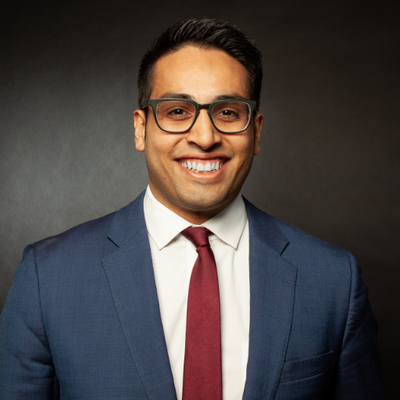
Saagar Enjeti
American journalist
24
APPEARANCES
15
PODCASTS
Sep 3, 2026

Saagar EnjetiGUEST
And they get a set fee that they take off, and so that's their similar difference, let's say, between the prediction market and the actual gambling company.
Saagar EnjetiGUEST
So when you were to speak to them, I'm sure that they would talk a lot about derivatives and event contracts.
9 MINS LATER


Saagar EnjetiGUEST
I mean, I would say this is, like, the great disappointment, political disappointment of my life, as I said, was I was inspired To get involved in politics because of Iraq.
Saagar EnjetiGUEST
And, you know, the enti- the, uh, centerpiece of the 2024 campaign, and it's fair for people to say that you were fooled, was no more foreign wars.
Saagar EnjetiGUEST
I mean, the vice president, as you said, wrote an op-ed endorsing Trump, "Trump's best legacy, no new wars." Stephen Miller famously said, "Kamala will send your sons to war." A significant contingent in the 2024 campaign was, "We are not going to war with Iran." And so to live in a reality where Trump dastardly and disgracefully attacks Iran under the cover of negotiations twice, kills 168 schoolgirls, you know, delivers the greatest strategic disaster to the United States potentially either since Vietnam or eclipsing it, if you talk to one of our guests, Professor Robert Pape, to live in that reality with those people who I really did trust, and I'm saying this on a personal level, I know many of them.
44 MINS LATER


Saagar EnjetiGUEST
You know, most people at this point have turned against NIMBY i, in terms of the general populace.
Saagar EnjetiGUEST
It gets super complicated when we get down to the local level, but this is one of those last bastions where a large perc- percentage of the public seems really to be against where the president is here on the issue.
15 MINS LATER

Saagar EnjetiGUEST
... and of course, we know for certain, uh, that h-home acquisition, beyond just wealth in and of itself, is one of the bedrock, uh, principles in order... is one of the bedrock foundations if we're able to build your overall family life.
Saagar EnjetiGUEST
It doesn't violate the same equal protection problems that I have with the explicit senior gating.
Saagar EnjetiGUEST
But what we're seeing, for example, in a State of Florida, a state which has no income tax, and w- now which wants to effectively abolish property tax for all households, is that nobody is simultaneously saying that we need to cut services.
Saagar EnjetiGUEST
And so I'll point to, uh, and I, and I don't think most people actually would even support that, seniors especially, who are predominantly the people who support this policy.
12 MINS LATER

Ryan GirduskyHOST
I get you're, she's part of the administration, she's gotta defend it, but it's something so, I don't know, deaf, like when you say something like that.
Saagar EnjetiGUEST
Like, there's a symbiosis of we actually get rich off this stuff, so we're okay with drilling for oil.
Saagar EnjetiGUEST
But, you know, w- there has been enough stories also even there where people go bust as a result, and then there's a lot of an- animosity towards the oil industry, especially pre-shale revolution after things petered out.
Saagar EnjetiGUEST
I've, I've just seen this go politically in a lot of interesting directions, enough to see that, A, something is happening, B is that the tide is o- not only just turned, but I think coming very explicitly.
Saagar EnjetiGUEST
And if, and what I would really advocate for is a genuine democratic process-

Saagar EnjetiGUEST
You know, Bloomberg reported just this morning, Iranian ballistic missile firing has actually remained constant, uh, through the war, especially when you match it.
Saagar EnjetiGUEST
Our strikes are actually reducing as well compared to the original first days of the war.
Saagar EnjetiGUEST
And I really want people to remi- I want people to put in some historical context of what's happening here.

Megyn KellyHOST
... how entrenched they are, how many of them there are? How are we gonna get them to put down their guns? Who exactly is gonna make them do it? What members of the regime have yet to fall, and how are we gonna take them out? Like, it, it gets a lot more complicated.


Saagar EnjetiGUEST
So it's shocking, uh, to actually see our sovereignty be sacrificed in this regard, specifically whenever it comes to Israeli interests.
40 MINS LATER


Saagar EnjetiGUEST
And then the third time-- So imagine the conventional wisdom every single time is like, "You can't do this, you can't do this, you can't do this," right? And the same generals who have cautioned you before, advisors, others, are like, "Hey, sir, this one is really different." Well, his recency bias is such, especially with Venezuela, that...
12 MINS LATER

Tucker CarlsonHOST
Like, there's n- if, if Trump isn't gonna save us from a system that kinda hates us, then what's the option?
Saagar EnjetiGUEST
So let me just lay out the case already of the damage that has been wrought on the United States.
5 MINS LATER
Unknown podcast
Epstein Files Special: Prince Andrew Arrested, Global Network, Mythology, Reid Hoffman Files
Feb 20 · 1h 47m

David SacksHOST
Who do you think this guy was? And ultimately, you know, at a 30,000 foot level, what do you think is going on here? What is this Epstein story really about? And then, Michael, I want to go to you on the same question.
Saagar EnjetiGUEST
I mean, I do think that there is a very low IQ, unfortunate, you know, explosion of accusations that are out there.
Saagar EnjetiGUEST
in the way that i describe it i think that jeffrey epstein was somebody who arose under very suspicious conditions uh in the 1980s potentially involving iran contra knowledge specifically with arms traffickers like adnan khashoggi and douglas lease stephen hoffenberg as well and that these black market money laundering tax evasion strategies were honed over a period which eventually ensnared various people like leslie wexner and many other multi billionaires and that at the very same time he also had you know his sexual proclivities which i think at this point were well known and that those became and became useful his money laundering specific uh dirt duties and knowledge and usefulness let's say to the cia to various other intelligence assets became a very useful part of the nexus in the post-cold war environment and that at the time it was also socially known for a lot of epstein associates that he had this bizarre practice of often you know seeking out massages which in some cases they are saying involving underage girls and so To say that he was running a vast compromise operation, I think, ascribes too much intention to what's really happening here.
Saagar EnjetiGUEST
And the reason why I'm being intentional in my language is that what he clearly was doing was recruiting and running this like vast massage scheme, also involving Ghislaine Maxwell and all across the world, Russian and Eastern European women, but also that this behavior was tolerated in some cases seen by a vast number of the global elite.
13 MINS LATER
David SacksHOST
What did we learn from that specifically about how Epstein got his start? I do think that there are these questions about, again, who this guy was, how did he accumulate hundreds of millions of dollars so early in his career, how did he seem to obtain all these different connections specifically to the intelligence world? Did any of that get resolved? And what's your take on that?

David SacksHOST
Who do you think this guy was, and ultimately, you know, at a 30,000-foot level, what do you think is going on here? What is this Epstein story really about? And then, Michael, I wanna go to you with the same question.
Saagar EnjetiGUEST
I mean, I do think that there is a very low IQ, unfortunate, you know, explosion of, uh, accusations that are out there, and I wanna be very responsible in the way that I describe it.
Saagar EnjetiGUEST
I think that Jeffrey Epstein was somebody who arose under very suspicious conditions, uh, in the 1980s, potentially involving Iran-Contra knowledge, specifically with arms traffickers, like Adnan Khashoggi and Douglas Lease, Steven Hoffenberg as well, and that these black market, money-laundering, tax evasion strategies were honed over a period which eventually ens- ensnared various people, like Leslie Wexner and many other multi-billionaires.
Saagar EnjetiGUEST
And that at the very same time, he also had, you know, his sexual proclivities, which I think at this point were well-known, and that those became... and became useful.
Saagar EnjetiGUEST
His money-laundering-specific, uh, dir- duties and knowledge and usefulness, let's say, to the CIA, to various other intelligence assets, became a very useful part of the nexus in the post-Cold War environment, and that at the time, it was also socially known for a lot of Epstein associates that he had this bizarre practice of often, you know, seeking out massages, which in some cases, they are saying involving underage girls.
Saagar EnjetiGUEST
And so to say that he was running a vast kompromat operation, I think, ascribes too much intention to what's really happening here.
13 MINS LATER
David SacksHOST
What did we learn from that, specifically about how Epstein got his start? I do think that there are these questions about, again, who this guy was, how did he accumulate hundreds of millions of dollars so early in his career? How did he seem to, um, obtain all these different, uh, connections, specifically to the intelligence world? Did any of that get resolved, and w- what- what's your take on that?
Saagar EnjetiGUEST
You know, what's interesting, what I really love about the American public, is they're taking this issue seriously.
Saagar EnjetiGUEST
So a couple of cou- of people showing up to the city council were like, "Hey, I'm reading articles about how the Chinese are able to do this without a lot- with less power and resources.
Saagar EnjetiGUEST
So how do we know that you're even gonna be sticking around here? Like, you're gonna build this jug- massive conglomerate, and then there'll be a sea change in the technology, and you're just gonna abandon us immediately with all of your claims?" Not to mention the power generation issue, which is massively controversial-
6 MINS LATER
JordyHOST
Ah, and, and so I-
Saagar EnjetiGUEST
You know, because right now, the builders will tell you that they are fully capable of building a smaller, cheaper type of house, but that that's not where the market is in terms of the people who have money.
Saagar EnjetiGUEST
Part of the reason that we've seen the rise of big mansions and larger houses is because that's the demand side problem, where a lot of people who have more money are the people who are willing to buy these bigger, more palatial homes with lots of experiences in it.


Saagar EnjetiGUEST
... which they can now drag on for a long period, let's say up to three years, until Donald Trump is out of office, to make sure that none of the other information comes to light.
Saagar EnjetiGUEST
So even the Files Transparency Act gave them outs, but even within the outs that they had, they had multiple cover-ups, right? So one of the more egregious example is, uh, Les Wexner.
Saagar EnjetiGUEST
So this is the deputy attorney general, uh, Todd Blanche, and here, Thomas Massey called him out, where he found a redacted piece inside of the file labeled "co-conspirator." Thomas Massey says, "This is a well-known retired CEO.
Saagar EnjetiGUEST
DOJ should un-redact this." Why did they redact it? Let's go to the DOJ's explanation.
2 HRS 47 MINS LATER
speaker_14UNKNOWN
This is so weird

BlakeHOST
Take, take a little victory lap here for a second.
Saagar EnjetiGUEST
Uh, look, it's not a victory lap, uh, because a victory lap for me is a tragedy for our country.
Saagar EnjetiGUEST
We have, you know, millions, tens of millions, almost 5% of the US population, a significant part of our adult population, which is using marijuana, high-potency marijuana, on a daily basis.
19 MINS LATER
BlakeHOST
The ultimate con artist.

Saagar EnjetiGUEST
Look, it's not a victory lap because a victory lap for me is a tragedy for our country.
Saagar EnjetiGUEST
We have, you know, millions, tens of millions, almost five percent of the U.S. population, a significant part of our adult population, which is using marijuana, high potency marijuana on a daily basis.

Blake NeffHOST
Do you think those stories are authentic or do you think they're confusing maybe other medical effects with marijuana?
Saagar EnjetiGUEST
It's something that the top 25%, 30% have read, are implementing, have the time to be able to.
Saagar EnjetiGUEST
And then the iPad kid thing is still definitely not yet fully known, you know, for a lot of other people.
Saagar EnjetiGUEST
And so, I- I think everyone should try to live under a more uniform standard.
Saagar EnjetiGUEST
And yeah, that's why broadly, I take your concern, uh, dude about Australia and, you know, like backwater ways to get around it.
Saagar EnjetiGUEST
But the government's sending a signal, and we have enough data on gambling, on other, all other vices, that when you send these signals, especially with a real information campaign, the behavior will reduce.
Saagar EnjetiGUEST
And there's a lot of different ways that we can deal with the backdoor ways of getting around it.
Saagar EnjetiGUEST
I'm very proud people are moving to my home state of Texas to raise families for affordable housing.
Saagar EnjetiGUEST
But what recently happened is what we took is that family dream and instead we, uh, basically pass off the societal, uh, the societal compact isn't, we're all in this together.
Saagar EnjetiGUEST
The silent generation paid property taxes for boomers whenever their children were going to school.
9 MINS LATER

Saagar EnjetiGUEST
Let's talk about Florida specifically, right? So the Florida Policy Institute estimates there's some 1.5 million Floridians who live in school districts where actually 50% of their funding, over 50% of that funding comes specifically from the homestead property tax.
Saagar EnjetiGUEST
That's about 5% of the Floridian population, but you have some $18.5 billion in shortfall, an exemption.
Saagar EnjetiGUEST
Now, as Blake said, inevitably, especially in a state like Florida, where you have no income tax, the money is going to have to be made up from somewhere else.
11 MINS LATER


Tracy AllowayHOST
if, at a local level, everyone kind of agrees, like, you know, this is bad for electricity prices, it's potentially bad for the labor market?
Saagar EnjetiGUEST
Great question, and I think actually that might be the politicians not really getting to the heart of the issue.
Saagar EnjetiGUEST
And we have to separate the AI technology and the promises that were originally there, which we could probably strategically agree, like, we need to maintain technological advancement, and then the current way that it's structured where it's basically in the hands of three or four, like, super CEOs and everything's kind of seems rolled up.
Saagar EnjetiGUEST
Fundamentally that, m- you guys are, are no going a lot more than I do, but because of the cost of compute of data centers specifically, like, the big tech companies are the ones that are in control.
Saagar EnjetiGUEST
So I think we should disaggregate, like, the idea of AI itself as a technology, potential open source and its usefulness from the way that it's actually being structured, used, and controlled.
11 MINS LATER

Saagar EnjetiGUEST
Both the Republican and the Democratic candidate said that they wanted to do something about it.
Saagar EnjetiGUEST
There's Prince William County here in Virginia, where this is an active live issue, and the public is overwhelmingly against it.
Saagar EnjetiGUEST
And so if we see this continued capital expenditure go up, and especially in more rural areas, we see headlines like 267% power increases for power bills in rural areas which are built near data centers, not to mention environmental concerns, et cetera, thence when you're gonna see people start to get dragged before Congress because-

Jordi HaysHOST
Is there not some type of solution that would allow, effectively allow data centers to pay a higher rate than everyday citizens and kind of make up the- the difference?
Saagar EnjetiGUEST
I mean, if I had to point to concrete, uh, different things, it would be number one is student debt, and that was, of course, the government's backstopping of the student debt crisis, guaranteeing other loans which caused runaway inflation in terms of education costs.
10 MINS LATER

Charlie KirkHOST
So, what would you say, because you're very in touch with this, you have a very popular YouTube channel, how are younger Americans, younger people viewing Israel, and what do you wish that more older Americans knew in regards to that? Saagar India-
Saagar EnjetiGUEST
Asking those questions and coming to what I think are the right conclusions about our, our economy and about this restructuring r- of our entire political base.
Saagar EnjetiGUEST
I mean, the way that voting patterns over the last decade have changed is unbelievable.
Saagar EnjetiGUEST
When you actually answer a lot of those questions, you come to them that are very, you know, inconvenient for the empire.
Saagar EnjetiGUEST
You know, the empire currently runs on cheap labor, um, which is immigration-related.
9 MINS LATER


Saagar EnjetiGUEST
I- I mean, I- I think my meta takeaway from all of this is just, uh, how different and how frankly weak this is compared to the Chinese system.
Saagar EnjetiGUEST
I want to remind everyone, uh, whenever we were covering this stuff last week, on the Chinese version of Amazon, they are actually advertising state subsidized discounts.
Saagar EnjetiGUEST
They're calling them patriotic discounts, saying, "Hey, Chinese people, if you are patriotic, stand up to the United States.
7 MINS LATER


Alex KantrowitzHOST
So just give us your perspective on where things stand with them and where you see the risk.
Saagar EnjetiGUEST
Yeah, I think just connecting those comments, what I was getting at is there's just this sense of nakedness from all of this, which I personally find really gross.
Saagar EnjetiGUEST
And I try not to hold myself up as too partisan or anything like that, but I know a lot of people who are very explicitly partisan nobody's buying this.
Saagar EnjetiGUEST
We can all understand that outside of Elon, the rest of them are doing this purely for business purposes.
Saagar EnjetiGUEST
And they may be correct in the short term, but there's just something really dizzying for the American consumer, for the shareholder, for the employees, for the leadership of these companies that to go record scratch every single time that there is an election, right? So 2014, we're libertarians.
27 MINS LATER
Alex KantrowitzHOST
So what are the geopolitical implications of that, and are we starting to already see it play out?