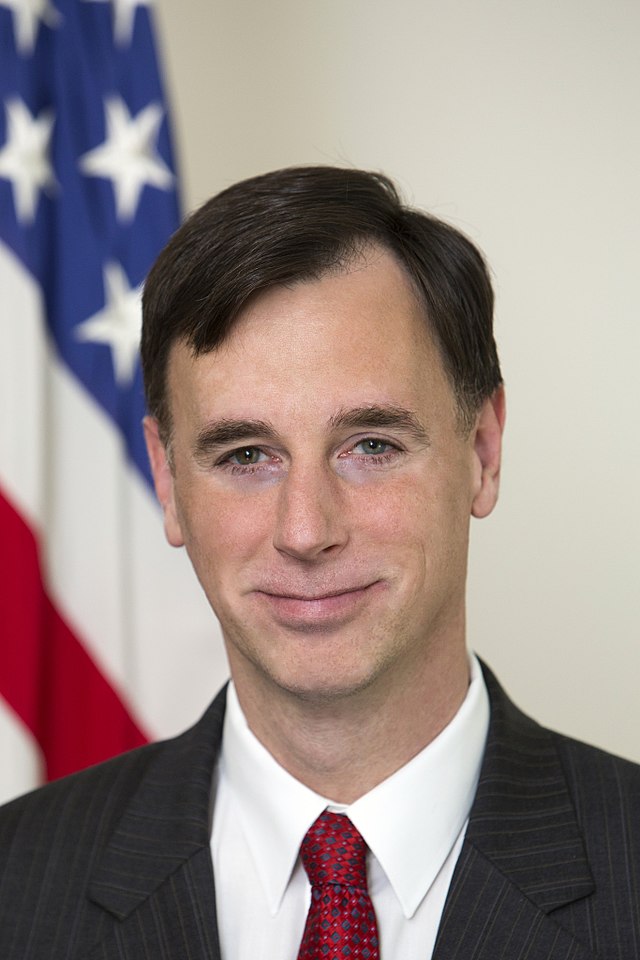
Rob Joyce
Former Acting United States Homeland Security Advisor
6
APPEARANCES
2
PODCASTS
Aug 20, 2026


Rob JoyceGUEST
I think the place to start is to understand that while everybody got this mythos fever about this model that came out that was so amazingly powerful, I was concerned before that.
Rob JoyceGUEST
Think about the fact that you get hit by an old Ford pickup truck or you get hit by a Lamborghini race car.
Rob JoyceGUEST
And the models that preceded some of these newest models are capable of finding vulnerabilities and creating exploits.
Rob JoyceGUEST
They just took a little more expertise and a little better cajoling by the operators, but they were capable for the past 18 months.
7 MINS LATER
Elisa PoteetHOST
It kind of worries me because it sounds a little bit like... subprime stuff right it's a cake mix once you make bake the cake you can't disaggregate it and i'm also reading that what the implications are for the development of quantum and when it lands i'm imagining like a spaceship landing and everything changes at once how did ai get us closer to this wasn't that supposed to be a decade from now


Nicole PerlrothHOST
And that is where Rob Joyce, the former head of NSA's cybersecurity directorate, told me defenders may actually be reclaiming the advantage.
Rob JoyceGUEST
I actually think the North Korean problem is much more solvable than the generic intelligence asset deployed into a company.
Rob JoyceGUEST
So I was at a conference just this week where people were talking about the tools they've enacted to stop remote workers from getting into their employment chain.
Rob JoyceGUEST
They're doing things like taking a picture on the video interview and then using that when the person shows up and is online at work to see if they've changed in any appearance or haven't kept a consistent story.
Rob JoyceGUEST
Others are insisting on a one-week onboarding where you come in, and you've seen things like technical capabilities, looking at the latency of keystrokes.
Rob JoyceGUEST
So the fact that they're remote workers is a real liability, and I think the industry will adapt and get much stronger at detecting and preventing this.
10 MINS LATER
Elisa PoteetHOST
What do we do about that? How does AI protect those systems, and what's the counterpoint? How do we protect those systems against the malicious use of US-created scary high-efficacy models?
Rob JoyceGUEST
I think the place to start is to understand that, you know, while everybody got this mythos fever about, you know, this model that came out that was so amazingly powerful, I was concerned before that, right? Think about the fact that you get hit by an old Ford pickup truck, or you get hit by a Lamborghini race car.
Rob JoyceGUEST
And the models that preceded some of these newest models are capable of finding vulnerabilities and creating exploits.
Rob JoyceGUEST
They just took a little more expertise and a little better cajoling by the operators, but they were capable for the past 18 months, and, you know, it's been a, a growth path since then.
Rob JoyceGUEST
What they are doing is they are revealing the flaws that are already in our software or in the configurations of our networks, or the problems we have created accidentally inside these systems.
7 MINS LATER
Elisa PoteetHOST
How did AI get us closer to this? Wasn't that supposed to be a decade from now?

Nick CarlsonGUEST
Uh, so if you were able to, to penetrate Axie's machine, you got access to, like, five or six of these signatures.
Rob JoyceGUEST
They targeted the senior engineer at a developer that works in this crypto ecosystem, and then after multiple fake interview rounds with that developer, they sent him a PDF job offer that was laced with malware.
Rob JoyceGUEST
So they worked to build their bona fides with this guy and convince him that he was getting a job opportunity.
10 MINS LATER
Nicole PerlrothHOST
That was Rob Joyce, who was running NSA's hacking division, TAO, at the time, and while he has to be circumspect on the classified intelligence they had definitively pointing to the DPRK, he confirmed that the initial public assessments were right on target.
Rob JoyceGUEST
After the Sony attack, even the cybersecurity community focused in on North Korea.
Rob JoyceGUEST
If you watched the, kind of the Twitter community that I follow, everybody was talking about the fact that Sony was a North Korean job.
Rob JoyceGUEST
After the White House came out with attribution and the FBI named them, then all the conspiracy theories popped out, and people had all sorts of reasons why it wasn't the North Koreans, which really just surprised me because the wisdom of crowds was already there, and the fact that the government said it pulled everybody into a, a whole different region.
17 MINS LATER
Rob JoyceGUEST
The strategic moment was the Sony breach, where it wasn't just a breach, it was reaching into an American company and kind of bleeding them in public.
Rob JoyceGUEST
I have to put into perspective that the North Korean economy is the size of, like, Vermont's economy, and here they are establishing a nuclear weapons program and have created intercontinental ballistic missiles that most nations don't have.
Nicole PerlrothHOST
Here's Rob Joyce, who used to run hacking divisions and later cybersecurity for the NSA.
Rob JoyceGUEST
Sanctions assume you can restrict the revenue, and this cyber channel creates revenue that's borderless, deniable, and renewable.