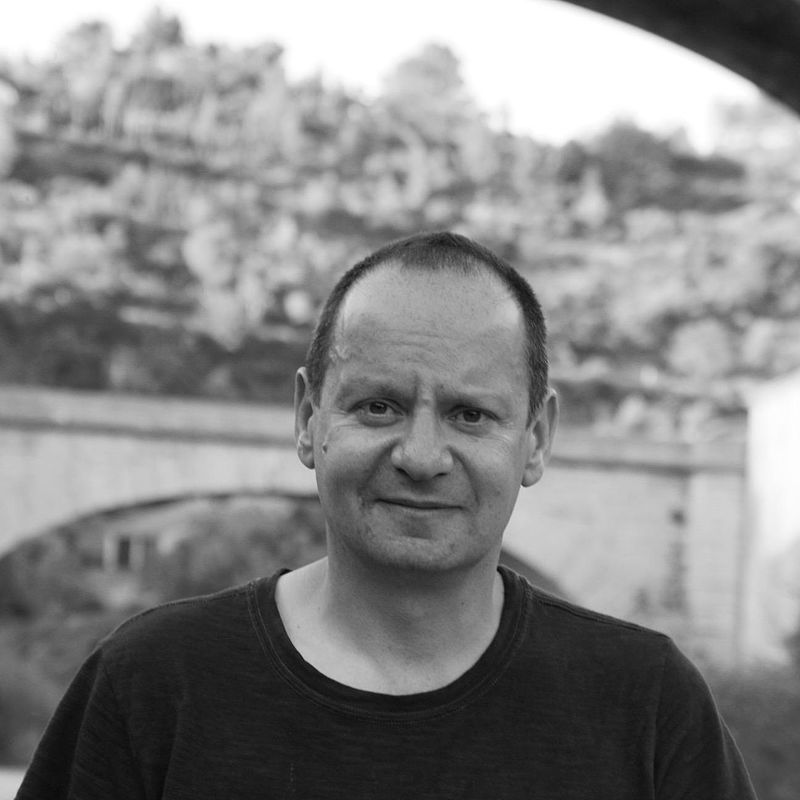
Philippe Sands
British-French writer and lawyer
29
APPEARANCES
24
PODCASTS
Nov 20, 2026


Amy GoodmanHOST
First of all, Philippe, why the Gambia? Why did they bring this case? And number two, talk about the significance, again, of this being the first country that has been convicted of genocide and what that ultimately means.

Philippe SandsGUEST
Well, it's lovely to be back on with you after a gap of about 15 years, Amy.
Philippe SandsGUEST
The Rohingya case was brought by the Gambia basically on the initial instance of a single individual, Bartambadu, who was the attorney general of the Gambia, who went on a visit to Cox's Bazaar, the place that's just been described, spoke to a lot of the people who had fled Myanmar, heard stories, and because he had been Previously, a prosecutor in the Rwanda criminal tribunal in The Hague and Arusha understood that the stories that he was being told told a story of genocide.
Philippe SandsGUEST
He persuaded the government of the Gambia, of which he was a member, to bring a case to the International Court of Justice.
Philippe SandsGUEST
It's because both Myanmar and Gambia were parties to the 1948 Convention on the Prevention and Punishment of Genocide.
Philippe SandsGUEST
And the Gambia is predominantly a Muslim country concerned about the mistreatment of a Muslim community in Myanmar.

Amy GoodmanHOST
First of all, Philippe, why the Gambia? Why did they bring this case? And number two, talk about the significance, again, of this being the first country that has been convicted of genocide and what that ultimately means.
Philippe SandsGUEST
Well, it's lovely to be back on with you after a gap of about 15 years, Amy.
Philippe SandsGUEST
The Rohingya case was brought by the Gambia basically on the initial instance of a single individual, Bartambadu, who was the attorney general of the Gambia, who went on a visit to Cox's Bazaar, the place that's just been described, spoke to a lot of the people who had fled Myanmar, heard stories, and because he had been Previously, a prosecutor in the Rwanda criminal tribunal in The Hague, in Arusha, understood that the stories that he was being told told a story of genocide.
Philippe SandsGUEST
He persuaded the government of the Gambia, of which he was a member, to bring a case to the International Court of Justice.
Philippe SandsGUEST
One of the reasons that happened It's because both Myanmar and Gambia were parties to the 1948 Convention on the Prevention and Punishment of Genocide.
Philippe SandsGUEST
And the Gambia is predominantly a Muslim country concerned about the mistreatment of a Muslim community in Myanmar.

Amy GoodmanHOST
First of all, Philippe, why the Gambia? Why did they bring this case? And number two, talk about the significance, again, of this being the first country that has been convicted of genocide and what that ultimately means.
Philippe SandsGUEST
Well, it's lovely to be back on with you after a gap of about 15 years, Amy.
Philippe SandsGUEST
The Rohingya case was brought by the Gambia basically on the initial instance of a single individual, Bartambadu, who was the attorney general of the Gambia, who went on a visit to Cox's Bazaar, the place that's just been described, spoke to a lot of the people who had fled Myanmar, heard stories, and because he had been Previously, a prosecutor in the Rwanda criminal tribunal in The Hague and Arusha understood that the stories that he was being told told a story of genocide.
Philippe SandsGUEST
He persuaded the government of the Gambia, of which he was a member, to bring a case to the International Court of Justice.
Philippe SandsGUEST
It's because both Myanmar and Gambia were parties to the 1948 Convention on the Prevention and Punishment of Genocide.
Philippe SandsGUEST
And the Gambia is predominantly a Muslim country concerned about the mistreatment of a Muslim community in Myanmar.


Philippe SandsGUEST
if you go back to the period of National Socialism, read a book, an extraordinary book by Sebastian Hafner, the historian, who was there in 1933 and describes it brilliantly.
Philippe SandsGUEST
And that was why in 1945, ironically enough, led by the United States, we created a sort of new global legal order called international law, which basically said there are limits placed on the sovereignty of the state to protect the dignity of the individual, to protect the dignity of groups.
Philippe SandsGUEST
And an architecture was put in place that including rules and institutions and courts.
Philippe SandsGUEST
And what the United States is now leading the world in doing, it's sort of ironic, is destroying the order that it created.
Philippe SandsGUEST
And so I think where we are right now, and it is a very tough time, I'm not starry-eyed at all, there is a struggle that is underway.
15 MINS LATER


Steve PaikinHOST
And yet so much more of the world seems to be exercised about what's happening in Gaza and pays very little attention to what's happening in Africa.
Philippe SandsGUEST
I mean, I think tens of thousands of people have probably died in Iran since the beginning of this year as part of a put down of peaceful demonstrations, individuals wanting to express and protect their rights.
Philippe SandsGUEST
And you're bound to ask yourself the question, why does Iran? Israel, Palestine, Gaza get so much attention.
10 MINS LATER


Rachel SylvesterHOST
How much do you think the lawyers are to blame or the institutions of justice for not standing up to him?
Philippe SandsGUEST
I sort of beelined first for the lawyers, and there are quite a few of them in the book.
Philippe SandsGUEST
The worst is Carp from the law firm Paul Weiss, which has, as you described, an incredible reputation.
Philippe SandsGUEST
And to see the law firms immediately capitulate, not all of them did, you can say more about that, Jacob, but some very major law firms capitulated more or less instantly and signed up to these pro bono deals where they do $40 million of pro bono work on MAGA-type projects.
29 MINS LATER
Rachel SylvesterHOST
Philip, do you think there's any way, you talked about it being ruptured, quoting Carney, do you think there's any way back from this? How does the world order re-establish itself? Can we get back to a rule of law?


Lesley DingleHOST
And the system you created is likely to survive the test of time because it was so well conceived.
Philippe SandsGUEST
One was in French and was more slender, shall we say, by Alexander Charles Kiss from the University of Strasbourg.
Philippe SandsGUEST
And then about a year before my book came out, my colleagues and friends Patricia Burney and Alan Boyle wrote a book called International Law and the Environment.
Philippe SandsGUEST
And it has a different structure from mine, but I was able to draw upon it and be influenced by it.
1 HR 9 MINS LATER
Philippe SandsGUEST
I could, you know, meet teachers, meet LLM students, meet JD students and be part of the community.
22 MINS LATER
JaniceHOST
I
Philippe SandsGUEST
I could, you know, meet teachers, meet LLM students, meet JD students and be part of the community.
22 MINS LATER
JaniceHOST
And also another big event in your life was your marriage.

Philippe SandsGUEST
And I think a different type of individual would have handled these complex, controversial, difficult matters in a different way.
Philippe SandsGUEST
And in a sense, I think it might be said he's the author of his own misfortunes by having taken such a public stance in the way that he has.
Philippe SandsGUEST
But I think the bottom line of it is now that The states have got to move as fast as they reasonably can, get a new prosecutor in post, and then decide what to do.
Philippe SandsGUEST
And of course, the first thing a prosecutor is going to have in their in-tray is what to do with existing arrest warrants and indictments.

Sean LayHOST
Yeah, it goes to its credibility, doesn't it? I just wanted to ask you briefly and finally, if you can, has the court lived up to what you were hoping for when you drafted that preamble to the Rome statute all those years ago?


Philippe SandsGUEST
The US is not a member of the International Criminal Court because I think any president who is inclined to support it knows that they would never get through the US Senate a ratification of the statute, and so no president has proposed it.
Philippe SandsGUEST
When it was adopted in 1998, um, the United States played a very active part in its negotiation, and so they fashioned a statute that was the most acceptable, I suppose, to the president at the time, that was Bill Clinton.
Philippe SandsGUEST
In fact, a few, a few months afterwards, Bill Clinton attended a, a seminar at New York University, uh, and I happened to be there.
Philippe SandsGUEST
And at, at the reception afterwards, I did ask him what his concerns were with the statute of the International Criminal Court, and it was really rather remarkable.
Philippe SandsGUEST
He knew particular provisions by heart, and he said, "Well, I got a problem, you know, Article X, Article Y." It was really, really very, very striking.
Philippe SandsGUEST
But the bottom line of it was basically there is a s- has always been a strong strand of opinion in the United States that does not like the idea of international courts exercising jurisdiction either over Americans or in relation to US interests.

Tristan RedmanHOST
But how has the US posture to the court evolved since the days of Bill Clinton?

speaker_7UNKNOWN
[laughs]
Philippe SandsGUEST
[upbeat music] How did this book begin? There are many starting points, but basically, I think the real starting point is the summer of 2014.
Philippe SandsGUEST
I'm in a small village in Austria called Hagenberg, the home of Horst Wächter.
Philippe SandsGUEST
You will know Horst if you listen to the BBC pod- uh, series, The Ratline, or, or the book.
Philippe SandsGUEST
Otto Wächter, a major Nazi governor in German occupied Poland, based in the city of Lviv, hunted after the war for the murder of hundreds of thousands of Poles and Jews and Roma.
speaker_7UNKNOWN
[laughs]

speaker_4NARRATOR
The Indian Ocean.
Philippe SandsGUEST
And there's been an issue about whether Mauritius really did include the Chagos Archipelago, but there's no question, this was dealt with by the International Court, that every three months a magistrate would go from Port Louis in Mauritius and do his duties, his magisterial duties, uh, on the Chagos Archipelago.
Philippe SandsGUEST
It was administered, the enslaved people were administered from there, and so on and so forth.
Philippe SandsGUEST
Then we come to decolonization after the United Nations is created.And the people of Mauritius want their independence.
25 MINS LATER

Nicholas MostynHOST
Why was the, why was the carve-out done by way of a lease as opposed to, uh, a carve-out of sovereign territory, as happened in Cyprus, for example?

Philippe SandsGUEST
In 1941, there was a meeting off the coast of Newfoundland, which was then a British colony, between the British prime minister, Winston Churchill, and the US then president, Franklin Delano Roosevelt.
Philippe SandsGUEST
And it's basically a vision statement of the world as they would like it to be.
16 MINS LATER

Philippe SandsGUEST
It's, it, it's makes for a lot of passions, a lot of controversy, a lot of anger, and a lot of upset.
Philippe SandsGUEST
Um, on the South African side, you know, for long and complex historical reasons, there's a sense that what is happening to the Palestinians is outrageous, and they want to find a way to go to an international court to argue that and to express their outrage and to make it stop happening, and the only way they can do that, because the only international treaty that gives you access to the International Court of Justice is the Genocide Convention.
Philippe SandsGUEST
On the converse side, there's outrage on the Israeli side that a, a state that emerged from the embers of the Holocaust, a genocide, is now being accused of genocide.
Philippe SandsGUEST
And so stepping back and without expressing a view as to what the International Court of Justice will ultimately do, and we don't know what the court will do.

Philippe SandsGUEST
It's, it, it-Makes for a lot of passions, a lot of controversy, a lot of anger, and a lot of upset.
Philippe SandsGUEST
Um, on the South African side, you know, for long and complex historical reasons, there's a sense that what is happening to the Palestinians is outrageous, and they want to find a way to go to an international court to argue that and to express their outrage and to make it stop happening.
Philippe SandsGUEST
And the only way they can do that, because the only international treaty that gives you access to the International Court of Justice is the Genocide Convention.
Philippe SandsGUEST
On the converse side, there's outrage on the Israeli side that a, a, a state that emerged from the embers of the Holocaust, a genocide, is now being accused of genocide.


Philippe SandsGUEST
Um, but then I'm going to surprise you, because who changes everything in September 2022, but none other than Prime Minister Liz Truss, who unleashes a negotiation with Mauritius to resolve, uh, this long-standing problem.
Philippe SandsGUEST
Actually, a pretty sensible decision, and she's supported, um, by her Foreign Secretary, James Cleverly, and that is then taken over by Rishi Sunak.
Philippe SandsGUEST
And finally, by the summer of 2024, you've got a very nearly completed draft treaty, uh, ninety percent complete.
Philippe SandsGUEST
Uh, then there's an election, uh, and then the Labour government basically wraps it up.
Philippe SandsGUEST
So it's a sort of Tory treaty, to be honest, which is why all these accounts of, uh, you know, Mrs Cleverly and others complaining about this-
Philippe SandsGUEST
The Mauritius doesn't require British nationals yet to have visas, but presumably, if the UK starts having visas for Mauritians, then, uh, that will soon, that will soon change.


Philippe SandsGUEST
is there with a value system, a court system, the rule of law, a constitution, something that we've always been taught to aspire to.
Philippe SandsGUEST
And what we're seeing now is the scales, in a sense, falling from our eyes as we confront the actual possibility that the United States could by force take control of a part of the territory that is within the NATO alliance.
Philippe SandsGUEST
And this is giving rise to some conversations that are extremely problematic.
Philippe SandsGUEST
I mean, one of the other countries that has come out very strongly against this, and it's complex, and I'm choosing my words carefully, is China.
21 MINS LATER


Philippe SandsGUEST
I brought them up because, well, I went down to Punta Arenas with a copy of In Patagonia in hand, looking to find the characters or their descendants that he wrote about that he claimed to have met in Punta Arenas.
29 MINS LATER

Philippe SandsGUEST
I brought them up because, well, I went down to Punta Arenas with a copy of In Patagonia in hand, looking to find the characters or their descendants that he wrote about that he claimed to have met in Punta Arenas.
29 MINS LATER

Philippe SandsGUEST
Um, there are negotiations within the framework of the United Nations at the regional level within a body called the International Law Commission, for example, to negotiate the creation of a permanent international court that would have global jurisdiction over everything.
Philippe SandsGUEST
But in short, notwithstanding the conflicts that take place, the wars that take place, whether it's Suez, whether it's Vietnam or other things, nothing happens.
Philippe SandsGUEST
There are diminishing numbers of criminal proceedings in relation to the war years across Europe and elsewhere.
Philippe SandsGUEST
What happens in the 1990s is we have horrendous conflicts in, amongst other places, the former Yugoslavia and in Rwanda, and mass killings occur in both places.
22 MINS LATER
Philippe SandsGUEST
It took place very early in the morning in the courtyard of the Palace of Justice in Nuremberg, where they would previously have taken their exercises.
Philippe SandsGUEST
As they approached their death, uh, we have the accounts of the chaplain, we have the accounts of what is said whilst actually standing with the noose around their neck.
Philippe SandsGUEST
Some went quietly, some went defiantly, uh, some shouted, some said nothing.
8 MINS LATER
David MusgroveHOST
Is that kind of the end of it in terms of the trial process for the Second World War, excluding things going on outside of Germany?
Philippe SandsGUEST
A-and that had a particular effect because the propaganda value of the trial meant that although the room was darkened, the prosecution had installed large lights on the ceiling and switched these on whilst the defendants were watching the films of the concentration camps.
Philippe SandsGUEST
And so you are able to see the defendants looking really rather shocked at vast mounds of corpses.
Philippe SandsGUEST
I mean, I spoke to, um, a lady who was the daughter of the chief judge, Sir Geoffrey Lawrence.
24 MINS LATER
Scroll for more appearances