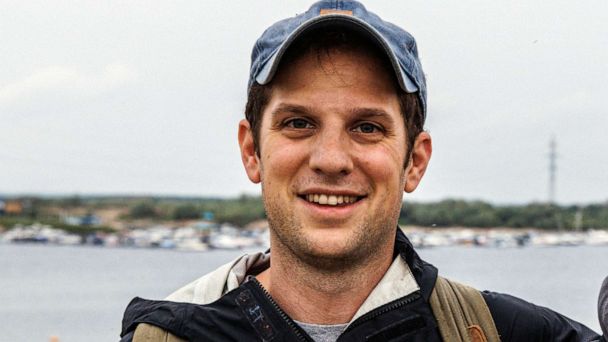
Evan Gershkovich
American journalist and reporter
22
APPEARANCES
20
PODCASTS
Oct 15, 2026


Dorian LynskeyHOST
Your expectation then is, what is it? Is it detention or is it expulsion from the country?

Evan GershkovichGUEST
So in the lead up to the arrest, they had changed the rules, the visa rules from we used to get them for a year.
Evan GershkovichGUEST
an accreditation, the approval you need to report in country as a foreigner for a year.
Evan GershkovichGUEST
They changed that with the start of the full-scale invasion to three months.
Evan GershkovichGUEST
We took that as another signal of, oh, when they're not happy with us, they might let the visa run out.
Evan GershkovichGUEST
And actually right before my arrest, that happened to one foreign correspondent.


Evan GershkovichGUEST
But that was basically what we understood, uh, the worst could happen, and then when the full-scale invasion st- starts, it was meant to be a lightning strike on Kyiv.
Evan GershkovichGUEST
After a week, that fails, and Russia shores up, dig- digs in for a long war, including passing these incredibly draconian censorship laws.
Evan GershkovichGUEST
So the Russian press fled because it criminalized calling the war a war, uh, which they were calling a special military operation for up to 10 years in prison.
Evan GershkovichGUEST
Have the rules now changed? Are they now not going to treat us like quasi-diplomats? The New York Times announced the temporary closure of its bureau.

Evan GershkovichGUEST
But that was basically what we understood, uh, the worst could happen, and then when the full-scale invasion st- starts, it was meant to be a lightning strike on Kyiv.
Evan GershkovichGUEST
After a week, that fails, and Russia shores up, dig- digs in for a long war, including passing these incredibly draconian censorship laws.
Evan GershkovichGUEST
So the Russian press fled because it criminalized calling the war a war, uh, which they were calling a special military operation, for up to 10 years in prison.
Evan GershkovichGUEST
Have the rules now changed? Are they now not going to treat us like quasi diplomats? The New York Times announced the temporary closure of its bureau.


Evan GershkovichGUEST
I was worried more about my source, uh, which is, was clearly the wrong thing to be worried about.
Evan GershkovichGUEST
Uh, I mean, even before foreign journalists at times were outwardly followed.
Evan GershkovichGUEST
In '22, we were outli- outwardly followed to the point of being welcomed at the train station when you get to a new town.
Evan GershkovichGUEST
Security officer is filming, filming you very blatantly so you understand that you're being watched.
Evan GershkovichGUEST
You go to your cab, and cars follow you, and then you go to meetings with your sources, cars are following you.

23:02

So I'm going to ask you to read that very evocative first sort of chapter of this particular story.
Evan GershkovichGUEST
I was jotting down my own notes from the papers when I heard the sound of marching feet.
14 MINS LATER
37:03
How, even though you knew what it was going to look like the end, how are you?


Evan GershkovichGUEST
So I had worked when, in late 2017 when I moved to Russia, I was working for The Moscow Times, an independent English language outlet there.
Evan GershkovichGUEST
Then I joined AFP, Agence France-Presse, and then I finally, uh, joined The Wall Street Journal.
Evan GershkovichGUEST
Uh, and, like, basically the story of my career kicks off at a, you know, the best place I could be working in a way, you know, a newspaper with global reach.


Chris EvansHOST
One of the crazy things about the cra- the, the whole crazy situation was that you had to be found guilty to stand any chance of going home.
Evan GershkovichGUEST
Yeah, so the Russian state, it's quite performative, uh, in terms of how, uh, you know...
Evan GershkovichGUEST
What, what they, they basically launched so-called hostage diplomacy in 2019.
Evan GershkovichGUEST
Uh, at that point, Maria Butina, who was charged in the US with being a foreign agent, uh, was in prison and Pu- and, uh, the Kremlin had been trying to get two other Russians home for a while, and efforts weren't going well, and Putin was getting frustrated.
Evan GershkovichGUEST
In late 2019, a state TV reporter asked Putin at a news conference, he goes, uh, you know, "Why don't we just arrest Americans, you know, like China does and just trade them?" And Putin said, "No, you know, they have to violate the law.
Evan GershkovichGUEST
We can't just snag them off the street." Lo and behold, two weeks later, Paul Whelan's arrested.
Evan GershkovichGUEST
And then, you know, over the years there was Trevor Reed, another Marine, Brittney Griner, the WNBA player.


Ben RhodesHOST
I, I, I want you to just take people into in that experience when you realized you were being set up, and then share a little bit about how you've spent a lot of time in the book unpacking how what to you is, you know, traditional reporting, um, whether it was clearly just a set up or whether some people might have actually believed that you were engaged in espionage.
Evan GershkovichGUEST
So when I moved to Russia in late 2017, uh, an American foreign correspondent or a foreign correspondent at all hadn't been arrested for espionage charges since the late Soviet period, since the late '80s.
Evan GershkovichGUEST
Uh, and so when we got there, uh, when I got there, the Russian press was feeling some pressure, but, uh, the m- the foreign press was allowed to report on whatever it wanted, uh, and we were treated as kind of quasi diplomats.
Evan GershkovichGUEST
Uh, the worst, you know, that would happen, and it happened to one person before the full-scale invasion in 2022, uh, was getting kicked out.
Evan GershkovichGUEST
And when the, uh, you know, the reason really is just that the Kremlin wanted to control the information environment, censor it for a domestic audience.
Evan GershkovichGUEST
But for a global audience, it, you know, it didn't really matter what the glo-global audience knew, and it gave the Kremlin cover.
6 MINS LATER
Ben RhodesHOST
But what did you surmise about Russian attitudes about the war and about what Putin has done, where he's taken Russia, based on your conversations with everybody ranging from, you know, FSB officials to common criminals to people who are in prison for their views on the war?

speaker_8UNKNOWN
[laughing]
Evan GershkovichGUEST
So the ground was clearly shifting under our feet, but we were monitoring, watching.
Evan GershkovichGUEST
And over the months of the first year of the full-scale invasion in '22, uh, Russian journalists were tried in absentia, put on the wanted list, which we took as a signal.
Evan GershkovichGUEST
Uh, and so foreign journalists, uh, some started co- you know, some had stayed.


David RemnickHOST
It wasn't, a- again, I'm not for a second saying this was a, a, a picnic, and the worst part of it sounds like your imagination of the suffering of your parents and friends at home.
Evan GershkovichGUEST
I mean, I think when you're in that situation and you realize, okay, they're gonna treat you like this kind of pristine package, uh, to be traded, I had this moment when, uh, you know, early on I real- you know, the warden would come in before anytime the US ambassador came to visit me, check if everything was okay.
Evan GershkovichGUEST
You know, they were treating me sort of as like a, a higher class citizen, and, you know, you, you, you know, you start getting those kinds of signals, and then eventually, once he came to check on me before the ambassador came and I had hurt my knee exercising, and I told him, you know, like, "Actually, I'm surprised at how, you know, well you're treating me in a way." You, the prisoners checked it, you know, checked it out, gave me some physical therapy exercises.
Evan GershkovichGUEST
And he goes, "Of course we, you know, we care about your health." And I was like, "Well, the package has to be undamaged or the value will go down." And he checked his shoulder, uh, and he whispered, you know, he looked around and he whispered, you know, uh, "I didn't tell you this, but yes." So it's this, it's very bizarre, this kind of like open, uh, conversation.
Evan GershkovichGUEST
Uh, and there was a moment actually where an FSB investigator told me that he was like, "Look, we gathered-" Enough evidence against you to imprison you, otherwise we would have poisoned you.
5 MINS LATER

David RemnickHOST
A- again, I'm not for a second saying this was a, a, a picnic, and the worst part of it sounds like your imagination of the suffering of your parents and friends at home.
Evan GershkovichGUEST
Yeah, I mean, I think when you're in that situation and you realize, okay, they're gonna treat you like this kind of pristine package, uh, to be traded, I had this moment when, uh, you know, early on I real- You know, the warden would come in before any time the US ambassador came to visit me, check if everything was okay.
Evan GershkovichGUEST
You know, they were treating me sort of as, like, a, a higher class citizen, and, you know, you, you, you know, you start getting those kinds of signals, and then eventually, once he came to check on me before the ambassador came, and I had hurt my knee exercising, and I told him, you know, like, "Actually, I'm surprised at how, you know, well you're treating me in a way." You, and prisoner has checked it, you know, checked it out, gave me some physical therapy exercises, and he goes, "Of course we, you know, we care about your health." And I was like, "Well, the package has to be undamaged or the value will go down." And he checked his shoulder, uh, and he whispered, you know, he looked around and he whispered, you know, uh, "I didn't tell you this, but yes." So it's this, it's very bizarre, this kind of, like, open, uh, conversation.
Evan GershkovichGUEST
Uh, and there was a moment, actually, where an FSB investigator told me that, he was like, "Look, we gathered enough evidence against you to imprison you.
Evan GershkovichGUEST
Otherwise, we would've poisoned you." Uh, and they do poison people abroad, but the argument I had with him, sort of similar, was that, "No, because I'm useful in a s- very specific way." Uh, but then, yeah, your, your loved ones and your family, they ne- It's always a black box.
5 MINS LATER


Evan GershkovichGUEST
You, you know, the, like, the Russian government was trying to censor information for its own people, for its own audience, but it wanted to project an image of being a normal country, and so foreign journalists help you do that.
Evan GershkovichGUEST
You know, you write for, you know, write for the world, the economy is doing fine, it's a normal place.
Evan GershkovichGUEST
Uh, and so the worst that could happen then would've been your visa's not renewed-
11 MINS LATER
Evan GershkovichGUEST
But it's also, I think it's important to get for people, you know, people who don't know Russia that well, it's very calculating.
Evan GershkovichGUEST
So Victoria Roshchyna, a Ukrainian journalist at this, you know, around the same time, gets taken captive in Russian occupied part of Ukraine.

Evan GershkovichGUEST
You, you know, the, like, the Russian government was trying to censor information for its own people, for its own audience.
Evan GershkovichGUEST
But it wanted to project an image of being a normal country, and so foreign journalists help you do that.
Evan GershkovichGUEST
You know, you write for, you know, write for the world, the economy is- ... doing fine.
Evan GershkovichGUEST
Uh, and so the worst that could happen then would have been your visa's not renewed.
11 MINS LATER


Evan GershkovichGUEST
They come up, and the FSB investigator in my case allowed us five minutes to speak.
Evan GershkovichGUEST
Um, and so first it's d- You know, jokes back and forth, catching up on various things, and then my dad paused my mom and me and said, "You know, I just wanna make sure I tell you this," uh, and, and he softly said, "We've come, yeah, we've come here with respect for you," and I think that's the most important thing he could have possibly said because it immediately, you know, all those worries of have I done something wrong float away.
speaker_17HOST
Does any of that make you angry now?
Evan GershkovichGUEST
I mean, what makes me angry is the system of hostage diplomacy, so to speak, using people cynically to return people, and I think that's something that we, you know, haven't completely dealt with.

Evan GershkovichGUEST
They come up, and the FSB investigator in my case allowed us five minutes to speak.
Evan GershkovichGUEST
Um, and so first it's, you know, jokes back and forth, catching up on various things.
Evan GershkovichGUEST
And then my dad paused my mom and me and said, "You know, I just wanna make sure I tell you this." Uh, and, and he softly said, "We've come, yeah, we've come here with respect for you," and I think that's the most important thing he could have possibly said, because it immediately, you know, all those worries of, have I done something wrong, float away.
Evan GershkovichGUEST
I mean, what makes me angry is the system of hostage diplomacy, so to speak, using people cynically to return people.

Evan GershkovichGUEST
So I was wracked with guilt at the beginning, when the arrest took place, and sort of thinking, it's one thing to take a risk to be reporting in Russia at the time, right? And then the story we were reporting on, I mean, it's an incredibly sensitive information during a war where Russia feels like it's not just at war with Ukraine, but with what it calls the collective West, with the US as its backer.
Evan GershkovichGUEST
And so I'm thinking, why did we do this? Why did my newsroom and I decide that this is OK to be doing, my poor family? And so I was worried when they were going to come to court, the conflict had developed to the point where Ukrainian drones had started reaching Moscow.
Evan GershkovichGUEST
And I'm worried about my parents coming, but also, yeah, this point of, you know, would they kind of be mad at me, admonish me? And so when they come into the courtroom, the first thing They turn and see me, and they just smile.
Evan GershkovichGUEST
They come up, and the FSB investigator in my case allowed us five minutes to speak.

Evan GershkovichGUEST
You know, I think one thing that's really important to point out is that I think the Russian state is really calculating in how they treat certain prisoners.
Evan GershkovichGUEST
And so in my case, if, you know, it's a cynical setup to take somebody for a swap and eventually swap them, that means that I'm not being treated in the sort of brutal ways that we know how they can treat people.
Evan GershkovichGUEST
Victoria Roshan, a Ukrainian journalist, was taken captive in Russian-occupied Ukraine around the same time and she came home in a body bag.
Evan GershkovichGUEST
She was killed and her body organs were removed so her parents couldn't figure out what happened with her.
Evan GershkovichGUEST
They treated me like this sort of pristine package to be kept and swapped.

Jake TapperHOST
How do you, as a symbol of press freedom or the lack of it in Russia, how do you see what's going on in the U.S. right now?

32:09

So walk us through what happened that day and when did you realize, oh no, something very bad is happening?
Evan GershkovichGUEST
Right, so exactly, I moved there five and a half years before the arrest, so that's late 2017.
Evan GershkovichGUEST
And so Vladimir Putin's regime is already something we'd describe as authoritarian.
Evan GershkovichGUEST
An opposition leader by the name of Boris Nemtsov had been killed in the streets, but foreign journalists were treated as kind of quasi-diplomats.
Evan GershkovichGUEST
The Kremlin wanted foreign journalists there, and it was Russian journalists who faced any sort of pressure because they wanted to censor information for a domestic audience.
Evan GershkovichGUEST
So the worst that had happened up until the full-scale invasion in 2022 was that a BBC journalist was kicked out.


Evan GershkovichGUEST
They left in this big wave of, uh, Jewish departures from the Soviet Union.
Evan GershkovichGUEST
Uh, Russian speaking, my mom's from present day Russia, my dad's from present day Ukraine.
Evan GershkovichGUEST
They met in the States, had my sister, then me, and enforced a Russian-speaking home.
Evan GershkovichGUEST
Uh, so in the home it was completely sort of this kind of like, uh, Soviet, uh, you know, bubble in a way.
22 MINS LATER

Tim MillerHOST
Like, do, do you have residual trauma? Like, what, what, you know, what was that process like?
Evan GershkovichGUEST
You, you know, the, like, the Russian government was trying to censor information for its own people, for its own audience, but it wanted to project an image of being a normal country, and so foreign journalists help you do that.
Evan GershkovichGUEST
You know, you write for, you know, write for the world, the economy is doing fine, it's a normal place, like it's a modern, you know, Moscow's modern.
Evan GershkovichGUEST
Uh, and so the worst that could happen then would've been your visa's not renewed or-
11 MINS LATER
Evan GershkovichGUEST
But it's also, I think it's important to get for people, you know, people who don't know Russia that well, it's very calculating.
Evan GershkovichGUEST
So Victoria Roshchyna, a Ukrainian journalist at this, you know, around the same time, gets taken captive in Russian occupied part of Ukraine.
Evan GershkovichGUEST
But it's also, I think it's important to get, for people, you know, people who don't know Russia that well, it's very calculating.
Evan GershkovichGUEST
So Victoria Roshchyna, a Ukrainian journalist at this, you know, around the same time, gets taken captive in Russian-occupied part of Ukraine.
Evan GershkovichGUEST
She gets killed and sent back in a body bag without her body organs, so her family can't figure out what happened to her.


Evan GershkovichGUEST
Next thing I know, they're telling me that they're with the Federal Security Service of the Russian Federation, the FSB, telling me that I'm under arrest, and I'm getting dragged down onto the floor.
Evan GershkovichGUEST
But right before I'm dragged down, I see the source kind of stepping back into the crowd.
Evan GershkovichGUEST
There's a hood put over my head, and then I'm just being dragged out of the restaurant.
Evan GershkovichGUEST
I'm brought into a van, hood pulled off, asked, by a man who's sitting in a suit, you know, very professional looking, who do I work for? I say the Wall Street Journal, already the implication's quite clear from that, hood back on, rough me up a little bit.
Evan GershkovichGUEST
What do they do exactly? They're punching your sort of like the midsection.