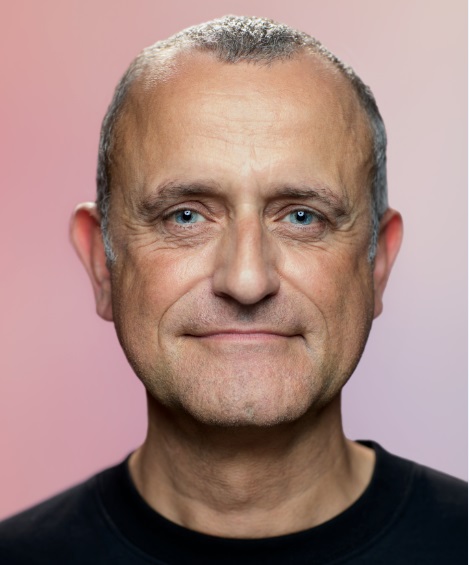
Phil Le-brun
19
APPEARANCES
18
PODCASTS
Aug 24, 2026

Richie CottonHOST
So, uh, how can you go about having a process to make sure that you're consistently making good decisions then? That seems to be the crux of it.

Phil Le BrunGUEST
But the most important thing is you actually make a decision because as soon as you make a decision, you can start to gather information on whether it's a good decision or not.
Phil Le BrunGUEST
We spend so much time paralyzed trying to make the perfect decision, but no decision is the worst possible outcome.
11 MINS LATER
Richie CottonHOST
Uh, so, um, I guess, uh, beyond this, do you have any other tips for making sure, like, all your employees are keeping their skills up to date? I mean, uh, particularly in the technology area where things are, are just moving quickly at the moment.

Phil Le-BrunGUEST
For instance, a new CEO comes into a multinational company and it seems perfectly logical to say, let's centralize everything because it's going to be more efficient and efficient is good.
Phil Le-BrunGUEST
And yet what happens is they create this massive bottleneck and pretend that every business unit is the same.
Phil Le-BrunGUEST
So we started to write about it and we came up with this metaphor of the tin man representing money.
Phil Le-BrunGUEST
um older organizations and the octopus being a sort of biological metaphor you're very curious uh two-thirds of its neurons are in its arms so it's decentralized um it's survived without any major structural change for over 250 million years i thought actually that's how we want our organizations to be some of this comes from my background i spent 31 years at mcdonald's corporation and um When I started to work in the corporate organization, we had a CEO who kicked off a couple of initiatives with cool names because every family needs a cool name.


Todd HenryHOST
Why do you believe that we spend so much money trying to transform our organizations to meet the challenges of today's marketplace, and yet we fail to produce results?
Phil Le-BrunGUEST
Well, the way we approach transformations, ironically, is based on the same methodologies which mirror the structures they're trying to change.
Phil Le-BrunGUEST
So we apply old ways of change to old structures and expect something brand new to come out.
Phil Le-BrunGUEST
And interestingly, building on Jana's description of the octopus hasn't changed its structure for 250 million years.
Todd HenryHOST
Could you give us a sense of how those three pillars play into building an octopus organization?

Phil Le-BrunGUEST
Often we'll ask leaders, you know, "How many of you got promoted for failing often?" So failing isn't the outcome we're looking for.
Phil Le-BrunGUEST
What we are looking for is how quickly do you learn, and when you learn, are you prepared to make a, a different decision as a consequence.
Phil Le-BrunGUEST
Uh, and we talk about learning philosophy in organizations as a really good health check about whether that company will be successful or not.
Phil Le-BrunGUEST
Uh, and often what prevents us learning is all those dependencies and governance meetings and the very diffused, uh, diffuse accountability.
8 MINS LATER

Jana WernerGUEST
So tapping into these people and becoming an architect of the system, when you continuously enable these people, free them up and help them and excite them to... address anti-patterns not one after the other but lighting a thousand fires so people can themselves own this because if you try to do a top down you don't know which ones and you don't know how to solve it needs to be and come a continuous way like mowing the lawn people continuously adapt the walls and attack the anti-patterns that stop the organization but to do that
Phil Le-BrunGUEST
One of the reasons is quite simply, everyone's got a different view, even at the leadership level about what a transformation is.
Phil Le-BrunGUEST
And we find this, we talk about this anti-pattern of, are you a team of leaders or a leadership team? And what we find, unfortunately, really quite common, even in some of the world's biggest companies, is there'll be a proclamation that we're going to become a digitally transformed platform-based organization that is customer-centric.
32 MINS LATER
Mahan TavakoliHOST
Would love to get your thoughts on AI's impact on all these Tin Man organizations that, as you beautifully said, I can still picture it, putting some oil on the squeaky parts of the armor rather than transforming to become octopus organizations.


Dan HillHOST
Have you found for some of the people who are maybe most rigid, most given to micromanaging, that some of these have been kind of your go-tos, the best ways to kind of nudge or move these people along? I'm curious what your experiences have been along those lines.
Phil LeBrunGUEST
I think one thing we look for is or people look to is the peers, people they trust.
Phil LeBrunGUEST
Maybe not the most cutting edge people in the organization, but people like them.
Phil LeBrunGUEST
And if those people can embrace some of these ideas, then it gives them the confidence.
11 MINS LATER


Phil Le-BrunGUEST
I wanna go back to, you mentioned the importance of the feedback loop earlier, and, uh, you talk about an advisory board model, which is my question in a moment.
Phil Le-BrunGUEST
I, I remember being with a Canadian company, and I went around with the researchers and I said, "So, what are you doing in your job?" And all of them are doing NPS, and I was kinda stunned.
Phil Le-BrunGUEST
So afterwards I said, "Why such an emphasis on that?" They said, "Oh, all the executive bonuses are tied to the NPS scores." And I said, "Are you actually re- learning anything? Is it helping the organization? Is it making you more sensitive?" "Eh, not so much.

Dan HillHOST
Have you found for some of the people who are maybe most rigid, most given to micromanaging, that some of these have been kind of your go-tos, the best ways to kind of nudge or move these people along? I'm curious what your experiences have been along those lines.
Phil LeBrunGUEST
I think one thing we look for is or people look to is the peers, people they trust.
Phil LeBrunGUEST
Maybe not the most cutting edge people in the organization, but people like them.
Phil LeBrunGUEST
And if those people can embrace some of these ideas, then it gives them the confidence.
11 MINS LATER

7:12
How do we overcome that? What pattern does that touch into that makes us so, um, old in acting like a 19th century organization?
Phil Le-BrunGUEST
It's a depressing stat, isn't it? You hire all these brilliant people, which I assume they're brilliant 'cause you've hired them.
Phil Le-BrunGUEST
Um, and then we put 42 levels of management on top of them to tell them how to do the job we hired them to do.
Phil Le-BrunGUEST
Uh, I, I guess if we step back, when we wrote the book, we sat down and said, "Look, what are all of those things that prevent an organization transforming, uh, into a better version of itself?" And we found about 300 dysfunctions.
Phil Le-BrunGUEST
For instance, new CEO comes into a multinational business and says, "We're gonna centralize everything 'cause centralization is efficient, and efficient is good." And yet they've just created a massive bottleneck in their own organization.
14 MINS LATER
22:22
How do you get chosen for one of the two-pizza teams in any organization? It doesn't have to be Amazon, but what kind of capabilities as an advisor are you looking for beyond functional expertise?

David GreenHOST
Can you cover that a little bit more and maybe give some examples maybe of organizations that are doing the clarity, the ownership, and the curiosity well?
Phil LebrunGUEST
So the clearer someone is about what good looks like, what a company stands for, what the purpose is, the more likely they are to take ownership.
Phil LebrunGUEST
The more ownership they take, the more likely they are to experiment because it's theirs.
Phil LebrunGUEST
And the more experimentation that happens, the clearer we become about the problem.
Phil LebrunGUEST
So clarity is really about having a shared understanding of purpose, values, priorities, and the such like, which sounds really obvious.
22 MINS LATER
David GreenHOST
Phil, a lot of leaders listening and HR leaders listening as well will be thinking, this all makes a lot of sense, but where do I start? Where should they start? The


Tiffani BovaHOST
But it is one of those things that I think they stop adapting and they start protecting themselves, right? Right.
Phil LebrunGUEST
We apply the old ways of working to the old organizational model and expect a new outcome.
Phil LebrunGUEST
It's a bit like me saying, I want to run like Usain Bolt, and I'm going to do it through a four-week transformation.
Phil LebrunGUEST
It's hard work, and you have to pull lots of levers, and you have to continue to go at it.
12 MINS LATER
Tiffani BovaHOST
And I think that's where I see the greatest impact Miss, what do you think, Phil?


Rachel WarrenHOST
Our audience are, uh, comprised primarily of individual retail investors, so I, I wonder for investors who, who are listening or interested in, in reading your book and maybe using it as more of a strategic filter for their portfolio, how, how can we as investors, uh, use some of these principles in your book to, for example, audit a company's execution runway?
Phil LeBrunGUEST
We boiled those into 38, what we call anti-patterns, uh, which are a conditioned habitual responses, so for instance, centralizing things in an organization because it feels more efficient even though you've created this massive bottleneck.
Phil LeBrunGUEST
And what we found is they fit into three categories: clarity, ownership, curiosity.
Phil LeBrunGUEST
So is it clear what the competitive differentiator for that organization actually is? Is it clear to the employees? One study said that sixty-seven percent of managers, uh, thought their, uh, employees knew what their company stood for and what the priorities were, and yet two percent of employees actually knew.
Rachel WarrenHOST
But I, I wonder, going back to that topic, why, uh, do anti-patterns matter more than bes-best practices? And if we're investors, we're reading annual reports, company filings, what are the red flags that might tell us that a company's mission statement, that their messaging is actually more marketing fluff than, uh, substance that's going to drive the growth story forward?

Phil Le-BrunGUEST
We, we think of anti-patterns as habitual conditioned responses to challenges, and they've sort of been deeply ingrained in leaders over the years because they sort of worked before.
Phil Le-BrunGUEST
So if you're a multinational company and your, your G&A is too high, the natural conditioned response is to say, "We're gonna do things once, and to do things once, we're gonna centralize things.
Phil Le-BrunGUEST
Um, we're gonna have a single payroll system across every country, uh, a single financial system across every country, 'cause how hard can it be?" And, and the reality is obviously there's lots of different nuances in different countries, um, with payroll and with finance and the such like.
Phil Le-BrunGUEST
But it just feels right, doesn't it? If you s- do things once, that's gonna be more efficient, and you've just created this massive bottleneck.
Phil Le-BrunGUEST
So, you know, from a purely logical point of view and also from a, a historical perspective, it makes sense.

Vasco DuarteHOST
Uh, for someone leading a team of eight to 10 people, most of our listeners will be in that camp inside traditional enterprises, so not the CEO, what would the octopus model actually mean for them? What can they change tomorrow after listening the episode?
Phil Le-BrunGUEST
Uh, and picking up on, on what Jana shared about the octopus and shared cognition and decentralized intelligence, look, you wanna put teams together of, um, diverse individuals, and we talk about cognitive diversity.
Phil Le-BrunGUEST
You want some, um, constructive conflict, what Linda Hill, um, a professor at, um, Harvard Business School t- terms, um, creative abrasion, 'cause that's where the magic happens.
Phil Le-BrunGUEST
When people come at problems from different points of view, that should be embraced, as opposed to having a uniformity of mindset.
10 MINS LATER

Dave StachowiakHOST
The challenge is that it's often not fully baked, and I'm, I'm wondering how do you thread that needle of involving people early, doing the coaching things we talked about earlier, but at the same time talking about something that it could really go a different direction because it's going to change as it emerges?
Phil Le-BrunGUEST
I think, uh, what we'd encourage people to do is talk, start to talk about what outcomes are you trying to drive.
Phil Le-BrunGUEST
So don't talk about the reorganization, and maybe as leaders don't even start with thinking you need a reorganization.
7 MINS LATER
Dave StachowiakHOST
And I'm, I'm curious, as you've put all this research together and the lived experience of leading in organizations so well, what, if anything, have you changed your mind on, on how, how we can all do better at being the octopus?

Travis ChappellHOST
Phil, I'm curious if there is a difference between What the differences would be working as the CIO of McDonald's versus working with AWS executives and residents? Do you view your role as being static between those two wildly different organizations? Or has it been a little bit different being part of a massive technology company versus a fast food restaurant?
Phil LeBrunGUEST
So McDonald's, very operational role, you had projects, you had to understand the customer, build stuff for customers, get it out to as many restaurants as possible, then support it.
Phil LeBrunGUEST
And it's quite an arduous job being a CIO because there's always something that needs attention, let alone budgets and governance and people and the such like.
Phil LeBrunGUEST
The privilege of the role we have at the moment is, yes, we're part of a large technology company, but we try and run it as the world's largest startup.
Phil LeBrunGUEST
It's a very curious organization in terms of it encourages people to be curious about things and ask questions, come up with a hypothesis, and gives us a lot of autonomy to actually explore new ideas, which is very much attuned to what we wrote about in the book.
Travis ChappellHOST
on a level when you have the just sheer volume of employees and business that's going on at something like Amazon.


Phil Le-BrunGUEST
Yeah, just a great, we've got 16 leadership principles and many organizations have values, principles, often it's website decoration.
Phil Le-BrunGUEST
Even the leaders can't remember the fact that one of their value was act with integrity, which I hope most organizations do without writing it down.
Phil Le-BrunGUEST
But within organizations like Amazon or Netflix or Apple, The leadership principles become everyday language.