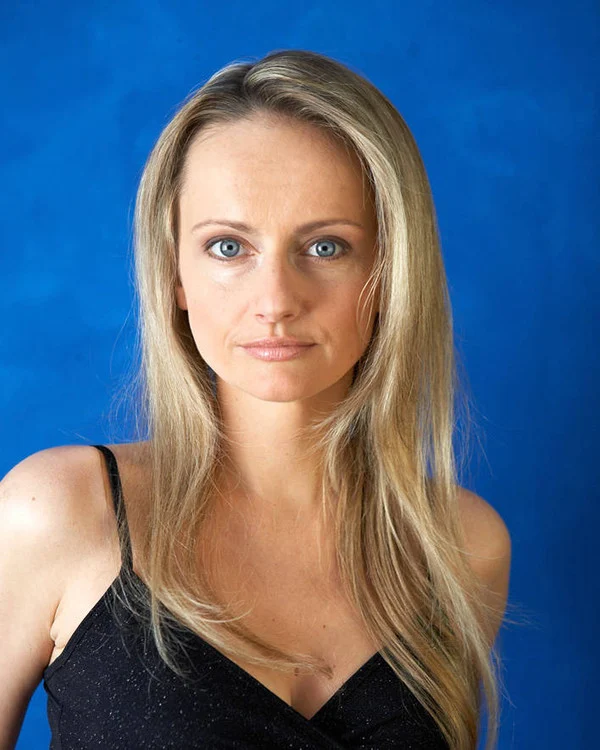
Jana Werner
German singer
20
APPEARANCES
20
PODCASTS
Oct 29, 2026


Ron PereiraHOST
Have you seen this done well at certain places where they've kind of broken the shackles, for lack of a better metaphor?

Jana WernerGUEST
Yeah, we deliberately took metaphors of Tin Man and Octopus because we don't believe there's pure organizations and naming certain companies doesn't really work because some companies might be very, very octopus for a while, but then a leader leaves or you hire a lot of people as you grow and suddenly your culture gets diluted and the octopus-ness goes away.
Jana WernerGUEST
And so we believe even in large companies, you might have some parts, some business units that are very octopus and some not so much.
Jana WernerGUEST
So we'd rather kind of think about which parts of organizations are said done well.
Jana WernerGUEST
And I work at Amazon right now, and there are many parts where it is done very well.
9 MINS LATER
Ron PereiraHOST
engine is and it's it's it's thinking for me now i find myself in and i see that with my kids as well like what do you think about the future of humanity maybe as it relates to the role of ai

Jana WernerGUEST
We didn't want to go with the idea of there's this kind of organization or this name or this brand that we, that people should strive for because no organization I believe is perfect.
Jana WernerGUEST
And even the ones that seem currently to do it well, once a leader changes or the environment changes or they grow or they change, the company itself will change.
Jana WernerGUEST
So We wanted rather to leave people with a mental model or an idea of what they could think about.
5 MINS LATER

Ali JumaHOST
And so how do we get into that stage when even if you lose a talent, you're still at the center able to operate?

28 MINS LATER

Bill GallagherHOST
And can you give us a taste of a couple of them? Like what are some good juicy ones?

Jana WernerGUEST
Um, they have to write job descriptions, they do it side of desk, they do a bullet list of skills.
Jana WernerGUEST
We sc- scan our CVs, usually now with AI, and if there's a keyword missing, that's not the perfect person.
Richie CottonHOST
Uh, talk me through, like, why don't organizations invest enough in their employees?


Todd HenryHOST
How do we cultivate, how do we cultivate an environment where people are willing to be curious, where people are willing to ask questions? What can we do as leaders to facilitate that?
Jana WernerGUEST
And we all heard the word, like everyone has heard it, and people get almost tired of hearing it, but there's so much misunderstanding.
Jana WernerGUEST
So this idea of opening up, of giving space for half-formed and baked ideas, asking questions as a leader from a genuine place of curiosity, open questions rather than the type of questions where you know as an employee if you answer, it'll just be used against you.
Todd HenryHOST
Could you share that story and talk about how we as leaders can create an environment where people feel safe surfacing ideas from the edges, innovative ideas from the edges, rather than feeling like it has to be a centralized command and control situation?


Jana WernerGUEST
... successful and therefore less fast because you do something that isn't effective and that doesn't stick.
Jana WernerGUEST
What I do find is that it's harder to do in the beginning when you have to corral people.
Jana WernerGUEST
You have to create a purpose that people really can buy into, and you have to have these conversations and take the patience and learn what's on people's minds.
Jana WernerGUEST
But those leaders that do that well, that build these kind of coalitions and that create a vision and that, that drive the inner excitement of people and take the time to build trust, to bring them on board, to be vulnerable and acknowledge errors, they actually then drive more sustainable and also transformation that then can build and build and build instead of doing one thing fast and slowing down.
8 MINS LATER
Jana WernerGUEST
And that's the difference between doing a task for a payout or owning a result for pride of the mission.

Mahan TavakoliHOST
So How can we make sure we are, and then therefore we are also focused on value rather than just focused on activity?
Jana WernerGUEST
They're starting to look at proxies instead of real customers, secondary reports.
9 MINS LATER
Mahan TavakoliHOST
So what is the kind of leadership and what is the kind of leadership mindset that it would take to be able to operate in an octopus organization?


Dan HillHOST
Why did it have that priority status? What's going on with clarity and particularly with jargon and why that's a worthy first target?
Jana WernerGUEST
We've bucketed the anti-patterns that we see, the mistakes companies make, those knee-jerk reactions that we all make as leaders or our go-to reflexes to deal with challenges.
Jana WernerGUEST
We bucketed them and we're not creating enough clarity for decentralized action and context.
Jana WernerGUEST
We're not pushing ownership far enough into the organization and we're not creating enough curiosity in the organization, especially nowadays where you have to operate differently and learn how to use AI.
Jana WernerGUEST
And in Clarity, one that is just pervasive through many, many companies, and we certainly have done this.

Julie AnixterHOST
So how do you help hierarchical organizations, which we're all very familiar with, begin to make the shift to distributed intelligence?

Dan HillHOST
Why did it have that priority status? What, what's going on with clarity and particularly with jargon, and why that's a worthy first target?
Jana WernerGUEST
We, um, um, we've bucketed the anti-patterns that we see, the mistakes companies make, those knee-jerk reactions that we all make as leaders, or our go-to reflexes to deal with challenges.
Jana WernerGUEST
We bucketed them, and we're not creating enough clarity for decentralized action and context.
Jana WernerGUEST
We're not pushing ownership far enough into the organization, and we're not creating enough curiosity in the organization, especially nowadays where you have to operate differently and learn how to use AI.
Jana WernerGUEST
And in clarity, one that is just pervasive through many, many companies, and we certainly have, have done this, we are, we're guilty of all the sins, um, is this use of what Scott Galloway calls yoga bubble, or we call corporatese.
Jana WernerGUEST
So this idea of we are an, an AI-forward company that is data centric, customer focused, and, um, leverages its corporate synergies, blah, blah, blah.
Julie AnixterHOST
The, so how do you help hierarchical organizations, which are all v- we're all very familiar with, make, begin to make the shift to distributed intelligence?

Dan HillHOST
Why did it have that priority status? What's going on with clarity and particularly with jargon and why that's a worthy first target?
Jana WernerGUEST
We've bucketed the anti-patterns that we see, the mistakes companies make, those knee-jerk reactions that we all make as leaders or our go-to reflexes to deal with challenges.
Jana WernerGUEST
We bucketed them and we're not creating enough clarity for decentralized action and context.
Jana WernerGUEST
We're not pushing ownership far enough into the organization and we're not creating enough curiosity in the organization, especially nowadays where you have to operate differently and learn how to use AI.
Jana WernerGUEST
And in Clarity, one that is just pervasive through many, many companies, and we certainly have done this.
Julie AnixterHOST
So how do you help hierarchical organizations, which we're all very familiar with, begin to make the shift to distributed intelligence?

Dan HillHOST
Why did it have that priority status? What's going on with clarity and particularly with jargon and why that's a worthy first target?
Jana WernerGUEST
We've bucketed the anti-patterns that we see, the mistakes companies make, those knee-jerk reactions that we all make as leaders or our go-to reflexes to deal with challenges.
Jana WernerGUEST
We bucketed them and we're not creating enough clarity for decentralized action and context.
Jana WernerGUEST
We're not pushing ownership far enough into the organization and we're not creating enough curiosity in the organization, especially nowadays where you have to operate differently and learn how to use AI.
Jana WernerGUEST
And in Clarity, one that is just pervasive through many, many companies, and we certainly have done this.
Julie AnixterHOST
So how do you help hierarchical organizations, which we're all very familiar with, begin to make the shift to distributed intelligence?

David GreenHOST
How have you seen organizations move successfully from Tin Men to Octopus organizations? And do you have any baby examples that you're able to share with listeners?
Jana WernerGUEST
Yeah, we find that they switch from doing change to people where the power of the interpretation is in the hands of the few and they push the plans to actually doing change with people.
Jana WernerGUEST
So creating the conditions for immersion solutions to arrive, to flourish people closest to the problems, to do that.
Jana WernerGUEST
So they kind of cultivate the organization's innate capacity for change itself.
Jana WernerGUEST
I think it was a CEO of a South African stock exchange calling that lighting a thousand fires.
8 MINS LATER


Tiffani BovaHOST
What are the things that, you know, are the commonalities between those that are far more rigid?
Jana WernerGUEST
This is where we kind of noted a bunch of dysfunctions, more than 300, and we boiled them down to 36 anti-patterns.
Jana WernerGUEST
There's a group around lacking the ability to really create the clarity, the context in which people could take decentralized action.
6 MINS LATER
Tiffani BovaHOST
I don't want them to be disheartened by the reality of their lack of control, right? That they just now have more responsibility.


9 MINS LATER

Michiel MaandagGUEST
So it's not possible if years ago you were running like, you know, a steady sort of thin man, but now that's done.


Jana WernerGUEST
We see that with AI, with the rise of AI technology, many of the foundations that we built our organizations on, that Phil just described, these tin man foundations, are being actually, um, taken out of, out of our org... out of our world in which we operate.
Jana WernerGUEST
So for example, um, organizations were designed to lower cost because delivery was very expensive.
Jana WernerGUEST
You can now decide, should I build one or another prototype? You just build both.
Jana WernerGUEST
So this cost of execution has gone down, but the speed of change has gone up, and nobody has the answer anymore.
Jana WernerGUEST
So these two fundamental things have changed the basis on which we build our organizations, and that then creates a lot of dysfunction.
12 MINS LATER

Rachel WarrenHOST
If we hear a company announce an AI transformation, digital transformation, should our reaction as investors be to naturally be skeptical? What is your, your thought process on that?

Jana WernerGUEST
You've all heard this idea Peter Drucker said, "When you give someone a target, they will achieve it even at the detriment of the company." Um, so, um, we love the idea of thinking more about something retrospective, like rewards.
11 MINS LATER
Kurt NelsonHOST
I mean, they're pretty apparent by their names, but, like, w- why should an organization, why should a leader be taking these on, and what does that do for them?

Vasco DuarteHOST
So what have you learned about helping them realize and how do you see that moment when people finally realize that, "Hey, m- wait, maybe the problem, it's me?" Question mark.
Jana WernerGUEST
I have spoken to s- a CEO, for example, of a large investment company headquartered in London and he said, "Man, I have to sign off all the small stuff.
Jana WernerGUEST
I don't even know why it's coming to me for sign-off." And the people working with him assume that he wants to sign it off, so [laughs] there's a total misunderstanding.
Jana WernerGUEST
He doesn't want to, they don't want to, but the processes are in place, and of course we don't question the sacred processes.
Jana WernerGUEST
So I've seen that side of the story where it's a matter of dismantling bureaucracy that has built up and that nobody questions anymore, and when one person has made a mistake, you've added a process that penalizes another 10,000 and it builds and builds.
13 MINS LATER
Vasco DuarteHOST
So tell us a little bit more about that and the consequences to what it looks like transforming these organizations in practice.

Jana WernerGUEST
We had this mad idea for the book and met people who worked with Harvard before.
Jana WernerGUEST
And at some point I met an incredible woman who's written these incredible books.
Jana WernerGUEST
They now get turned into Netflix series and she's on the board of an incredible company.
Jana WernerGUEST
And I put my big girl pants on and just walked up to her and said, we have this idea.
11 MINS LATER
Travis ChappellHOST
What would be your advice to the young person who wants to have a fruitful career?

21:50
What do companies get wrong? And companies that are able to create that clarity at the scale of Netflix or McDonald's or Amazon, what do they do right?
Jana WernerGUEST
It's often underestimated how to create it and how little there is an organization.
Jana WernerGUEST
It starts with a really strong purpose of the organization that's not so abstract, that it doesn't make any sense, that speaks to hearts and minds.
Jana WernerGUEST
The famous one is where the janitor works in NASA and JFK asks him, what are you doing? And he says, I'm putting a man on the moon.
16 MINS LATER


Adi IgnatiusHOST
How do you make this really happen within organizations that have all of these embedded problems?
Jana WernerGUEST
Yeah, we talk a lot about ownership culture and the challenge that a gatekeeper culture tends to create.
Jana WernerGUEST
So, the pig and the chicken walk down the road, and the chicken says to the pig, "Uh, shall we open a restaurant together?" And the pig goes, "Yeah, sure.
Jana WernerGUEST
What shall we serve?" And the chicken says, "Well, ham and eggs, of course." And suddenly the pig stops in his tracks and goes, "You realize I have to be much more committed to that than you." And sometimes it takes the audience a minute of why that is.
Jana WernerGUEST
But basically, the point we're trying to make, there's a difference between those that contribute and those who are really committed and accountable.
Adi IgnatiusHOST
You know, how do they focus then on what really can make a difference in terms of the kind of transformation you're describing?