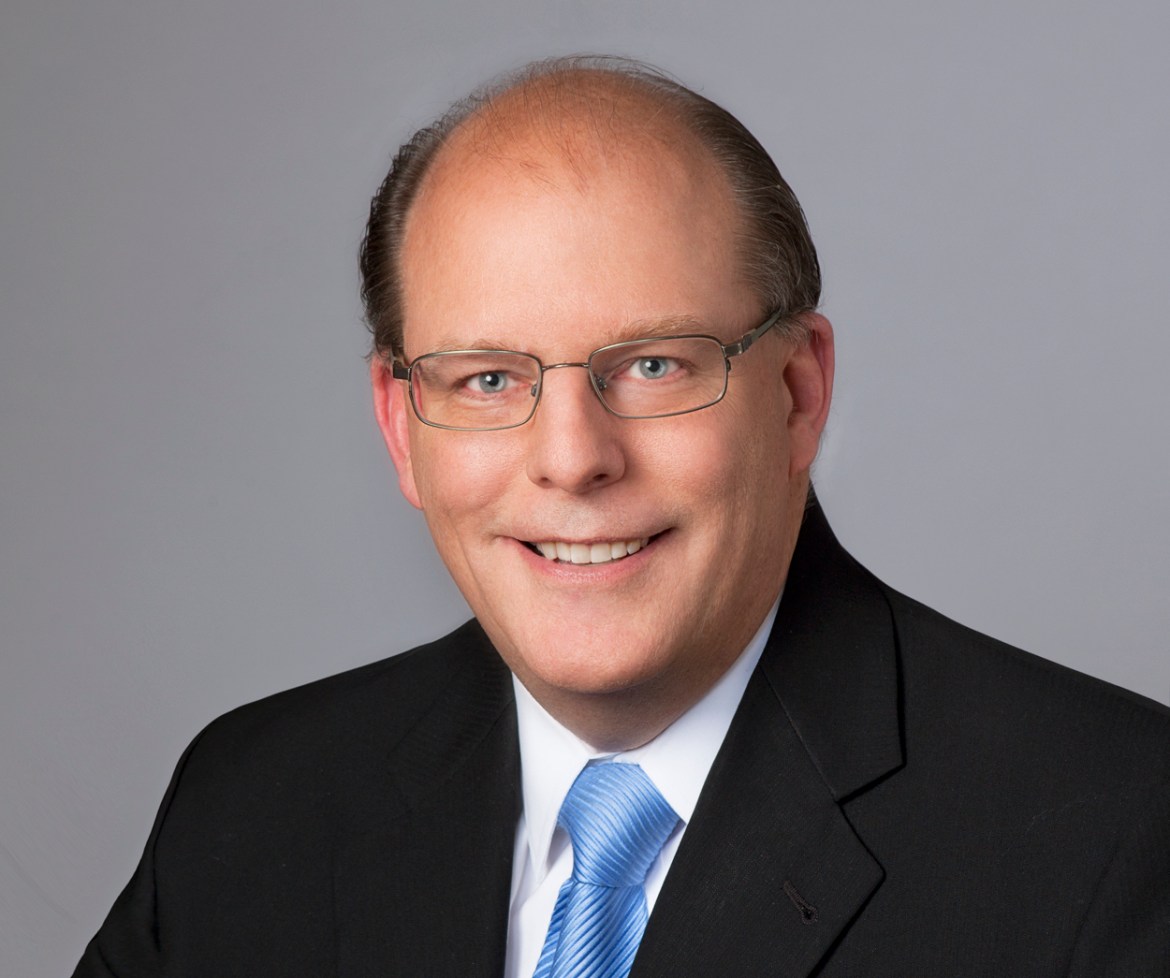
Peter Wehner
American writer
21
APPEARANCES
11
PODCASTS
Oct 6, 2026


Corey NathanHOST
When those come up in a particular piece that you're working on, do you try to work that into the essay, or is it something, um, that you try to find, uh, the overlapping, uh, a-and, and focus on that, you know? Or, or is there another way to, to deal with those differences in your writing?

Peter WehnerGUEST
I'd say, Corey, that we have not had really too many differences that I can think of in the pieces that we've written, um, together.
Peter WehnerGUEST
Um, uh, so if we have differences, for example, on, on, uh, on faith, I mean, those are enormously rich conversations.
Peter WehnerGUEST
And I imagine John and I could actually probably write something, an essay on faith, where we would both be comfortable with it.
Peter WehnerGUEST
It'd be a little awkward to read an essay like that, uh, though, because you'd have a little bit of a, of a ping-pong effect.
6 MINS LATER


Andrew KeenHOST
Has America rediscovered the plot, certainly in a moral sense, in terms of the willingness, maybe not of the elites of Washington insiders like Mitch McConnell or wealthy people like Jeff Bezos, but have Americans found their ethical spine when it comes to standing up to this man? And did they rediscover it on the streets of Minneapolis?
Peter WehnerGUEST
And I think it was a really important, John and I both think it was really important moment in the arc of the Trump presidency.
Peter WehnerGUEST
In part, I must say, Andrew, because I sensed prior to that, of feelings of powerlessness and some measure of despair and loss of human agency among the critics of Trump, a feeling of like, what can we do? He has the power.
12 MINS LATER
Peter WehnerGUEST
I think part of what made this one sting a little bit, uh, more, uh, was that these guys are leaving the Senate.
Peter WehnerGUEST
Um, so it, it's not as if their political careers or future political careers are, are, are gonna be in jeopardy because of this or the life is gonna be particularly difficult, you know, in the next term or that they need to keep, uh, the, the, the lines to power, which is part of the justification.
Peter WehnerGUEST
It's bad, but it would be worse if, if I weren't advising t- Trump or if I weren't close to Trump.
Peter WehnerGUEST
And in the case of, of Cassidy and, and, and Cornyn and some of the others, I mean, they're, they're, they're leaving the Senate.
6 MINS LATER


Aubrey ChavesHOST
passages straight out of the bible that justify something that feels completely opposite
Pete WehnerGUEST
yeah that's a great question aubrey um that's right i mean and there are particular people within the trump administration that invoke the bible more than others donald trump tends not to but there are figures like pete hagseth the secretary of defense self-described secretary of war um who um who is part of a, a branch of reform theology, uh, that a person named Doug Wilson is, is, is the head of that, of that, uh, that reforms movement.
46 MINS LATER


Curtis ChangHOST
know, or Kuyper more recently, right, if you're part of that stream, Abraham Kuyper.
Pete WehnerGUEST
But even those traditions themselves can be narrow-typed, telescoped, and you can begin to get trapped within traditions, which actually prevents you from escaping traditions when you need to, right? There is this tension.
28 MINS LATER
Curtis ChangHOST
Pete, bring us home from this long conversation by comparing the political visions of these two figures, J.D. Vance and Pope Leo XIV.
Peter WehnerGUEST
Uh, you know, Bongino befo- before the, the, the person that Trump wanted, uh, uh, as, as, uh, at the DIA, Defense Intelligence Agency, at the CIA.
Peter WehnerGUEST
I mean, the, these, these people are, are kooks and nuts and conspiracy theorists.
Peter WehnerGUEST
And it's the entire administration at very senior levels, at the most senior levels, are just filled with these people.
13 MINS LATER
Andrew KeenHOST
Uh, his people will go away, and perhaps the Republicans will come back to, quote-unquote, "normal." Which of those two aftermaths are more likely?
Pete WehnerGUEST
Yeah, I mean, essentially, I was alluding to King Lear at the end, kind of raging against the wind, raging into the night.
Pete WehnerGUEST
I think that two things are happening with Donald Trump at the same time, one of which has been relatively consistent, the other one, which is relatively new.
Pete WehnerGUEST
The consistent thing with Donald Trump has been the sociopathy, the narcissistic personality disorder, the disordered personality.
8 MINS LATER


Robert SiegelHOST
And, uh, you, you've offered, uh, as a response, uh, to, to that phenomenon, uh, a turn to Christian humanism, a tradition that, uh, uh, joins, uh, the pursuit of, uh, of human reason and, uh, the classics with, with tradition and faith.
Peter WehnerGUEST
I did an essay in, in The Atlantic on, on Christian humanism, um, 'cause I wanted to think about what might be a, a pathway out for, for what I think is, is a kind of wreckage that American Christians have created.
Peter WehnerGUEST
And I would say E.J. would know it very well as, as a Catholic, because I think it, it mirrors a lot of, of, of, um, Catholic thought, social thought.
Peter WehnerGUEST
Essentially, it- it's the notion that everyone bears the image, um, of God, and so they therefore have inherent dignity and, uh, uh, and equal worth.
8 MINS LATER


Michelle MartinCORRESPONDENT
A couple questions I have about that is, w- where does his worldview come from in, in your, in your reporting?
Peter WehnerGUEST
I think he has, he has reached for faith to try and put meaning into his life.
Peter WehnerGUEST
One is that, um, he's found himself under the influence of a, of a pastor named Doug Wilson, who is with a g- a reformed tradition, uh, tw- within, within the Protestant world, uh, that I think deeply misunderstands, uh, Christianity and, and, and corrupts and, and distorts, you know, the scriptural, uh, the scriptural teaching.
8 MINS LATER
Peter WehnerGUEST
I think what we're seeing, Charlie, when we kind of pull back is one old thing and one new thing.
Peter WehnerGUEST
I would say the old thing is the sociopathy that, that, that has really marked Donald Trump for his entire adult life, as best we can tell, and the narcissistic personality disorder that, that, uh, that he almost certainly is, is struggling with.
Peter WehnerGUEST
That's been a constant, and we've seen it manifest itself in all sorts of ways, uh, over the course of his life and over the course of, of his two terms in office.
26 MINS LATER
Clarissa MollHOST
But I thought that conservatives were traditionally always on the watch for the temperature rising, that that was part of what it meant to be a conservative, was to prize moderation and to avoid extremes.
Pete WehnerGUEST
I think what's happened is that people who claim to be conservatives, in fact, were not conservatives or they've broken with conservatism.
Pete WehnerGUEST
Conservatism as a philosophy I think still holds, and the things that you described, epistemic humility, the insight really that we saw in the founders so beautifully, which was the importance of taming the darker passions, setting a system of government of checks and balances, and the dangers of destroying institutions and norms that are built up over hundreds and thousands of years.
Pete WehnerGUEST
I mean, that's always been what I refer to as the conservative sensibility, which is different than a governing philosophy, right? There are public policies, there's sort of philosophical views of government, and then there are dispositions and temperaments.
Pete WehnerGUEST
I think that the dispositions and temperaments are the most important because I think they can often drive those other things.
7 MINS LATER
Curtis ChangHOST
Um, how would you compare Hegseth and this current administration's use of scripture versus what you experienced when you were in the White House?
Pete WehnerGUEST
Yeah, I mean, and from my perspective, I, I think his is very, very problematic, and I, I think he's wrestling with it in a way that's, um, to be charitable, thin, and that leads, uh, to really an ethic that's antithetical to Christianity and the ethic of Jesus.
Pete WehnerGUEST
In terms of, of, uh, how it operated itself in, in the administration which I served or the, the White House in which I served, which is George W. Bush and the administrations, which was Reagan and George H.W. Bush, and this is true I think of, of Obama and, and Clinton.
Pete WehnerGUEST
I mean, I think that there were people, uh, certainly there were people who, who, uh, grappled with these, with these issues, which is what does the Bible teach and, and, and, uh, what does that mean for, for the very concrete and particular decisions that we face.
Pete WehnerGUEST
Now in, in the case of the Bush administration, that manifests itself in different ways.
Pete WehnerGUEST
When it came to war, uh, you know, there was, there was that element too, and, uh, you know, one can argue for sure whether...
Pete WehnerGUEST
Well, one is there's a debate on, on pacifism versus just war, right? That's a very rich debate.
Curtis ChangHOST
So Pete, how have you been disturbed by the texts, and what have you done with that disturbance?

Sky JethaniHOST
Why would you say MAGA is not just against conservatism, but actively opposed to it?
Peter WehnerGUEST
I mean, I'd say partly because of what MAGA is, what it represents, um, ideologically, uh, which is, I think, much more of a populist, ethnic nationalist movement than a conservative movement, and, uh, what I consider to be conservatism, at least authentic conservatism, conservatism rightly understood.
Peter WehnerGUEST
The reason I became a member of the Republican Party and served in three Republican administrations, including in, in, in the, um, George W. Bush White House, was because the Republican Party was an imperfect repository, political party repository of conservatism.
32 MINS LATER
Peter WehnerGUEST
... on, like, how, how, how does, you know, how does, how does this happen? I think one important thing to understand, and people who are not in the evangelical fundamentalist world probably don't understand it, it's precisely because they're not in, in that world, is that, you know, Donald Trump never sold himself as a Christian.
Peter WehnerGUEST
Um, he was smart enough as a marketing person to know that that just wasn't gonna work.
Peter WehnerGUEST
So what he did is he sold himself as, as an avenging, kind of ruthless warrior on their behalf, and that created a connection, and then you had people like Robert Jeffress, uh, and, uh, Tony Perkins, and Franklin Graham, uh, and, and Jerry Falwell Jr. at the time, you know, cheering him on, saying, "You know, we want the meanest SOB we can find.
Peter WehnerGUEST
We want a, you know, we want a tough-minded president." And he fit that bill, and so they view him n- not as one of their own, but a defender of their own, and even to the point in which I think it felt like he uses means and methods that we're not fully comfortable with, but, God, are we glad that he's using them on our behalf.
5 MINS LATER

Charlie SykesHOST
The church is the conscience of the state, and that's kind of the challenge, isn't it?

Mike CosperHOST
When you look at Christian support for Trump, how do you understand that in the day and age that we live in right now?
Peter WehnerGUEST
In one sense, it's just rank hypocrisy, and the most obvious example of that would be many of the same people who lacerated Bill Clinton for his affair with Monica Lewinsky on an almost daily basis in the nineteen nineties have now become huge Trump supporters.
Peter WehnerGUEST
And we've seen in the polling data that morality as a feature in political leadership really mattered a lot to, uh, evangelicals in the nineties, and once Trump came into power, it flipped.
Peter WehnerGUEST
So there's obviously hypocrisy, uh, going on, but I don't think that's sufficient answer, certainly not the whole answer, what's gone on.
Peter WehnerGUEST
I, I think in some respects, it's more complicated than that, more psychologically complicated than that.
Peter WehnerGUEST
And one way that I explain it is that I think that a lot of Christians who ended up voting for Trump in twenty twenty-six viewed his immorality, his cruelty, his crudity, as a bug, not a feature.
7 MINS LATER
Peter WehnerGUEST
Essentially, what you, what you're asking churches to do is a version of what the Confessional Church in Nazi Germany did, which was to rise up.
Peter WehnerGUEST
It was a minority within Germany at the time because there was a, a movement, Deutsche Christen, as, as they referred to it, German Christians, in which the church had been, uh, captive, uh, made captive by the Nazi Party and supported it.
Peter WehnerGUEST
And there was a Confessional Church led by Martin Niemöller and, and particularly Dietrich Bonhoeffer, that, that, that stood up and said, "We can't, we can't allow that." Why is some version of that not happening in the United States right, right now? Uh, first thing I'd say is, is actually apropos what you said earlier.
Peter WehnerGUEST
There were three bishops who released a statement, which clearly had the blessing of Pope Leo, uh, in the context of international affairs and the, and the acidic erosion of moral foundation of American foreign policy.
26 MINS LATER


Peter WehnerGUEST
I mean, there's memoranda that he signed early on, and he essentially, uh, said, and his people have said, um, that, uh, he will be, as you said, the final arbiter of what's legal and what's not.
Peter WehnerGUEST
One of which is, uh, y- you know, when we really get to a constitutional crisis will be, I think, if the S- Supreme Court makes a ruling, and he just decides, uh, to ignore it, and that i- would be such a violation both of American history and- and the norms.
Peter WehnerGUEST
But we don't know what would happen, all right? If- if- if the Supreme Court says one thing and he says, "Well, that's an interesting opinion, uh, and I don't believe it," who arbitrates that? Uh, who decides? Uh, and we don't know, because it hasn't happened, it hasn't happened before.
Peter WehnerGUEST
The other thing I'd say about- about Trump is that, um, I mean, there's a record here.

Clarissa MollHOST
What did you find as you talked to faith leaders about why everyone is so quiet when it seems like the need is so great and so emergent and immediate?
Pete WehnerGUEST
I heard from just about 30 ministers, people of faith, uh, including Russell who was, who was good enough to go on the record with his quotes.
Pete WehnerGUEST
There was a lot of people w- went off the record because they were understandably nervous about some of the comments that they made, but there, there were six or seven reasons that came up, if I were to categorize them.
Pete WehnerGUEST
I just mean that a lot of pastors and probably more congregants just don't know about PEPFAR.
Pete WehnerGUEST
A second, and this is understandable, I heard from pastors, for example, a good friend of mine, Scott Dudley at Bellevue Presbyterian Church in Bellevue, Washington, who talked about the commitments that his own church already had with refugees and immigrants and orphans and the homeless and they had...
Pete WehnerGUEST
they didn't have much bandwidth for doing something new and I understand that and I, and I accept that.


Peter WehnerGUEST
... which, um, you know, would have had, uh, an uprising against the slightest, um, a- act against, uh, the pro-life cause in- from their perception.
Peter WehnerGUEST
And now what do you have? A person as head of HHS, which is the most important federal agency when it comes to abortion, who as ear- recently as last year didn't believe in any restrictions at any point with abortion.
Peter WehnerGUEST
Trump himself is de facto pro, um, pro-choice, um, and you see it with America's, uh, role, uh, in- in th- the- uh, the world.
Peter WehnerGUEST
It's a nativist, populist, nihilistic party, and it al- also underscores just what a cult of personality it is.
11 MINS LATER


Pete WehnerGUEST
We've seen it for so many years that in a sense, as, as you were suggesting earlier, you kinda shrug your shoulders because we've gotten used to it.
Pete WehnerGUEST
I will say this, Tim, when, when I hear that kind of thing, it is, to me, a kind of CAT scan into who these people are and what drives them, and what a fraud so much of their lives have been, and in a, in a sense, how much of a fraud a lot of Republican politics, uh, a lot of Republican politicians have been.
Pete WehnerGUEST
And I'm saying this as somebody who, who obviously spent my life, you can tell from my biography, in the Republican Party.
27 MINS LATER
Mike CosperPANELIST
And on the other hand, I think there's a reaction towards the hostility of the academy towards Israel and towards Jews in particular, that I think has a lot of popular support from Americans who are tired of seeing anti-Semitism on campus.
Pete WehnerGUEST
There's no question that on elite universities and not just Harvard's and Yale's and the private universities, Columbia, but others as well, that there is a very strong tropism against Israel and some measure of anti-Semitism, I think, in terms of trying to understand it.
Pete WehnerGUEST
I think that the frame that it's fitting in is the oppressor-oppressed paradigm that's very strong on the left and on university campuses.
Pete WehnerGUEST
And they have decided that Israel is the oppressor and the Palestinians are the oppressed.
Pete WehnerGUEST
And in my experience, when you listen to the people who have that view, There's virtually nothing that the oppressor quote unquote can do that they think will cross any moral lines.
Pete WehnerGUEST
And there's virtually nothing that the so-called oppressor can do, which will win them sympathy.
10 MINS LATER
Clarissa MollHOST
with your recent interview in The New York Times with Nicholas Woltersdorf, who is a professor emeritus of philosophical theology at Yale, because this conversation seems to be just as much about the First Amendment rights and anti-Semitism as it is about the genuine spirit of inquiry and curiosity that I am convinced, as a Christian, is divinely embedded in humanity.