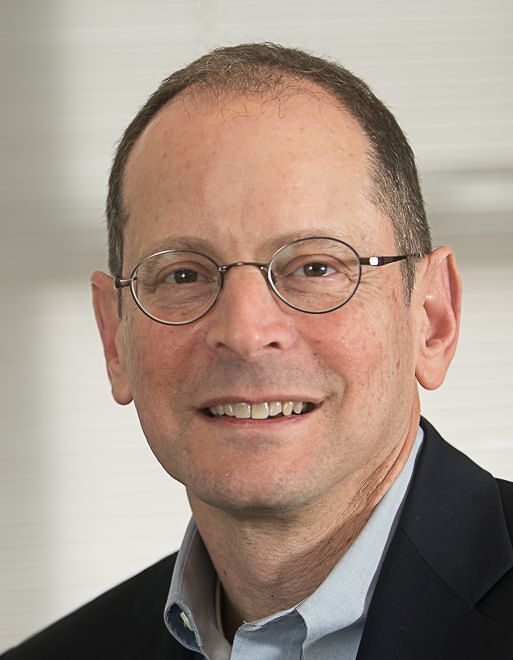
Jonathan Rauch
American author and journalist
27
APPEARANCES
17
PODCASTS
Oct 2, 2026


Jonathan RauchGUEST
[laughs] Well, so I've been writing about where knowledge comes from since the early '90s when I wrote my first book about it, and I've been saying that we rely for in modern life on three great liberal systems to organize our societies, work out our conflicts, manage our resources, keep us at peace, make us prof- prosperous, healthy, and knowledgeable.
Jonathan RauchGUEST
And one is capitalism, markets, and the second is liberal democracy, and the third and most successful is liberal science, which is the whole knowledge-seeking enterprise, the, the global system of people critiquing each other, looking for each other's mistakes.
Jonathan RauchGUEST
It's trans-- literally transformed the human species from small tribes that knew a few things to being able to develop a vaccine over a weekend.
Jonathan RauchGUEST
So that's our greatest achievement, and I've written a couple books defending it, and the most recent, as you say, is, is published in, I think, spring or June of twenty twenty-one, and it's called The Constitution of Knowledge.
Jonathan RauchGUEST
And it says a marketplace of ideas, just free speech isn't enough, that, that having knowledge requires an intricate system of pitting ideas against i-- other ideas in a structured way that looks a lot like the US Constitution, which forces compromise.

Chip ConleyHOST
But I, I-- what is your thought on wisdom, uh, relative to knowledge, since you are a knowledge expert and I'm doing my best to try to be a wisdom expert?

Ashley C. FordADVERTISER
Find out how they started something bigger than themselves, and listen wherever you get your podcasts.
Jonathan RauchGUEST
Someone else who repeats that information in Bengal should get the same result.
Jonathan RauchGUEST
The idea here is if you take personal standpoint and privilege out of it so that we become interchangeable, that allows us to coordinate among not just a handful of people who happen to agree on things or be in the same tribe or be in the same physical place.
Jonathan RauchGUEST
We can now coordinate millions, hundreds of millions, billions of human beings who follow those rules, and that's the greatness of science.
48 MINS LATER
speaker_2ADVERTISER
Chapter three, the surprising link between liberalism and Christianity.


Andrew KeenHOST
Is your analysis, both in the piece, Trump has finally lost the plot, and more generally about the role of the universities and law firms and media, the American elites in terms of either standing up to Trump or rolling over, they don't have quite as a heroic narrative as perhaps the people on the streets of Minnesota, do they?
Jonathan RauchGUEST
No, they don't, although some of them were heroic enough, which is the point of Pete and my article.
Jonathan RauchGUEST
So the thesis we pursue in this particular article Is it the most ambitious thing that Trump's really the people around him were determined to try to do is they thought the left is winning the culture war.
Jonathan RauchGUEST
And they were going to use the full force of the presidency and the U.S. government to go through the private sector domain by domain and route the left, drive it out, change the culture and values of the country.
14 MINS LATER
Andrew KeenHOST
What have you learned over the last 10 or 12 years in terms of politics and your association with the Republic?

Jonathan RauchGUEST
First of all, thank you all for being here for the important work of the ICC, for the important work all of you are doing on your campuses.
Jonathan RauchGUEST
I, like all of you, was horrified at what we saw not only on October 7th, but on October 8th at places like Harvard.
Jonathan RauchGUEST
I also want to thank Aviva for your work at Boundless, as well as for being with us today.
26 MINS LATER


Ben WittesHOST
Or are you really just bewailing your fate relative to, say, mine with respect to a horde of female mosquitoes getting ready to lay eggs?
Jonathan RauchGUEST
I find it actually a source of emotional rescue to know that I am genetically attractive to something.
Jonathan RauchGUEST
Most of my life, I've not had the luxury of knowing that I was attractive to something.
Jonathan RauchGUEST
At the moment, I'm working with Pete Wehner on an article for a certain major newspaper that you've heard of, celebrating what we think is the fact that the most ambitious of the Trump MAGA agendas has failed.
Jonathan RauchGUEST
And that's an effort to rewire American culture from the top down by using government as a blunt instrument in all kinds of spheres, like bludgeoning the media, bludgeoning private law firms, bludgeoning universities, uh, changing the names of things like, you know, the Gulf of Mexico, um, putting different names on the Kennedy Center.
Ben WittesHOST
is there some benchmark against which you're measuring success here? What's the framework other than that he's got very low approval ratings that is marking this failure?
Mike FeinbergPANELIST
And my friend and I both had the same exact thought upon leaving, which is like, how many movies of the type that Harry Dean Stanton made in his heyday will not get made because of the budget that was spent on The Avengers? Like, what David Lynch or Vin Vendors film or somebody who could be the next David Lynch or Vin Vendors now gets cast aside so they could afford the CGI for five minutes of The Avengers?
Jonathan RauchGUEST
One is that the childish moral simplicity of these movies feeds the idea that the world is a place with good guys and bad people and bad guys, and Donald Trump is a good guy superhero who is fighting the bad guy wokesters.
Jonathan RauchGUEST
And the second problem I have with them is the larger problem of adults taking over and industrializing things that belong to children, like Halloween.
Jonathan RauchGUEST
which was at one point a sweet, innocent thing that kids did to dress up, and parents sent them out to do it or went around with them.
Jonathan RauchGUEST
But no one thought about turning this into a giant festival for adults to show off how much money they can spend.
9 MINS LATER

Doug StewartHOST
It's also one of the first things or the first thing that Jesus says when people encountered him after the resurrection because they were freaked out.
Jonathan RauchGUEST
Or the famous episode when he and the disciples are on a boat in the Sea of Galilee and a storm comes up and the disciples are all afraid for their lives because they think the boat is going to sink.
33 MINS LATER
Doug StewartHOST
And as you answer this, I think it'll be obvious how the conversation we just had kind of spins into that.

EricHOST
What does a democratic republic need from Christianity?
Jonathan RauchGUEST
They weren't pressured at the time by the people we now call Christian nationalists to include Christianity, the name of Jesus, in the founding documents.
Jonathan RauchGUEST
At the same time, though, They told us that they could give us the structure of a government, of a democratic republic, but that the core values on which that would rest, what they called Republican virtues, would have to come from the people.
Jonathan RauchGUEST
And they said, Madison, Washington, Franklin, Hamilton, all said, if the public is not virtuous, This Republic won't survive regardless of whether, as Madison called the constitution, there are parchment barriers.
Jonathan RauchGUEST
So where was Republican virtue supposed to come from? So civil society, which means family and community and local institutions, but very heavily, maybe predominantly, it should come from faith institutions.
17 MINS LATER
Donald TrumpSOUNDBITE_SPEAKER
with the stuff they're doing.

Aviva KlompasMODERATOR
Jonathan.
Jonathan RauchGUEST
So first of all, thank you all for being here for the important work of the ICC, for the important work all of you are doing on your campuses.
Jonathan RauchGUEST
Um, I, like all of you, was horrified at what we saw not only on October seventh, but on October eighth at places like Harvard.
Jonathan RauchGUEST
I also wanna thank Aviva for your work at Boundless, as well as for being with us today.
28 MINS LATER
Aviva KlompasMODERATOR
Jonathan.


Jonathan RauchGUEST
I, like a lot of us, am, am very much on a journey in what I think are uncharted waters, and my starting point for that journey was past tense, also still is to some extent, but my starting point was the voters in America and the world don't know how good they've got it.
Jonathan RauchGUEST
They have-- They enjoy a level of peace, freedom, prosperity and knowledge which is unparalleled in human affairs, and that's especially true of the United States of America, which has never been more prosperous, more secure.
Jonathan RauchGUEST
And so aren't they being more than a bit spoiled to think that now is one of the worst times in American history? Isn't there just, at some level, a fundamental failure of perception here and maybe also a failure on the part of liberals to tell our story in the way that, you know, Ronald Reagan so effectively did? Tell stories about peace and freedom and the shining city on the hill.
15 MINS LATER
Jonathan RauchGUEST
The second thing they've done, which is also very bad, is the renorming project, and that they've been working on for 10 years, and that's getting people adjusted to political standards that violate all previous civic norms to their advantage.
Jonathan RauchGUEST
This is not so much Trump, but I think it's Steve Miller, it's Bannon, it's Russell Vogt.
Andrew KeenHOST
Has anything changed over the last six months in terms of the court, its makeup, its decisions, the law, and this attempt by the Trump administration to subvert or undermine or ignore the law? Or is it just business as usual, certainly over the last 18 months of this second Trump presidency?
Jonathan RauchGUEST
I think that, that we got more clarity on, on what this court is and what it's doing.
Jonathan RauchGUEST
We haven't had a discontinuity, but we got the clearest statement to date of the conservative court's agenda.
Jonathan RauchGUEST
We knew it was aggressive and that they were interested in overturning longstanding precedents, and we knew that it had a strong view on the power of the presidency, the unitary executive, um, the inability of Congress and, to some extent, the courts to limit executive power.
Jonathan RauchGUEST
Um, and we knew that a number of them, especially Alito and Thomas, but also to some extent, um, Kavanaugh and Gorsuch, were pretty out there in terms of some of their views, and we've seen all that confirmed.
Jonathan RauchGUEST
The biggest decision was certainly overturning Humphrey's Executor and, you know, what all that means bottom line is it's much harder for Congress to set up an independent agency and much easier for the president to fire people running agencies, uh, just because he doesn't like them.
Jonathan RauchGUEST
And that's a significant shift in power away from Congress and toward the presidency.
9 MINS LATER
Andrew KeenHOST
I- i- do, do you see a, a moral vacuum? Uh, you and Pete Wehner, um, have, uh, written extensively on this, certainly when it comes to the United States.
Jonathan RauchGUEST
I am far from a scholar on these issues, but I'd like to get your opinion of the theory on which this decision is based because I think it's kind of bunk.
Jonathan RauchGUEST
My understanding of Madison's constitutional idea is not that the three branches should all have their distinctly separate lanes and not get in each other's business.
Jonathan RauchGUEST
It's that the branches should get up in each other's business all the time, and that Congress, when there are conflicts, should be supreme, and that the powers of the executive are delegated by the Constitution through the Congress.
Jonathan RauchGUEST
So it seems to me that the theory of, I guess it's called unitary executive, is probably just wrong as a matter of constitutional doctrine.
6 MINS LATER


Charlie SykesHOST
What, what is, what is your sense? How do, how do you describe what we're seeing?
Jonathan RauchGUEST
The one thing that we know Trump is, it's, it's not controversial, is a patrimonialist, and a patrimonialist is a leader who believes that the government is the personal property of himself and his family.
8 MINS LATER
Charlie SykesHOST
What did you make of Donald Trump basically, you know, swearing at Benjamin Netanyahu, telling him, you know, "Stop attacking Hezbollah in Lebanon"? I mean, what's happening to that beautiful friendship?


Jonathan RauchGUEST
We are going to force these two visions into contention with each other and allow it to work out dynamically." And I think that that word dynamic is where Madison's genius lies.
Jonathan RauchGUEST
Unlike, or at least to a greater extent than anyone then, and to a significantly greater extent than I'd argue most people now, Madison solves the core problem of how do you make a republic both dynamic and stable? He studies for months to try to figure this out, and he comes up with the right answer, which is if you divide government in various ways and then force factions into a constant state of negotiation with each other so that they have to compromise all the time to get anything done, you can create not just compromises that split the baby.
25 MINS LATER
speaker_4UNKNOWN
So if there's one element of his legacy that folks here should reflect on, um, as they leave this panel today, uh, what should that be? And we'll start with Jonathan.
Jonathan RauchGUEST
Well, I'm working on an article at the moment with, uh, I won't get into too many details because we're still in editorial process, but an article with a, a collaborator who worked for three Republican presidents in different parts of administrations.
Jonathan RauchGUEST
And we wanna kind of denumb people to what's happening right now, um, by, by saying that to describe Trump himself as a, a little bit crazy, incoherent, irrational, these, these qualities are true.
Jonathan RauchGUEST
But in the second term, they have projected downward and outward to the administration as a whole.
11 MINS LATER
Charlie SykesHOST
We've never been at that point where the people with-- where the government in charge of the greatest world-destroying arsenal that we've ever known is psychotic, right? I mean, isn't that the whole point of civilization is to keep the psychotic individuals from having the power to destroy the planet? Wouldn't that have been one of the major goals of civilization over the last two thousand years? Uh, you know, not just the last ten years.


Sam HarrisHOST
Uh, I just wanted to emphasize that, you know, whether or not someone agrees that you are, uh, naming this correctly, we shouldn't lose sight of, you know, all the ground our country has, has lost and is losing under this president.
Jonathan RauchGUEST
We've never seen the US government turned into the personal property of the leader, where, you know, he dials up a prosecution or he accepts gold bars and then bases his tariffs, you know, based on stuff that people give him.
Jonathan RauchGUEST
The, the, the opposite of patrimonialism is, is not democracy, it's bureaucracy.
Jonathan RauchGUEST
Because what they wanna do is weaken all the tendons in the bureaucracies that make government competent because you don't want experts.
Charlie SykesHOST
So give me your, your thoughts about, you know, the, the killing of, of Rene Goode and, and the aftermath, and the way it's playing out in the Department of Justice.
Jonathan RauchGUEST
[inhales] Well, I'm not an insider to that case, to say the least, so I'm not sure that I have all that much to add to, to, to what's been said by, by you and others.
Jonathan RauchGUEST
Uh, it does seem to me that there are two separate threads here that should be separated to, to some extent.
Jonathan RauchGUEST
I actually heard about it before I saw the news reports when it floated across my social media feed, and I clicked on the video, and I felt physically nauseated by what I saw.
14 MINS LATER
Jonathan RauchGUEST
You have witnessed how far this administration will go to violate the rule of law and norms of all kinds.
Jonathan RauchGUEST
They, I think, are paving the way, um, to deploy ICE and National Guard and possibly active duty military around polling places to, quote-unquote, "protect" them in 2026, an election they care considerably more about.
Jonathan RauchGUEST
Um, one way that Trump and his MAGA base and followers in Congress could react to these results is a course correction.

6:33

What are some of the examples that you would say are, are pa- classically patrimonial in Trump's behavior and this administration in particular?
Jonathan RauchGUEST
In Washington, we used to have, for example, a policy process in the White House on which various policy nerds and lawyers would check on policies and develop them.
Jonathan RauchGUEST
There would be independent bureaucracies which the president couldn't necessarily fire.
Jonathan RauchGUEST
Congress would have an independent will and Cabinet secretaries would be appointed on grounds other than their personal willingness to do whatever the president tells them.
Jonathan RauchGUEST
The policy process now is the president wakes up one morning and decides if we're going to launch military strikes against Venezuelan boats, or if we're going to raise tariffs against Canada because he doesn't like an ad, or if he's going to put the National Guard on the streets.
9 MINS LATER
16:30
(laughs) So, um, with that in mind, do you think that Trumpism a la patrimonialism is here to stay, at least amongst the Republican Party, for some time?

Jonathan RauchGUEST
And that book was about non-governmental repression of speech and thought at universities, but also elsewhere.
Jonathan RauchGUEST
I think that you and I and probably all of us agree that free speech is not just about law and government, it's also about culture.
Jonathan RauchGUEST
And you need to have cultural institutions that follow principles of free speech, especially universities for whom pursuit of inquiry and knowledge is fundamental.
Jonathan RauchGUEST
So, I think we all agree that the culture matters, but I'm going to guess that we may also agree, but I'll try you on this, that government repression of speech is more concerning than cultural repression of speech.
Jonathan RauchGUEST
I would argue it's an order of magnitude more concerning because government can yank your license, investigate you, try you, put you in jail.
Jonathan RauchGUEST
And that's where I bridle at an equivalence between what students are doing on campus by way of canceling other students who are right wing, versus what the FCC just did, or what ICE did.
16 MINS LATER

Yascha MounkHOST
So, how are you thinking, on the whole, about the principles that should guide us as we're trying to figure out these difficult questions of social media regulation?
Jonathan RauchGUEST
... we're in an apoc- apocalyptic moment, we're in a fight against the left, which is out to destroy our country, and the post-modern element of that group believes that there tr- there's no such thing as real truth, there's only such thing as power, and that truth comes from the wielding of power.
Jonathan RauchGUEST
The post-modern formula is that, uh, discourse creates, uh, power and power creates reality.
Jonathan RauchGUEST
So, in that world, you know, what really happened or didn't happen with or around Jeffrey Epstein is not the important thing.
Jonathan RauchGUEST
The important thing is being able to win the narrative, which is, which is how they think about it, and if they think they can win the narrative one way or another, that's what they care about.
18 MINS LATER


Tim MillerHOST
Well, let me hear more about your take on secularization and then we'll, we'll grade you at the end.
Jonathan RauchGUEST
So I said, "Isn't it great that Americans are just losing interest in religion? And, you know, religion is the most divisive and dogmatic force out there and we'll be like Scandinavia and we'll be happier and more harmonious." And I was hugely wrong about that.
Jonathan RauchGUEST
In this century, the first 20 years of this century, we have seen a wave of dechurching, secularization unlike anything in American history.
Jonathan RauchGUEST
Now we're talking Christianity since this is, you know, it's obviously our predominant religion.
Jonathan RauchGUEST
You saw, just in a period of 14 years, you saw a 15 percentage point drop in the number of people saying they were Christian, and where did they go? They became so-called nones, N-O-N-E-S, people with no religion.
16 MINS LATER


Jonathan RauchGUEST
Um, so I'll try, and, and just cut me off or divert me if I start to filibuster.
Jonathan RauchGUEST
So the first thing is what I just alluded to, which is that our society depends on organizations of faith, and in the United States, that means overwhelmingly Christianity, to perform a lot of basic social functions, like socializing kids, um, and giving people a sense of purpose and meaning in life, providing community, group worship, providing outlets.
Jonathan RauchGUEST
A lot of people in the, in the old days, when I grew up, the first thing people asked each other wasn't often, "Where do you work?" or, "Where are you from?" It was, "What church do you go to?" So these were just pillars of our civic society, and they crumbled.
25 MINS LATER

Jonathan RauchGUEST
Well, so, this, Russ, is really the, the hinge of the entire argument of the book.
Jonathan RauchGUEST
I mean, so far, I've been describing what's happened and the forces behind it, and I've described the ways in which Christianity, Christians have made, I think, tragic choices, choices, excuse me, that have redounded against Christian witness and also weakened liberal democracy.
Jonathan RauchGUEST
But, but now we get to what I think is the core of the argument, which is...
16 MINS LATER

Russ RobertsHOST
It may be in the fundamentalist way, maybe in other ways, but what do you feel about those, those, uh, that tension and that, that question of fundamentalism?
Scroll for more appearances