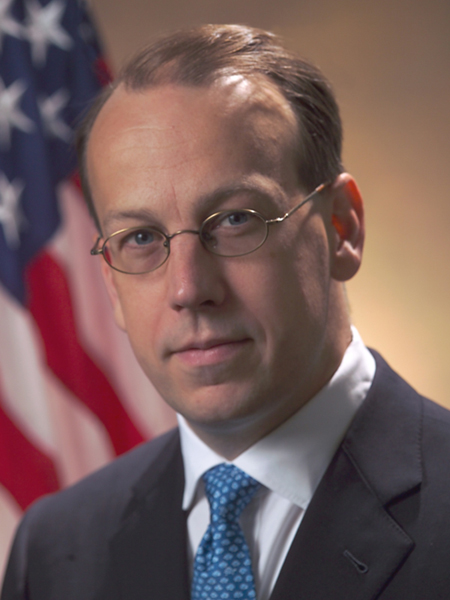
Paul Clement
Lawyer and former Solicitor General of the United States
17
APPEARANCES
3
PODCASTS
Apr 27, 2026

Neil GorsuchGUEST
And Mr. Clement, not, not to say you're wrong about your view of the scope of the misbranding actions, but if you were wrong, how would it matter? Could you still win if misbranding actions were more, um, uh, expansive than what you're arguing?

Paul ClementGUEST
I mean, I suppose I could, and I suppose, like, you could, you know, kind of just go with impossibility preemption and make this, like, very simple because I just think you look at those regulations and it makes it clear we can't change the, uh, we can't change the label.
Paul ClementGUEST
The reason I'm sort of, you know, fighting on this, and the reason I think I'm not wrong, is because I think that there, as I said, you know, when it comes to misbranding, that's very specific.
Paul ClementGUEST
The easiest way to commit a misbranding offense is to omit something that you're required in the registration process to put on the label, if you take it, if you omit something.
Paul ClementGUEST
And if, of course, the state thinks you need to add something that EPA is not requiring you to put on the label, I mean, that just walks squarely into the text of the express preemption clause.
Paul ClementGUEST
And, and part of the reason I'm kind of, like, resistant to put all the weight on impossibility preemption is because, you know, in some respects the express preemption clause is even broader because it doesn't, uh, require an actual conflict.
Paul ClementGUEST
Um, you know, if the state imposes a labeling requirement that's different from or in addition to, uh, that's still preempted by the plain text of the statute without really regard to whether it's misbranded.
48 MINS LATER


KaganGUEST
And Mr. Clement, not, not to say you're wrong about your view of the scope of the misbranding actions, but if you were wrong, how would it matter? Could you still win if misbranding actions were more, um, uh, expansive than what you're arguing?
Paul ClementGUEST
I mean, I suppose I could, and I suppose, like, you could, you know, kind of just go with impossibility preemption and make this, like, very simple because I just think you look at those regulations, and it makes it clear we can't change the, uh, we can't change the label.
Paul ClementGUEST
The reason I'm sort of, you know, fighting on this and the reason I think I'm not wrong is because I think that there, as I said, you know, when it comes to misbranding, that's very specific.
Paul ClementGUEST
The easiest way to commit a misbranding offense is to omit something that you're required in the registration process to put on the label if you take it, if you omit something.
Paul ClementGUEST
And if, of course, the state thinks you need to add something that EPA is not requiring you to put on the label, I mean, that just walks squarely into the text of the express preemption clause.
Paul ClementGUEST
And, and part of the reason I'm kind of, like, resistant to put all the weight on impossibility preemption is because, you know, in some respects, the express preemption clause is even broader because it doesn't, uh, require an actual conflict.
Paul ClementGUEST
Um, you know, if the state imposes a labeling requirement that's different from or in addition to, uh, that's still preempted by the plain text of the statute without really regard to whether it's misbranded.
48 MINS LATER
speaker_9NARRATOR
Mr. Clement.
Elena KaganPANELIST
And Mr. Clement, not to say you're wrong about your view of the scope of the misbranding actions, but if you were wrong, How would it matter? Could you still win if misbranding actions were more expansive than what you're arguing?
Paul ClementGUEST
I mean, I suppose I could, and I suppose, like, you could, you know, kind of just go with impossibility preemption and make this, like, very simple because I just think you look at those regulations and it makes it clear we can't change the label.
Paul ClementGUEST
The reason I'm sort of, you know, fighting on this and the reason I think I'm not wrong is because I think that there, as I said, you know, when it comes to misbranding, that's very specific and the easiest way to commit a misbranding offense is to omit something that you're required in the registration process to put on the label if you omit something.
Paul ClementGUEST
And if, of course, the state thinks you need to add something that EPA is not requiring you to put on the label, I mean, that just walks squarely into the text of the express preemption clause.
Paul ClementGUEST
And part of the reason I'm kind of, like, resistant to put all the weight on impossibility preemption is because, you know, in some respects the express preemption clause is even broader because it doesn't require an actual conflict.
Paul ClementGUEST
You know, if the state imposes a labeling requirement that's different from or in addition to that's still preempted by the plain text of the statute without really regard to whether it's misbranded.
Paul ClementGUEST
And it seems to me that if EPA, once you go through the registration process, they tell you what's required to be on your label.
48 MINS LATER
John RobertsMODERATOR
Thank you, counsel.
Paul ClementGUEST
I wouldn't think the one place we were going to, especially defer to the states with respect to the federal general election deadline, is with overseas and military voters, where the interests of the federal government are probably paramount.
Paul ClementGUEST
If you read the statutes different and want to reconcile them the way that the SG does, we have no objection to that.
Paul ClementGUEST
We just think The better way to read these two statutes is to reconcile them in the way that we do.
23 MINS LATER

Brett KavanaughPANELIST
I just want to get your response to how we think about the historical practice in the text and then the who decides.
Paul ClementGUEST
I wouldn't think the one place we were going to especially defer to the states with respect to the federal general election deadline.
Paul ClementGUEST
is with overseas and military voters, where the interests of the federal government are probably paramount.
Paul ClementGUEST
If you read the statutes different and want to reconcile them the way that the SG does, we have no objection to that.
23 MINS LATER
Brett KavanaughGUEST
I just want to get your response to how we think about the historical practice in the text and then the who decides.
Elena KaganPANELIST
Do you have a theory whether or not it makes any sense about how it came to be? I mean, why?
Paul ClementGUEST
And again, though, I think the critical thing, though, is the one thing we can't ignore is that Congress made the deliberate judgment to treat interstate and interstate differently.
Paul ClementGUEST
Now, if you really think they should be the same, then maybe that's a reason to not read the preemption clause to reach uh, safety related towards altogether as, as lower courts have read the ADA.
Paul ClementGUEST
I mean, if the anomaly is really bothering you, that's the one way you can make the anomaly go away.
1 HR 24 MINS LATER
John RobertsMODERATOR
Rebuttal, Mr. Clemente?
Elena KaganGUEST
Do you have a theory whether or not it makes any sense about how it came to be? I mean, why?
Paul ClementGUEST
And again, though, I think the critical thing, though, is the one thing we can't ignore is that Congress made the deliberate judgment to treat interstate and interstate differently.
Paul ClementGUEST
If you really think they should be the same, then maybe that's a reason to not read the preemption clause to reach safety-related torts altogether, as lower courts have read the ADA.
Paul ClementGUEST
I mean, if the anomaly is really bothering you, that's the one way you can make the anomaly go away.
1 HR 24 MINS LATER


Paul ClementGUEST
So I think, in fairness, I think Congress included patents in the statute because it wanted to be comprehensive of all interest in in property.
Paul ClementGUEST
But I don't think it's a far-fetched hypothetical to say that somebody might have illegally left Cuba from the Cuban government standpoint, had a patent, and that patent was canceled, and that might be something that they could bring an action to.
Paul ClementGUEST
The other thing I will say is, look, the government looked through all these claims, and they found, even in 1960, they found only two claims that involved patents.
Paul ClementGUEST
And I do think this does underscore the point that Justice Barrett alluded to, which is it just can't be right that if you traffic in anything that's covered by one of these claims, that you get to recover the full amount of the claim.
Paul ClementGUEST
Because like one of the two patent claims that they point to on page 29 of their brief, I looked it up.
Paul ClementGUEST
in fairness, I think Cuba, Congress... included patents in the statute because it wanted to be comprehensive of all interest in property.
Paul ClementGUEST
But I don't think it's a far-fetched hypothetical to say that somebody might have, like, illegally left Cuba from the Cuban government standpoint, had a patent, and that patent was canceled, and that might be something that they could bring an action to.
Paul ClementGUEST
The other thing I will say is, look, the government looked through all these claims, and they found, even in 1960, they found only two claims that involved patents.
Paul ClementGUEST
And I do think this does underscore the point that Justice Barrett alluded to, which is it just can't be right that if you traffic in anything that's covered by one of these claims, that you get to recover the full amount of the claim.
Paul ClementGUEST
Because, like, one of the two patent claims that they point to on page 29 of their brief, I looked it up.


Sonia SotomayorGUEST
Who decides that issue? Meaning, who decides whether something should be called negligence or just gross negligence?
Paul ClementGUEST
So I would think that ultimately that's a mixed question of law and fact that would be ultimately decided by the Court on judicial review, assuming you're with me that there's judicial review.
Paul ClementGUEST
I do think there would be an logically anterior, purely legal question of whether gross negligence is sufficient for cause.
Paul ClementGUEST
And just as I think I have a pretty good argument that negligence pre-office is not a sufficient basis for cause, I think I have a pretty good argument that that gross negligence pre-office is not a sufficient basis for cause.
Paul ClementGUEST
And, you know, in some respects, I think in the long run, it will be better to make clear that in the context of this unique institution with this distinct history of that for-cause is several steps north of gross negligence even, because that's going to make it really something that the courts aren't going to have to get dragged into on a routine basis, where I think the lower the standard is, the more likely you are to have removals in the future, and the lower the standard, I think the greater is going to be the judicial temptation to think about pretext.
Paul ClementGUEST
And I'm not going to say that there's no role for a pretext inquiry in But it's not a happy sort of scenario for the courts to be considering pretext in the context of presidential decision-making.
Paul ClementGUEST
And it seems to me the way to solve that is to say there are real procedural and substantive kind of bite to this term sort of for a cause.
Brett KavanaughGUEST
You just want to tackle that at all? I mean, you've covered it, but I want to get it out one more time so you can succinctly answer it.
Sonia SotomayorGUEST
Who decides that issue? Meaning, who decides whether something should be called negligence or just gross negligence?
Paul ClementGUEST
So I would think that ultimately that's a mixed question of law and fact that would be ultimately decided by the Court on judicial review, assuming you're with me that there's judicial review.
Paul ClementGUEST
I do think there would be an logically anterior, purely legal question of whether gross negligence is sufficient for cause.
Paul ClementGUEST
And just as I think I have a pretty good argument that negligence pre-office is not a sufficient basis for cause, I think I have a pretty good argument that that gross negligence pre-office is not a sufficient basis for cause.
Paul ClementGUEST
And, you know, in some respects, I think in the long run, it will be better to make clear that in the context of this unique institution with this distinct history of that for-cause is several steps north of gross negligence even, because that's going to make it really something that the courts aren't going to have to get dragged into on a routine basis, where I think the lower the standard is, the more likely you are to have removals in the future, and the lower the standard, I think the greater is going to be the judicial temptation to think about pretext.
Paul ClementGUEST
And I'm not going to say that there's no role for a pretext inquiry in But it's not a happy sort of scenario for the courts to be considering pretext in the context of presidential decision-making.
Paul ClementGUEST
And it seems to me the way to solve that is to say there are real procedural and substantive kind of bite to this term sort of for a cause.
Brett KavanaughGUEST
You just want to tackle that at all? I mean, you've covered it, but I want to get it out one more time so you can succinctly answer it.
Sonia SotomayorPANELIST
Who decides that issue? Meaning, who decides whether something should be called negligence or just gross negligence?
Paul ClementGUEST
So I would think that ultimately that's a mixed question of law and fact that would be ultimately decided by the court on judicial review, assuming you're with me that there's judicial review.
Paul ClementGUEST
I do think there would be an logically anterior, purely legal question of whether gross negligence is sufficient for cause.
Paul ClementGUEST
And just as I think I have a pretty good argument that negligence pre-office is not a sufficient basis for cause, I think I have a pretty good argument that gross negligence pre-office is not a sufficient basis for cause.
Paul ClementGUEST
And, you know, in some respects, I think in the long run, it will be better to make clear that in the context of this unique institution with this distinct history, that for cause is several steps north of gross negligence even, because that's going to make it really something that the courts aren't going to have to get dragged into on a routine basis, where I think the lower the standard is...
Paul ClementGUEST
the more likely you are to have removals in the future, and the lower the standard, I think the greater is going to be the judicial temptation to think about pretext.
Paul ClementGUEST
And I'm not going to say that there's no role for a pretext inquiry, but it's not a happy sort of scenario.
Brett KavanaughPANELIST
You just want to tackle that at all? I mean, you've covered it, but I want to get it out one more time so you can succinctly answer it.
John RobertsMODERATOR
Mr. Clement.
Paul ClementGUEST
Chief Justice, and may it please the Court, Congress amended the Federal Officer Removal Act in 2011 and added the words related to.
Paul ClementGUEST
Both before and after that amendment, this Court emphasized those are words of substantial breadth, meaning connected to or associated with.
Paul ClementGUEST
Thus, the import of Congress adding those capacious words to the statute is hard to deny, so much so that respondents effectively spend very little time defending the lower court's reasoning unrelated to.
Paul ClementGUEST
Instead, they shift their focus to acting under which is a distinct requirement of the statute addressing who can remove and an issue on which they lost unanimously below.
1 HR 13 MINS LATER
John RobertsMODERATOR
Rebuttal, Mr. Clement.
Paul ClementGUEST
Chief Justice, and may it please the Court, this Court's cases recognize that liability for copyright infringement is not limited to direct infringers, but extends to those who induce, cause, or materially contribute to the infringement of others.
Paul ClementGUEST
And a classic form of material contribution is to provide the means of infringement to a specific known infringer, knowing that infringement is substantially certain to follow.
Paul ClementGUEST
That combination of knowledge of a specific consumer and an ongoing relationship is critical to distinguish culpable conduct from simply engaging in a one-and-done sale of an item that can be used in a way to infringe but is generally used lawfully.
Paul ClementGUEST
Now, on this record, it is beyond dispute that Cox provided the service to known infringers with substantial knowledge that what they themselves called habitual abusers would continue to infringe.
Paul ClementGUEST
That reality, along with a record chock full of Cox's admissions that it held the copyright laws and the DMCA in contempt, is what requires... to insist on the extreme position that they can continue to provide service to habitual abusers in perpetuity without consequences.
18 MINS LATER
Brett KavanaughGUEST
Why shouldn't that be a kind of tiebreaker here between of letting Congress solve the issues that you're raising?

John RobertsHOST
We will hear argument first this morning in case 24568, Boss versus the Illinois State Board of Elections.
Paul ClementGUEST
Chief Justice, and may it please the Court, Illinois counts mail-in ballots received up to two weeks after Election Day.
Paul ClementGUEST
Petitioners contend that under controlling federal law, that is two weeks too long.
Paul ClementGUEST
As a result, if the petitioner's merits theory is credited, which it must be for evaluating standing, then Illinois is counting unlawful ballots.
Paul ClementGUEST
Those unlawful ballots could cost Congressman Bost the election or at least reduce his margin of victory, and he has to pay his campaign staff for two extra weeks.
1 HR 40 MINS LATER

Brett KavanaughGUEST
And what do you think are the best precedents in terms of what Congress has done for this?
Paul ClementGUEST
Well, I think all of the stuff in Section 8 and Section 9 are precedents for the idea that when you have something that's not a pure revenue-raising scheme, not a delegation of the IRS, but you give some other agency some kind of revenue-raising authority with respect to covering their services or the programs they provide, this fits comfortably within that pretty long tradition that includes delegation's to this court to have fees to cover the cost of certain services.
Paul ClementGUEST
And those, you know, it was like this court in Whitman, just to take a precedent that nobody's asking to be overruled, it looked at the statute there, and one of the arguments was that the lower court has accepted is, ah, this isn't good enough.
Paul ClementGUEST
And I think at least in a statute like this, where it's not pure revenue raising, I don't think asking for a determinate cap is makes any more sense here than asking for a determinative criterion made in Whitman.
Paul ClementGUEST
It's just that the criterion, rather than being a determinative cap, is all the different restrictions on this universal service fund.
Sonia SotomayorGUEST
In which ways? And can you summarize why all of the ideas that have been floated as to how to say this is a tax and that as such it needs some cap or something else what effects would that have on our precedents?
Paul ClementGUEST
If you seek intervention under the agency's rules and that's denied, that's a final order you get to appeal.
Paul ClementGUEST
So I guess I would resist the notion a little bit that there's no judicial review of that.
5 MINS LATER