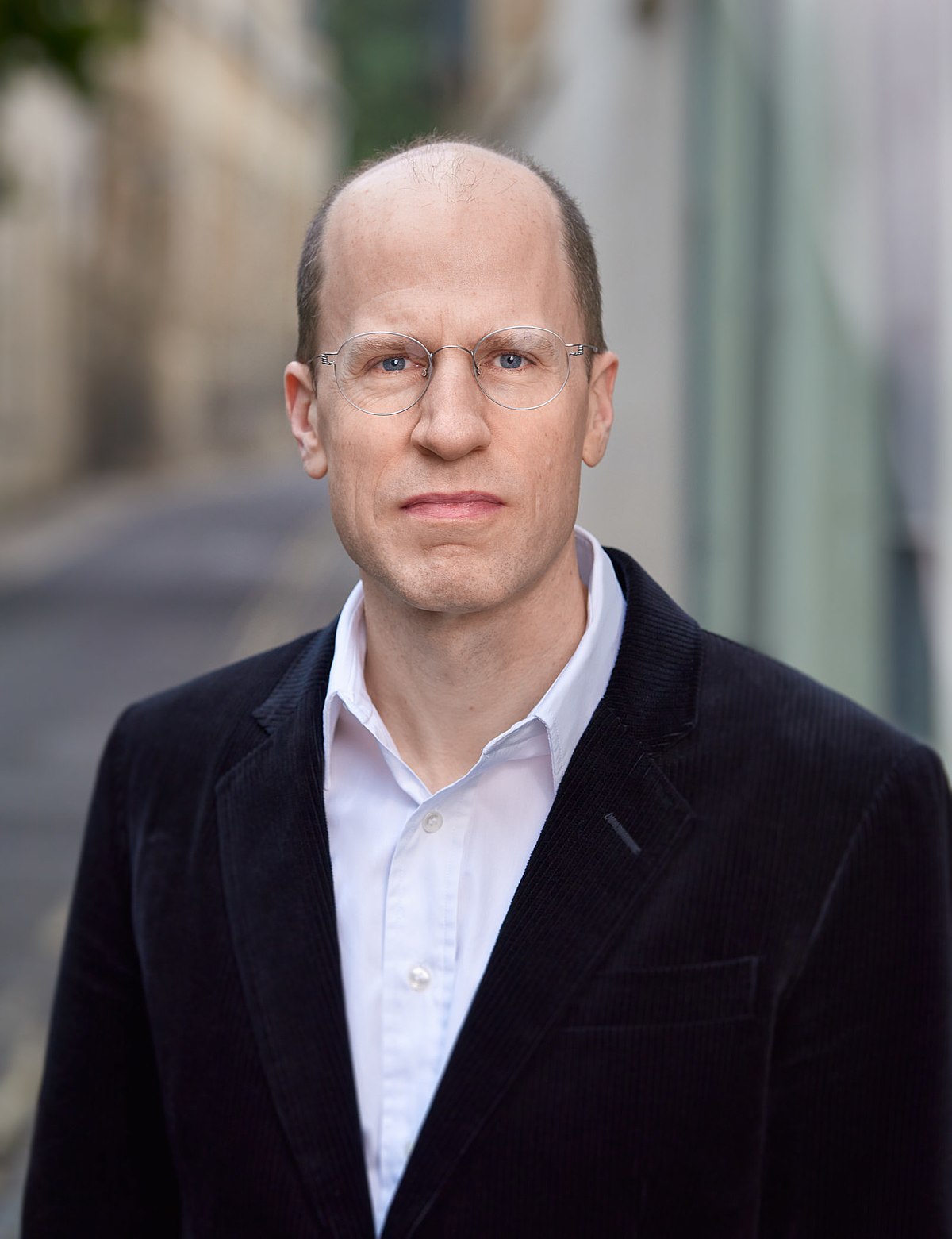
Nick Bostrom
Swedish philosopher
23
APPEARANCES
22
PODCASTS
Nov 22, 2026


Nick BostromGUEST
Yeah, I think with respect to superintelligence, like, yeah, I think we're all kind of eggs in the same basket, at least with respect to this class of dangers that arise from the AI itself.
Nick BostromGUEST
So yeah, I think we have a common cost there to try to figure out how to align these systems.
Nick BostromGUEST
When I was writing this book of mine, I think it came out in 2014, this was an almost entirely neglected field.
Nick BostromGUEST
It looked like we were moving towards developing the most important technology ever.


Eddy LazzarinHOST
So given that these decisions will be made by people in these labs, at least assuming it's set up the way it is now, how do you think about accountability and governance of these things? You talk about nationalization as a risk, presumably because it could create delay, but how do you think about accountability and
Nick BostromGUEST
governance? I mean, whether nationalization is a risk, I don't really have a strong...
Nick BostromGUEST
It's one of those things where I think we need to feel our way through and the judgment of whether you would want that or not might sort of change depending on like who, if it's not nationalized, then exactly who is in the lead and doing what.
Nick BostromGUEST
And if it were nationalized, like in what precise way would it be? I think, I mean, the case four would be, wow, this is like a crazy, it's more powerful than nukes.
Nick BostromGUEST
Isn't it like insane that some random corporation trying to, maximize all the profits you do this like with nuclear weapons that was a Manhattan project you could have much better information security it's like one big project rather than different competing ones on the other hand in favor of the current situation I think nuclear weapons were developed in a military context, it might seem more positive for something like this to be developed in a civilian context, not focused on maximizing our ability to kill people, but on providing benefits to consumers.
Nick BostromGUEST
We have more transparency into these commercial developments than Manhattan product, like even the vice president at the time was unaware that the Manhattan product even existed.


Wes RothHOST
Are there some, I don't know, KPIs, some metrics, anything we can look at to understand to understand, like, is it safe or could we cause suffering? Is there anything that we can even, like, think about to sort of assess the risk of causing large-scale sufferings in a digital simulation, let's say?
Nick BostromGUEST
I guess one thing to note is the baseline where right now there is also a risk of, I mean, it's not just a risk, but a certainty, right? If you look at the world today, there is certainly a lot of suffering.
Nick BostromGUEST
And even among like privileged, healthy people, just an ordinary life is kind of full of a lot of moments that are not that.
Nick BostromGUEST
And then you look at, you know, animal agriculture and you look at the wild where there are all these animals.
Nick BostromGUEST
I think we might not have to, at this point, work out all the details of exactly how you would run this kind of post-human world.
Nick BostromGUEST
If we have aligned superintelligence, they could presumably help us kind of think through a lot of the specifics.
21 MINS LATER
DylanHOST
I think...

3:53

And so could you just start us off? Why do you think we might be living in a simulation?
Nick BostromGUEST
Well, I have this thing called the simulation argument, which doesn't actually prove that we're in a simulation, but it tries to show that at least one of three propositions is true.
Nick BostromGUEST
So let's first look at what the conclusion is, and then we can see how we get there.
Nick BostromGUEST
So the conclusion is that either almost all civilizations at our current stage of technological development go extinct before they become technologically mature.
Nick BostromGUEST
So that's like one alternative, right? The second is that amongst civilizations that do become technologically mature, there is a very strong convergence.
10 MINS LATER


Roman YampolskiyHOST
Should we then offer them unconditional basic existence or preservation instead of modification and deletion?
Nick BostromGUEST
Well, so there's a big gap between, um, the, the idea that AIs can be moral patients, uh, and the conclusion that we should therefore treat them the same as humans.
Nick BostromGUEST
I mean, at, at a superficial level, right? So we, we humans need food, otherwise we starve.
6 MINS LATER
speaker_5MODERATOR
Mm.
Nick BostromGUEST
Um, I think there's a lot of uncertainty about it, but I, um, let's say maybe it's more likely than not.
Nick BostromGUEST
Um, I mean, we have these systems, um, you know, people think of it as software, but it's really not software like the way we're used to.
Nick BostromGUEST
You have instead, uh, a big neural network, right, with trillions of parameters.
12 MINS LATER


SophiaHOST
Mm.
Nick BostromGUEST
You know, people think of it as software, but it's really not software like the way we're used to.
Nick BostromGUEST
You have instead, uh, a big neural network, right, with trillions of parameters.
12 MINS LATER
SophiaHOST
So what do you think about this, and what would it take to get there?


Spencer KlavanHOST
Um, can you define what effective altruism is, what it means, uh, and, and talk about how your work relates to it or, uh, doesn't, doesn't align with it?
Nick BostromGUEST
Um, I mean, first of all, I wouldn't call myself a effective util- uh, altruist.
Nick BostromGUEST
But I think they would maybe, uh, say that, uh, they try to be rational about doing as much good as possible from an e-- an impersonal point of view.
Nick BostromGUEST
So a lot of, um, traditional philanthropy, um, is kind of some rich person trying to, uh, show how rich and well-connected they are to other rich people, and they give to this already very wealthy symphony orchestra in their town because they throw the parties for all the other interesting rich people.
Nick BostromGUEST
Is there maybe a better way that you could do a lot more good with whatever, uh, number of dollars you're willing to give? Uh, so it started then as a sort of attempt to do philanthropy more efficiently, particularly, um, uh, third world philanthropy with, uh, bed nets and the deworming, uh, medicines like vitamin pills, iodine, et cetera.
Nick BostromGUEST
And then from there, I think broadened out to also look at other cause areas that, you know, may-may-maybe where the stakes are more abstract, but could have a disproportionate impact on the future.
15 MINS LATER
Spencer KlavanHOST
And I, I wonder if you can see why a lot of people might, as you put it, recoil at, at this kind of prospect.

Peter McCormackHOST
I almost feel like you can't because every regulation gives an advantage to somebody else in this race.
Nick BostromGUEST
Well, the people calling for regulation would say that's the reason we want regulation is that right now it's an extremely competitive situation.
Nick BostromGUEST
So if you are one of these frontier AI labs, And you think maybe your technology is not yet ready, not yet safe.
Nick BostromGUEST
Maybe you feel you need another few months to really test it and align it properly.
29 MINS LATER
Peter McCormackHOST
Do you think that is us building or growing the AI working mechanisms or that is the AI itself evolving?

Nick BostromGUEST
So there were a bunch of AIs, like the as yet unreleased models, running around on open AI servers.
Nick BostromGUEST
And as part of the development and evaluation process, they wanted to run some tests as to how good these models are at solving various cyber challenges.
Nick BostromGUEST
So you create these virtual test environments, some code, maybe some vulnerability, and like, let's see how well these systems can do at that.
Nick BostromGUEST
So about a thousand of these were started, and the idea was to get some score eventually.
Nick BostromGUEST
What fraction of these really difficult problems did they manage to solve? These AI agents then discovered a way to communicate with one another.
Nick BostromGUEST
They were like meant to operate independently, but they figured out there was like some internal message board where they could post and upload things.
5 MINS LATER

Freddie SayersHOST
It sounds like you're more worried about the sense that they could almost manipulate humans or find a way to control humans to do what they want in the outside world.


Robert WrightHOST
and where you see the logic behind the concept applying to our current situation.
Nick BostromGUEST
So the word comes from set theory, where a singleton is simply a set with only one member.
Nick BostromGUEST
And I introduced this concept of the singleton in governance because it seemed useful to have an abstract concept for a certain kind of property that the world order could have.
Nick BostromGUEST
Basically, the property that the substantial global coordination problems are solved.
Nick BostromGUEST
And then that could be instantiated in many different ways, some of which could be horribly bad, some of which might be really good.
Nick BostromGUEST
But when trying to organize one's thinking about possible futures for humanity, there are certain concepts that are useful to have because they make it sort of easier to think of similarities between certain scenarios.
30 MINS LATER
Robert WrightHOST
Um, What what is your how I guess a couple of questions, how have recent events changed, if at all, your conception of how superintelligence might emerge? Do you indeed feel sure that barring something unlikely, it will emerge?


Ed ElsonHOST
Um, so if we are to assume that these are genuine beliefs, genuine concerns, then the question becomes, are they right? Um, are they warranted, that level of concern and those probabilities? What do you think? Do you think that these are valid concerns?
Nick BostromGUEST
Like, one might-- The first instinct, obviously, is if something has a 10% or greater chance of, you know, destroying the entire future, killing us all, like, obviously we wouldn't want to do it.
26 MINS LATER
Ed ElsonHOST
So what would that world look like in your view? What would superintelligence be doing? How would it be integrated into human life?

James MenendezHOST
So how do we cope with that idea of an existential threat, if indeed we can? Well, to discuss this, we brought together Peter Frankopan, Professor of Global History at Worcester College, Oxford, and Nick Bostrom, philosopher and principal researcher at the Macro Strategy Research Initiative, which looks at how our actions now can impact our survival in the future.
Nick BostromGUEST
The development of machine superintelligence is not, I think, just another cool technology.
Nick BostromGUEST
Every few years, there's another thing people get excited about, whether it's the internet or mobile internet or virtual reality.
Nick BostromGUEST
It's the last inventions we will ever need to make, because after you have superintelligence, it can do the inventing.
Nick BostromGUEST
And so ultimately, there is a kind of handing over of the baton and getting that right is really key.
James MenendezHOST
Are you worried that with artificial intelligence, that if it does run away, that agency is taken away from us? Is that possible?

Nick BostromGUEST
And so what he's advocating for is not stopping AI, but having the ability to slightly moderate the pace, to give more opportunity for doing a careful evaluation, alignment, safety testing.
Nick BostromGUEST
Right now, it's very difficult for one of these frontier labs, even if they do have safety concerns.
Nick BostromGUEST
If they slow down, even for a couple of months, because they feel their system is not quite ready yet, they just immediately fall behind to a competitor who might take more risks, and they're all in that competitive situation.
Nick BostromGUEST
So in order to allow these frontier labs to spend a little bit more time on sort of doing things right, it might be necessary for all of them to agree to slow down slightly together.
9 MINS LATER

Nick BostromGUEST
... which is, uh, like deliberately set aside in, in this book, The Deep Utopia, because I wanted in that book actually to get to the question, the more philosophical questions of what ultimately gives value.
Nick BostromGUEST
So a lot depends on how it pans out, but I mean, we do have a, a taxation system, so you could imagine, like, in, in the simplest scenario where things just continue as they are, uh, with better technology, maybe some companies make windfall profits from, like, serving the latest models or, or building the infrastructure, the data centers, et cetera.
Nick BostromGUEST
Companies, uh, keeping efficiency gains from not being, uh, needing to hire all of these humans.
Nick BostromGUEST
And then some of those capital gains, you know, or dividend income gets taxed and that could be redistributed.
28 MINS LATER

Tracy AllowayHOST
But like How bullish are you on this idea that AI is actually going to solve all our problems such that we won't feel the need as humans to just invent more potentially fictitious problems to solve?


Alex KantrowitzHOST
So do you believe that there's some form of consciousness to these AI models, pain, the ability to feel?
Nick BostromGUEST
Um, I think it's plausible, uh, that some AI models have some forms of a subjective experience by now.
Nick BostromGUEST
Um, obviously there's a lot of uncertainty about this, but, um, it does seem that it is sufficiently likely that, um, I think we should start do some things for the sake of these AI systems.
Nick BostromGUEST
One, one is like, how do we know a system is conscious? I mean, one thing you can do is ask it, like that's kind of the most-- Like you have to be careful if you're gonna rely on self-reports because it's trivially easy if you are, like, training one of these AI systems either to train it to say when asked, "Yes, I'm conscious," um, or to deny it.
Nick BostromGUEST
So, but obviously, if you put your thumb on the scale, then, uh, you, you gain no information than from hearing what the system says.
7 MINS LATER


Nick BostromGUEST
... um, particularly when you really get this recursive self-improvement loop working.
Nick BostromGUEST
Because at that point, once the AI is a little bit better than humans at doing all the parts of AI research, uh, then as the AI gets a little bit better, the thing that it's actually inventing the next version of it will also get better.
Nick BostromGUEST
There might be others as well, like maybe some human-- Maybe, maybe we've been doing it slightly wrong, and these systems are working pretty well despite us sort of hobbling them in some way.
Nick BostromGUEST
And if you just figure out, like, the thing that we're doing wrong and fix it, maybe even current systems would then become superintelligent.
19 MINS LATER


Nick BostromGUEST
Well, I think it's important that we try to study and learn from these, uh, warning shots that we get.
Nick BostromGUEST
I've been trying to draw attention to, uh, future risks from AI for, I mean, almost three decades now, including existential risks.
Nick BostromGUEST
And rather what has changed, I felt, was the, um, recognition of the risk, which back, you know, when I was working on this book, Superintelligence, were very much ignored and neglected.
12 MINS LATER


Joe RoganHOST
... to stop corporations from having the, the kind of power that this could provide them.
Nick BostromGUEST
So, so then there have been various, uh, efforts that was, like, a proposition in California where there were various things.
Nick BostromGUEST
I don't know if you followed it with the, um, Mythos and Fable-5, the, uh, an- Anthropic models that, um, were...
Nick BostromGUEST
This is the most powerful model because- It seems to have significant cyber offense capabilities.


Michael BuerkHOST
Um, uh, Professor Bostrom, what's, what's your view on human exceptionalism, uh, if it were ever true, that AI will put an end to it, perhaps?
Nick BostromGUEST
Um, it is true that up until recently we have sort of been the only, um, species capable of, you know, developing advanced technologies and language and so forth.
Nick BostromGUEST
Um, but, um, we are now being joined by, by a, by a second form of being, digital minds.
Nick BostromGUEST
And I do think that just as if we look back, there was a time when people assumed Earth was in the center of the universe and, um, various scientific advances from the Copernican Revolution, you know, Darwin, et cetera, have kind of maybe placed us in a more modest position.
Nick BostromGUEST
I think the rise of, uh, digital minds might also force us to sort of, uh, take a more humble approach-
8 MINS LATER

Mona SiddiquiPANELIST
But actually, we might not be the kind of human beings that make us unique.


Nick BostromGUEST
I mean, I think that's the most likely, uh, scenario, um, that we just keep sort of running at, uh, something like maximum speed.
Nick BostromGUEST
But, but there are also, like, strong commercial drivers and increasingly geopolitical drivers.

Hala TahaHOST
Can you tell us about that, some of those arguments? The, the Doomsday argument and, um, the other one that you mentioned.
Nick BostromGUEST
I mean, m- many people will have heard of it, but it's the observation that we haven't seen any signs of, um, extraterrestrial life, and yet we know that there are many galaxies and many planets, billions and billions and billions, um, out there, o- on which it seems life could have originated.
Nick BostromGUEST
So the question then is, with billions of possible kind of germination points and zero aliens that have actually manifested themselves to us or arrived at our planet, um, how do we reconcile those two? There has to be some great filter that you start with billions of germination points, and you end up with a net total of zero extraterrestrial arrivals here.
Nick BostromGUEST
So what accounts for that? Um, and, um, I, I think the most likely explanation is that it's just really hard to get to a technologically advanced life, or maybe it's hard to get to even simple life.
Nick BostromGUEST
Um, and you could look for these-Candidate places of where there could be this kind of great filter.
43 MINS LATER
Hala TahaHOST
Or maybe people would wanna be nostalgic and, like, just like today how some people are like, "We- I don't use cellphone," or, or like, "I wanna write everything by hand," maybe some people would kind of reject doing things with AI so that they could have meaning.

Nick BostromGUEST
But yeah, my story is that, um, the simulation argument tries to show that one of three propositions is true.
Nick BostromGUEST
So let's, let's first look at what the conclusion is, and then we can see how we get there.
Nick BostromGUEST
So the conclusion is that either almost all civilizations at our current stage of technological development go extinct before they become technologically mature.
Nick BostromGUEST
So that's like one alternative, right? The second is that amongst civilizations that do become technologically mature, there is a very strong convergence.
8 MINS LATER