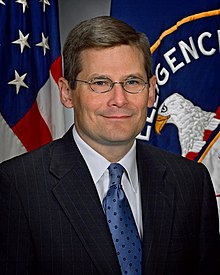
Michael Morell
Former United States Deputy Director of the Central Intelligence Agency
7
APPEARANCES
6
PODCASTS
Oct 28, 2026


Charlie RoseHOST
What are the repercussions of what he wants to do and the way he and the administration has done it?

Mike MorellGUEST
First of all, there was already significant, I wouldn't say extreme, but significant vetting of individuals from these countries.
19 MINS LATER
Charlie RoseHOST
Where do you, on torture, and where is the, where is CIA people whose consideration is the national security of the United States? Where were they in this argument that, gained some conversation last week about black sites, about water boiling and about extreme measures.
Michael MorellGUEST
So the first time I learned of it, um, so when, when, when the briefing was done, I went down to the motorcade and my assigned vehicle was called the senior staff van.
Michael MorellGUEST
And then at the last, very last minute, the president's photographer jumped in.
34 MINS LATER


Mosheh OinounouHOST
How much discussion was there that summer leading up to 9-11 around the threat that bin Laden posed and the potential for a domestic attack?
Michael MorellGUEST
So the previous previous nine months and I started briefing the president in early January before he was sworn in.
44 MINS LATER


Michael MorellGUEST
Those measures that John and Michael talked about, they were kept secret because if we... they're disclosed to the enemy, they would be... their purpose and usefulness would be lost.
Michael MorellGUEST
They were kept secret, and we knew at the time that we were gonna authorize and do things and establish programs that when the m- the crisis of the moment and the concern of the moment had died down, the American people might be, uh, at the safe space after we'd gotten... after Al-Qaeda, after we reduced the threat, the American people may be uncomfortable with them.
Michael MorellGUEST
We knew that was a, a possibility, but we thought these were measures we had to do to get on top of the threat to prevent the country from being attacked again.
32 MINS LATER

Michael MorellGUEST
Um, I remember one Democratic senator who would later become an opponent, a vocal opponent, um, his response when he was briefed on EITs was, "Is that all you're doing to protect the country? My constituents would expect you to do even more." 'Cause he knew the context of the moment.
Michael MorellGUEST
And then fast-forward to Dave Petraeus' confirmation hearing, which John McCain attended as the ex officio member of the Senate Intelligence Committee, and, and Petraeus and McCain had a soliloquy about EITs.
Michael MorellGUEST
There's a nuclear weapon in New York, and you've got the guy who knows where it is, and he won't tell you.
Michael MorellGUEST
What do you do? They agreed, they agreed that in that moment you would do extraordinary things.
24 MINS LATER

Mosheh OinounouHOST
How much discussion was there that summer leading up to 9-11 around the threat that bin Laden posed and the potential for a domestic attack?
Michael MorellGUEST
So the previous nine months, and I started briefing the president in early January before he was sworn in.
48 MINS LATER
Mosheh OinounouHOST
And then fast forward 10 years, nearly 10 years, and you're in the Situation Room with President Barack Obama.