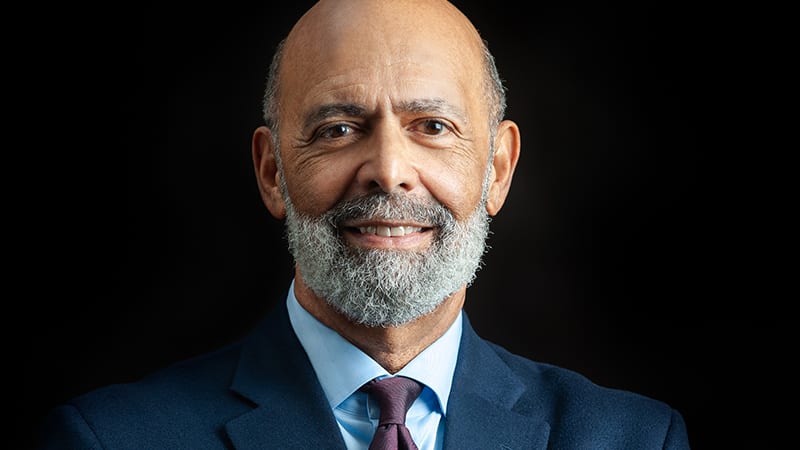
Michael Lomax
CEO of the United Negro College Fund
5
APPEARANCES
2
PODCASTS
Jul 2, 2026


Michael LomaxGUEST
What I can say is, when you have a high-conflict individual at the center of a conflict, what's different about it, because, again, conflict is normal in the human sort of set of relationships at work.
Michael LomaxGUEST
But, but when we sometimes look at a way an individual is showing up, they're complaining about an issue, and then, uh, we resolve that one, then there's another one.
Michael LomaxGUEST
They're complaining about how their supervisor deals with them or complaining about a colleague, or they didn't get the right workspace, whatever it may be, and there seems to be a genesis of this.
12 MINS LATER

Megan HunterHOST
Once a leader, or let's say someone in the HR department, a H-- an HR professional, has identified a high-conflict pattern, let's say there's a lot of complaining that, you know, s-something bad has happened, "I'm the victim once again," [chuckles] "It's someone else's fault," or whatever the pattern might be, what usually goes wrong next? Why do smart leaders get pulled into these conflicts?

Michael LomaxGUEST
For people listening, they might worry that, "Do I have to kind of diagnose this person as a high-conflict person and sort of fit them into a bunch of criteria?" No, we don't need to do that.
Michael LomaxGUEST
We can all get upset, and we can all sometimes act out at work, but then realize, "Okay, I sh- I shouldn't have done that." And sometimes situations can overwhelm average people, and sometimes for a long period of time, big organizational restructuring, "I'm worried about losing my job," or other big changes at work, or life events outside work.
Michael LomaxGUEST
All of those things can cause us to show up differently or in problematic ways.
11 MINS LATER
Megan HunterHOST
So what do you see in the workplace? Do you see other ways this is applied, other co-problems it causes?
Michael LomaxGUEST
And then in an organization, if someone filed a complaint like that, we focus on the incident, investigate the incident.
Michael LomaxGUEST
And, and instead of, "Okay, what, what just happened there? What led to that?" So we focus on, in human resources, we focus on those incidents.
Michael LomaxGUEST
We don't step back sometimes and look at this is the third or fourth complaint this person's filed.
Bill EddyHOST
You know, like you said, Michael, it doesn't reach the level that it really triggers-
Michael LomaxGUEST
There's a lot of leaders themselves who are uncomfortable dealing with conflict, who might avoid it, and until it gets really difficult or it's escalated, and now, now they must.
Michael LomaxGUEST
Or they are dealing with conflict, but maybe they're too, uh, aggressive, too direct, uh, too, too controlling.
Michael LomaxGUEST
And Bill, as you said in your description of the generational differences, there are people nowadays who just won't put up with that.
Michael LomaxGUEST
They'll go somewhere else, right? So leaders do really need to find that middle ground where they're comfortable addressing conflict and dealing with it early, but not in ways that alienate the, you know, the vast majority of the employees that just wanna come to work and enjoy their jobs.
11 MINS LATER
Megan HunterHOST
So there's this focus on achieving those objectives, and often just a complete lack of attention to conflict.


Geoff BennettHOST
Beyond the dollars themselves, how do you plan to leverage this gift in your messaging, in your partnerships to attract more donors and more institutional support?
Michael LomaxGUEST
We're trying to make sure that people understand that we're a good bet and that their funds will be very well used, and gifts like this will, uh, help tell that story, but we're also trying to tell people just how important this gift is, uh, for the...
Michael LomaxGUEST
In the case of UNCF, we have 50,000 students attending the 37 institutions, uh, that we represent, and we really just don't have enough support to help those students get to, through college, and on to careers without taking out tremendous debt.
Michael LomaxGUEST
It's- it's what we're best known for and this- these endowments will help our institutions cover more of the costs of their students, of faculty, of facilities, and make them less reliant on debt, uh, to borrow to get those things done or for their students to borrow and, uh, uh, pay their tuition.
Geoff BennettHOST
So, how will UNCF make sure that philanthropy doesn't become the substitute for longer term structural support provided by state and federal governments?
Michael LomaxGUEST
Well, right now, philanthropy is- is not gonna be, uh, uh, leading what the federal government does.
Michael LomaxGUEST
The real question is, in my mind, whether philanthropy is going to raise the bar on the amount and size of the gifts that they make available to HBCUs.