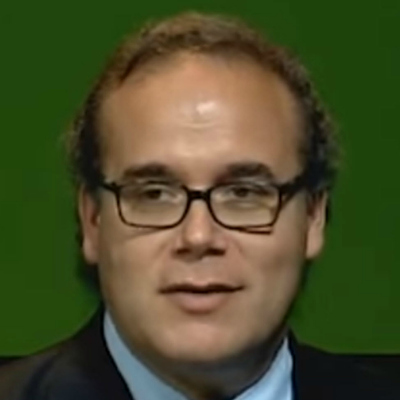
Maximo Torero
Peruvian economist
8
APPEARANCES
8
PODCASTS
Sep 25, 2026


Máximo ToreroGUEST
It's happening together with the problem of the Strait of Hormuz, which has removed between 25% to 30% of all inputs to agriculture.
Máximo ToreroGUEST
And therefore, we need to be very careful with that, because that increases all the cost to farmers.
17 MINS LATER

Maximo ToreroGUEST
What the Strait of Hormuz is doing is basically removing 20% to 30% of the key inputs to agriculture.
Maximo ToreroGUEST
What are those? Brand oil, which is used for production, for transportation, for logistics, for irrigation.
Maximo ToreroGUEST
It is removing sulfur, which is used to produce phosphates, and other fertilizers like that.
Maximo ToreroGUEST
What we are observing today in the harvest right now is a consequence of those higher prices.

Carolyn BeelerHOST
Can you tell me what you are expecting to see because of El Niño, how that impacts the food supply?


Maximo ToreroGUEST
What the Strait of Hormuz is doing is basically removing 20% to 30% of the key inputs to agriculture.
Maximo ToreroGUEST
What are those? Brand oil, which is used for production, for transportation, for logistics, for irrigation.
Maximo ToreroGUEST
It is removing sulfur, which is used to produce phosphates, and other fertilizers like that.
Maximo ToreroGUEST
What we are observing today in the harvest right now is a consequence of those higher prices.
Carolyn BeelerHOST
Can you tell me what you are expecting to see because of El Niño, how that impacts the food supply?


Paul NewnhamHOST
In two to three minutes, what does this year's SOFI report tell us? Can you give us the top headlines?
Maximo ToreroGUEST
One area is an update of the number of people in hunger, the situation in nutrition, the access to healthy diets.
Paul NewnhamHOST
Beyond the headlines that people are going to quote when this report comes out, what's the finding in the report that you're worried might get missed?


Maximo ToreroGUEST
So this year report what shows is that for the third consecutive year, uh, the number of hungry people is declining, which is good news.
Maximo ToreroGUEST
They are fragile, uh, and also insufficient to achieve the SDG 2, which is what we want by 2030.
Maximo ToreroGUEST
If we look specifically to the numbers, we find that 7.8% of the global population faced hunger in 2025, down from 8.1% in 2024 and 8.6% in 2022.
21 MINS LATER

David LabordeGUEST
So if you have less income, all of this become more complicated for individual when you have to pay your food, but also for country to scale up the right solution.


Maximo ToreroGUEST
So this year report what shows is that for the third consecutive year, uh, the number of hungry people is declining, which is good news.
Maximo ToreroGUEST
They are fragile, uh, and also insufficient to achieve the SDG 2, which is what we want by 2030, but the important thing is that we keep accelerating the decline.
Maximo ToreroGUEST
If we look specifically to the numbers, we find that 7.8% of the global population faced hunger in 2025, down from 8.1% in 2024 and 8.6% in 2022.
Maximo ToreroGUEST
Now, what that means in terms of numbers is that in 2025, we have 645 million people still in hunger, and which is 14 million less than in 2024 and 43 million less than in 2025.
20 MINS LATER
David LabordeGUEST
So if you have less income, all of this become more complicated for individual when you have to pay your food, but also for country to scale up the right solution.

16:57
He says the war's economic shocks are forcing many farmers to make trade-offs.
Maximo Torero CullenGUEST
The choice was, I plant the same, I plant less, like Australia decided to plant 50% less wheat.
19:47
So in general terms, how do you think farmers are doing right now, in comparison, say, to last year?

Maximo ToreroGUEST
[jingle]Craving bold, authentic taste without kitchen chaos? True Nature Meats' Southern Barbecue chicken breast delivers.
Sam FenwickHOST
So with concerns growing about global food security, I spoke to Maximo Torero, Chief Economist at the UN's Food and Agriculture Organization.