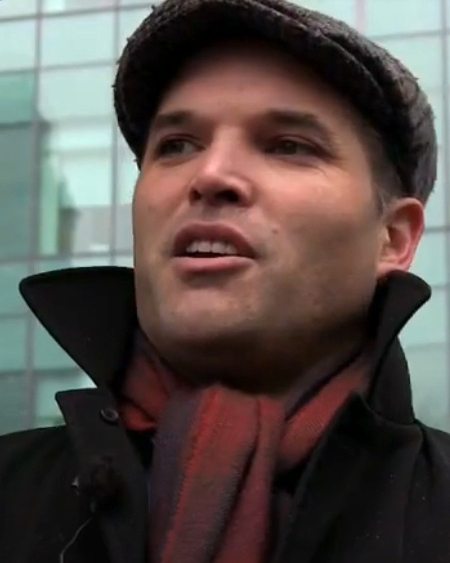
Matt Taibbi
American author and journalist
20
APPEARANCES
10
PODCASTS
Oct 12, 2026


Matt TaibbiGUEST
... what, what we were looking at in the Twitter Files was really kind of an informal version of what was becoming formalized in a lot of other countries.
Matt TaibbiGUEST
So, uh, almost every European country has one or another version of the same kind of law.
Matt TaibbiGUEST
The EU has a gigantic law called the Digital Services Act, and the, the basic structure of most of these laws is that they, it's not the government ordering you what to do or ordering the takedown of content.
Matt TaibbiGUEST
What it does is it, is it, uh, essentially what these laws say is, "Okay, if you wanna operate your internet platform in our country, you have to abide by the recommendations of, you know, this list of what, you know, tru- what they call, the EU calls trusted flaggers," right? And it's usually a whole bunch of NGOs that have been licensed to do content recommendations.

Matt TaibbiGUEST
I mean, that, i- i- isn't that the extraordinary irony of, of, of this case? We, you know, I, I grew up in an era, in the post-'60s era, where, uh, basically the elimination of spirituality, uh, you know, the mocking of people who go to church, uh, people who were still religious, uh, you know, they were figures of fun for, uh, liberal America for 50 years.
Matt TaibbiGUEST
Uh, we ridiculed people who, who had any kind of spiritual or moral education earlier, uh, in their lives.
Matt TaibbiGUEST
And now, all of a sudden, after 50-plus, 60-plus years, uh, you know, we're suddenly waking up and realizing, uh, you know, it's actually bad to wake up in a world where kids don't have a, a proper, uh, mortal, mo- moral or spiritual grounding.
Matt TaibbiGUEST
And as a parent, you know, I, I look at this case and I don't think, you know, I don't side with the boys, uh, or with Jane Doe e- or, or either of them.
Matt TaibbiGUEST
I just feel horrified that there is this lack o- of an education that young people need to get, um, before they go off to, you know, a place like Corn- Cornell, where they're going to be living, uh, and have lots of freedom, uh, to engage with, um, e- each other and do all kinds of things and experiment with drugs and, and alcohol, and all these things.
Matt TaibbiGUEST
And th- they don't have the spiritual or moral grounding that, that people used to have.
19 MINS LATER
Matt TaibbiGUEST
Uh, yeah, it, it's incredible, and, you know, the, the ignorance about economics is unbelievable.
Matt TaibbiGUEST
Um, and coming back to the United States and seeing the difference between how, uh, students were taught about the Soviet era, uh, when I was in high school and what happens now, uh, they don't teach them anything, uh, the, the, about the bad things that happened, uh, in the Soviet era, about how that kind of economics doesn't work, about how even the Soviet Union had to abandon, you know, so-called war communism, where they fixed prices and, and go back to the market as early as twen- uh, 1921.
19 MINS LATER

Megyn KellyHOST
There's an online petition by all these woke young white women to make sure we all stand by him, but, uh, the, the bloom is coming off this rose, and fast.


Brian KilmeadeHOST
Lawmakers are playing politics, but for the most part, did you see much on any other outlet about J- uh, Fauci and, and what a fraud he is?
Matt TaibbiGUEST
Uh, not only did I not see that, but if you look at the New York Times this morning, you'll, you'll see, uh, Rand Paul compared to Joe McCarthy, um, for his interrogation o- of Fauci.
Matt TaibbiGUEST
Uh, so, uh, uh, the, the legend, y- you have to remember how extreme Fauci mania became, uh, in 2020 and 2021.
9 MINS LATER
Brian KilmeadeHOST
Matt, how did this overlap with what you discovered on X when you were allowed to go in there after Elon Musk bought it?


36 MINS LATER
speaker_11UNKNOWN
[applauding]


Matt TaibbiGUEST
The audiences since Trump entered the race, if you go back to 2014, it was normal for a station like CNN or MSNBC to be somewhere between 20th and 30th overall in terms of cable stations.
Matt TaibbiGUEST
And in January, the top three cable stations of 2021, the top three stations were just MSNBC, Fox, and CNN.
Matt TaibbiGUEST
So basically, cable news stations have replaced entertainment channels like ESPN and USA.
46 MINS LATER


Eli LakeHOST
And by the end of Trump's first presidency, it was like we really were living in a censorship digital regime, right? I mean, and that's the thing, is that it starts with this kind of, all right, everybody can agree maybe the Russians did something here, and then it ends in four y- but in four years it's, like, off to the races, right?
Matt TaibbiGUEST
So, um, what's interesting about this is that if you go back and look, if you re- remember the big terrorist attacks in Europe, you know, the ones in, uh, I believe it was, uh, Brussels and in France, that led to a series of demands by the EU, uh, that all the major internet platforms sign these voluntary codicils on changing, um, their approach to what they call terrorist speech.
Matt TaibbiGUEST
Uh, but the, the essence of it was that it, it, it created a new relationship between the platforms and the security state where they were responsible, uh, uh, you know...
Matt TaibbiGUEST
Again, the, the, what's so interesting about this is that the format kind of replicated itself en- endlessly.
Matt TaibbiGUEST
The same basic structure of you're not being directly censored, but the state is, is telling a private company that it has to ex- exercise its speech rights in a certain way.
Matt TaibbiGUEST
And so all the companies sign these sort of, quote-unquote, "voluntary agreements" under very heavy pressure with Europe in 2016, and then the same thing happened after Trump and Brexit here in the United States.
21 MINS LATER
Megyn KellyHOST
And I, it seems to me that right now Republicans are relishing the thought of that, but it could be one of those careful-what-you-wish-for situations, Matt, given the way the country's going right now.
Matt TaibbiGUEST
I mean, um, uh, not embarrassed to admit that, uh, not long ago I was fairly supportive of, um, of Bernie Sanders.
Matt TaibbiGUEST
Um, he had me tag along with him in Congress and showed me how everything in the House worked when he...
7 MINS LATER


Chris CuomoHOST
What do you s- when you say, Matt, "I don't think it matters if he's a journalist," what distinction are you making?
Matt TaibbiGUEST
Well, the, the, the fact is, in the law, the law doesn't really make a distinction about whether or not you're a journalist.
Matt TaibbiGUEST
Journalists just happen to be the ones who, uh, practice them more than any, uh, other people.
Matt TaibbiGUEST
Um, and w- when there is state action against journalists, it's usually an indicator that, that, um, uh, you know, First Amendment rights in particular are under siege.
Matt TaibbiGUEST
Uh, you know, the one thing that the law does speak about with the press is, is the freedom of the press, and that's just, um, that just involves the, the, the question of whether or not the government has the right to restrict, um, uh, or establish, uh, uh, you know, a state organ, but that's not the issue here.
Chris CuomoHOST
How do you think we're doing, uh, in the country right now? What are you thinking about the political state of play?
Chris CuomoHOST
But what is the other explanation? Why would Durham leave it out when that's exactly what he was investigating?
Matt TaibbiGUEST
Well, what, what Durham did or did not do and why he did or, uh, didn't do it, um, those are good questions.
Matt TaibbiGUEST
All the facts that you just outlined, uh, he did take out th- the most explosive stuff and put it in a classified annex.
Matt TaibbiGUEST
And that stuff is, I think, you know, very newsworthy and, and, you know, raises an awful lot of questions, and also completely recasts, uh, what the story is.
Matt TaibbiGUEST
You know, we had little glimpses of this whole idea of, you know, that the, the Russians were talking about Hillary Clinton and having a plan to vilify Donald Trump by tying him to, uh, Putin and Russia.
6 MINS LATER
Chris CuomoHOST
J- y- you never needed to go beyond his casinos and you could have had months and months of drama.
KennedyHOST
So for journalists who had access to more of the facts than maybe you or other skeptics did at the time, um, were you surprised that the New York Times and the Washington Post ignored, uh, some of these red flags that, that in another time with another subject might have resulted in very different reporting?
Matt TaibbiGUEST
I mean, especially the New York Times, which had just been through, uh, a, a terrible reputation-destroying ordeal with the WMD episode, where it was essentially the same story.
Matt TaibbiGUEST
They were being told by unnamed, uh, intelligence community officials that there was evidence of something and...
Matt TaibbiGUEST
they w- weren't shown what was inside the box, and they went to print with this and they later had to a- admit publicly that, you know, they had been, uh, y- you know, deceived, that there was a national intelligence estimate that was published that suppressed all the d- dissenting information.
Brian KilmeadeHOST
What changed for you? Was it something in the Durham annex and the whistleblowers over the last week?
Matt TaibbiGUEST
Yeah, I mean, I've been covering this story for eight years, and I started out just saying something seemed wrong with the reporting, like the sourcing was bad, and I thought it was a story about a thin investigation that wasn't supported well enough.
Matt TaibbiGUEST
And, uh, I was very reluctant to go to this place that this was a conspiracy to cover up something that Hillary Clinton had done.
Matt TaibbiGUEST
But the Durham report really leaves no doubt anymore that the Clinton, uh, campaign had a plan in place to blame Trump on, uh, with something related to Russia even before the WikiLeaks stuff came out.
Matt TaibbiGUEST
(laughs) So, uh, the- the- the administration that, uh, the investigation that followed was just incidental, and that's pretty well-demonstrated by what happened in the report.
Brian KilmeadeHOST
And- and the thing is, now you have this guy, Leonardo Bernardo, a name with the Open... with George Soros's Open Society, Jeff Goldstein dealing with Debbie Wasserman Schultz, back and forth and finding a way to change the narrative from Hillary's emails and the John Podesta hav- cacking to Donald Trump in bed with- with Vladimir Putin to hopefully win the election, and later to destroy his first term when he won.
Matt TaibbiGUEST
Yeah, I mean, it's- it's unbelievable 'cause the real story here is- is that Hillary Clinton's use of a private email server opened up the United States to an unprecedented, uh, security risk.
Matt TaibbiGUEST
And th- the Russian government actually came into possession of a huge cache of material, uh, correspondence all- all the way up to the- the- the president's office.


Ben ShapiroHOST
The, the recent stuff, is it big? Is it small? Do you think it's being overblown or is it being underplayed?
Matt TaibbiGUEST
Um, and, uh, as somebody who worked for a long time, I spent a month and a half last year on, for instance, that House Intelligence report that just came out last week.
Matt TaibbiGUEST
Um, (clears throat) what's new about all this is that the, the shift in public, uh, attention is going to go from a flawed investigation i- into Donald Trump from... into, uh, uh, a manipulated investigation.
Matt TaibbiGUEST
And now, it's abundantly clear from all these details that it wasn't even really an investigation of Donald Trump.
Matt TaibbiGUEST
It was a setup designed to distract from an internal scandal involving Hillary Clinton.
Matt TaibbiGUEST
The, the response to this whole thing has, from everybody, has been, "Well, yes, we knew the Steele dossier was included in, in this report, and yes, that, that was bad, kind of a black eye." But, um, you know, as the Washington Post put it the other day, you know, there had to have been better updated intelligence that they got in the meantime that pointed to Trump, uh, I'm sorry, to Putin interfering specifically to help Donald Trump.
Matt TaibbiGUEST
And even I thought, you know, you never know, there might be something in there, I mean, uh, you know, of, of some worth that would have pointed in that direction.
Matt TaibbiGUEST
No, it turns out that there are three pieces of intelligence that they were relying on for the, for those two key phrases.
Matt TaibbiGUEST
The other is that Putin had developed a clear preference, uh, for Trump and orders his, ordered his intelligence services to help him whenever possible.
8 MINS LATER
Matt TaibbiGUEST
Well, first of all, I, I, I understand, um, and I think you did a great job walking people through everything.
Matt TaibbiGUEST
I, I don't think that the report, as it was released, um, did a particularly good job of, uh, explaining the... what, what exactly the significance of these documents was, but they were very significant.
Matt TaibbiGUEST
Uh, if you remember, before the election, uh, there was a story in the New York Times, for instance, on October 31st- uh, 31st saying, "FBI sees no link, you know, between Russia and Trump, uh, and the election." This was sort of what a fi- uh, officials were telling people in the media.
Matt TaibbiGUEST
Uh, there were a few fringe attempts to kind of work the Steele dossier material, this full-on Trump-Russia conspiracy narrative into the media.
14 MINS LATER


Sean HannityHOST
What is the difference when you poll Donald Trump with, between him and other politicians? 'Cause there is a phenomenon with this.
Matt TaibbiGUEST
And, uh, we've seen some great political leaders come around, like Newt Gingrich, who was one of, obviously an early mentor to me.
Matt TaibbiGUEST
We've seen some great politicians, but they broke the mold with, with Donald Trump.
Sean HannityHOST
But certainly to me, based on everything I believe, it seems like this is, this, this is the plan that will work the best for the American people, and the Republican Party is now the party of working men and women.
Megyn KellyHOST
They- there'd be an attempt to, like, understand, well, you know, how Ron DeSantis brought this on himself.
Matt TaibbiGUEST
Yeah, I mean, uh, I think it's gonna be critical to determine what exactly the motive was here.
Matt TaibbiGUEST
Um, you know, very often in these cases when people do extremely destructive things, including things like school shootings, a significant percentage of those folks are, um, you know, sociopathic and predisposed to violence of some kind or another, um, and people attribute motives to them that they assume because of the way they dress, or because of the, what music they listen to, or that- that sort of thing.
Matt TaibbiGUEST
Uh, so in this case, you know, all we have are- are some superficial indicia, right? We- we see a person who is- is associated with a lot of traditionally left-leaning causes targeting a Democratic governor who, you know, maybe stands out on one or two particular issues as, um, you know, as being something, uh, that kinda traditional, uh, liberals or socialists might not be happy about.
Matt TaibbiGUEST
Uh, frankly, on the- in the foreclosure front, as somebody who's covered, uh, foreclosure courts, I'm a little surprised there hasn't been more violence of this kind, uh, dating back to the mid-2000s because I've seen how enraged people are, uh, by being thrown out of their hou- their homes.
Matt TaibbiGUEST
Uh, you know, a significant pro- uh, uh, percentage of those people are- are tossed out kind of unfairly.
16 MINS LATER
Matt TaibbiGUEST
And the entire argument of the piece was that Trump was such an extreme threat, that journalists had to tick- change the way they did business.
Matt TaibbiGUEST
We had to be true, to quote "history's judgment," right? So, it was a clarion call for the entire mainstream media to change its, "They did this, they did that, we don't really care, you sort it out" attitude to, "Let's become activists, let's tell you, uh, which is the right thing and who's the villain and who isn't, uh, and let's become a narrative-driven, in-your-face politicized media," which has lost all credibility with audiences.
Matt TaibbiGUEST
Now, when he says that Trump can go, uh, circumvent journalistic narratives and go directly to the people, he's absolutely right.
Megyn KellyHOST
He's got to control them all or he won't give us access." It's so funny to see their own bias just completely blind them to what's actually happening in front of them.
4:15
Once we finished listening to what was a fantastic debate kicked off by Matt Taibbi and his opening remarks in favor of the motion, don't trust mainstream media.
35 MINS LATER


Matt TaibbiGUEST
I mean, there, there, there are, there are so many different areas where they're gonna have to investigate, reinvestigate that.
Matt TaibbiGUEST
Uh, we just went through a period where, you know, there was sort of mass stonewalling of c- of Congress when it was trying to investigate what happened with COVID.
Matt TaibbiGUEST
Uh, you know, people, there were key people, like Peter Daszak from the EcoHealth Alliance, who just didn't answer subpoenas, right? And, and so we're gonna h- there, there are documents that w- that we know exist that we're gonna get now, uh, you know, with FBI communications between the Bureau and a lot of these scientists, you know, dating back 10 years, and it's gonna tell a very, a crazy story.
Matt TaibbiGUEST
There's a reason why Fauci's pardon is backdated to 2014, uh, because that's the, the time period that they're gonna be l- have to start looking, which is, you know, when did we start defying the ban on gain-of-function re- research? We clearly did.
24 MINS LATER