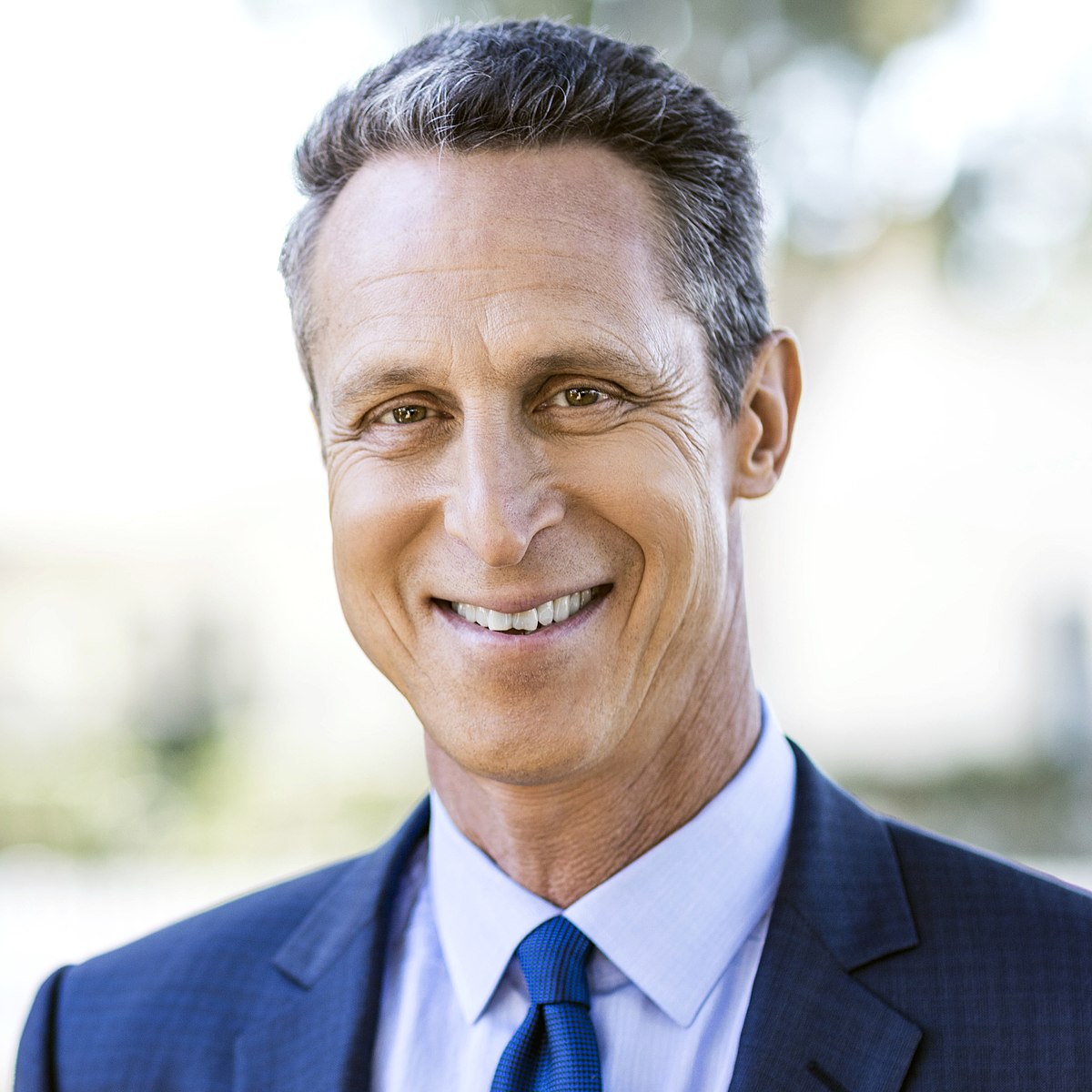
Mark Hyman
American physician and author
18
APPEARANCES
15
PODCASTS
Sep 18, 2026


Mark HymanGUEST
Pero la comida es el motor para las enfermedades crónicas que afectan a cada una de dos personas actualmente.
Mark HymanGUEST
Eso es el ochenta y cuatro por ciento de tres coma billones de nuestros costes sanitarios o por enfermedades crónicas.
Mark HymanGUEST
La forma en que los cultivamos, el tipo de alimentos que producimos, la forma en que se comercializan, la distribución y la promoción, literalmente impulsan casi todo lo que está mal con nuestra sociedad.
56 MINS LATER


Jason CalacanisHOST
Mark, what should I think about these? And that general reaction from classic doctors.
Mark HymanGUEST
Well, we're entering a whole new era of data-driven healthcare, which we never had before.
Mark HymanGUEST
Doctors are trained very specifically to the minimum amount necessary to make the diagnosis and then find the drug or the surgery to treat that diagnosis.
Mark HymanGUEST
It's not about gathering lots of data to really have a deep understanding of human biology.
Mark HymanGUEST
And so doctors have a very bad bias against testing and against imaging, unless it's for confirmation of what a presumed diagnosis is.
31 MINS LATER

Mark HymanGUEST
You know, it, it, it makes me angry, honestly, Darshan, because we have the understanding of human biology in a way that we never did.
Mark HymanGUEST
We understand the microbiome, mitochondria, the immune system, hormonal and cellular communication.
Mark HymanGUEST
And, and this, these puzzle pieces are, have been talked about in different aspects of medicine, but no one's sort of synthesized them until, you know, we kind of...

Mark HymanGUEST
You want to tell us what's going on because people don't know what's happening in their bodies.
Mark HymanGUEST
They don't know they have insulin resistance or prediabetes, which is affecting half of the Americans.
Mark HymanGUEST
We see that in Function Health, a company I co-founded with over 46% with high inflammation.


Mark HymanGUEST
... [laughs] to, to now, the change in our chronic disease epidemic is staggering.
Mark HymanGUEST
The change in autism rates have gone from 1 in 10,000 to 1 in 30-something kids, depending on where you look at the data.
Mark HymanGUEST
The, the rate of neurodevelopmental issues has gone, now affecting one in six children.
Mark HymanGUEST
[laughs] I mean, when I was in medical school, there was no Type 2 or Type 1 diabetes.
13 MINS LATER


Mark HymanGUEST
And I've learned over time that the most important thing that causes so much of my patients suffering is food.
22 MINS LATER

Mark HymanGUEST
She was seen by the best doctors in one of the best healthcare centers in the world.
Mark HymanGUEST
Uh, and she was getting the best GI treatment for her reflux, the best treatment for irritable bowel, the best treatment for depression, quote, the best meaning the, the best traditional view, uh, the best treatment for migraines, the best treatment for her prediabetes, the best treatment for her psoriatic arthritis, and she was seeing a d- different doctor for every inch of her.
Mark HymanGUEST
And no one said, "What is linking all these problems together?" For her, it was inflammation.
Mark HymanGUEST
She had tremendous amounts of inflammation that were driving all these conditions.
43 MINS LATER
Hala TahaHOST
If you had a year to transform their health and performance, what are the things that you would change?

Mark HymanGUEST
Uh, and, a- and, and mTOR, uh, is stimulate... and when it's stimulated by leucine, we talked about, uh, leucine, which is important for muscle synthesis, uh, it activates this, this particular pathway that helps you build muscle, which is really important.
Mark HymanGUEST
On the other hand, if it's always switched on, and if you're always eating all day long and you don't take a break, you can't, you can't quiet down this pathway, this switch, and turn on the other thing you need for longevity, which is cellular cleanup.
11 MINS LATER


Mark HymanGUEST
And, uh, I'm also the head of strategy and innovation for the Cleveland Clinic Center for Functional Medicine.
Mark HymanGUEST
I'm the host of The Doctor's Pharmacy podcast, which is a top 200 podcast, and I, uh, and I'm really on a mission to help get the, to the end of ne- un- of needless suffering through addressing chronic disease through functional medicine and fixing the food system because, you know, I've, I've been sitting in my office for 30 years seeing patient after patient who's sick with chronic disease that's caused mostly by food, and it's like being in a boat that's sinking with a bucket trying to bail it, and I finally asked, "Why are we seeing so many people who are sick?" It's food.
8 MINS LATER

Mark HymanGUEST
Eleven million people a year, and I think that's a way underestimate, 'cause seventy-five percent of the deaths globally are from chronic disease, and most of those are from lifestyle modifiable factors.
Mark HymanGUEST
And then I began to say: Well, why are we eating this food? And then I was like: Well, it's our food system, 'cause it's producing all this high-starch, high-sugar, ultra-processed foods that everybody's consuming, which is now sixty percent of the diet in America.
17 MINS LATER

Mark HymanGUEST
I mean, Eat Fat, Get Thin I wrote, like, over 10 years ago before anybody was talking about keto or anything else, and now we're seeing, you know, people doing keto diets to reverse diabetes, obesity, I mean, having as good or m- better effects than, than GLP-1 drugs.
Mark HymanGUEST
Now, that doesn't mean that all fat is good for everybody all the time 'cause everybody's different.
Mark HymanGUEST
But I think that, um, you know, we really got down the wrong track for so many decades.
Mark HymanGUEST
Uh, especially with the, with the McGovern report, the, the, the sort of efforts to, by certain aspects of scientific community to vilify fat and to blame it for heart disease and blame it for cholesterol, and that led to this whole high carb diet which created the hockey stick of obesity, diabetes, metabolic dysfunction in our biology, which is crippling our country.
27 MINS LATER


11 MINS LATER

speaker_4NARRATOR
... and what are the highly inflammatory foods that are-
Mark HymanGUEST
So the, the highly inflammatory foods are obviously all the ultra-processed food, which is 60% of our diet.
Mark HymanGUEST
You know, we have a whole food system that's designed to produce commodity crops that's turned into ultra-processed food that we're consuming in massive amounts.
Mark HymanGUEST
And it's, it's, you know, stuff that, you know, you wouldn't have in your kitchen.
Mark HymanGUEST
You wouldn't have butylated hydroxytoluene to sprinkle on your vegetables or mono and diglycerides in a bottle to put on your salad dressing, right? It...
24 MINS LATER

Unknown podcast
Mark Hyman: Struggling With Brain Fog, Weight Gain, and Low Energy? It’s Likely Hidden Inflammation! (Do THIS to Reverse It)
Aug 18 · 1h 10m
Mark HymanGUEST
So the, the highly inflammatory foods are obviously all the ultra-processed food, which is 60% of our diet.
Mark HymanGUEST
You know, we have a whole food system that's designed to produce commodity crops that's turned into ultra-processed food that we're consuming in massive amounts.
Mark HymanGUEST
And it's, it's, you know, stuff that, you know, you wouldn't have in your kitchen.
Mark HymanGUEST
You wouldn't have butylated hydroxytoluene to sprinkle on your vegetables or mono and diglycerides in a bottle to put on your salad dressing, right? It...
23 MINS LATER
speaker_9HOST
Yeah.
Mark HymanGUEST
So everything you eat affects your microbiome, affects your gene expression, affects your epigenome, which is the, the, the sort of meta, sort of control system for your genes.
50 MINS LATER

Bari WeissHOST
And the idea that we need to, like, personally go out and fix the air in our homes and the water coming out of our tap does seem insane to me.


Mark HymanGUEST
Uh, and I studied Buddhism in college, but I also studied systems thinking and systems theory and Gregory Bateson and, you know, the nature of the network effect of life and biology and everything else.
Mark HymanGUEST
And so I kind of went through medical school, but when I came out, I was a pretty straight traditional medicine doctor.
Mark HymanGUEST
But then I got sick, and it turned out I had gone to China to live there for a year and work as a doctor to help start expatriate medical clinics 'cause there were no Western medical clinics in China, and people were terrified, there were 60,000 expatriates, to go to the Chinese hospital.
Mark HymanGUEST
So I spoke Chinese 'cause I studied Asian studies, I went there, but what I, inadvertently had happened was I got exposed to huge amounts of mercury from the air, 'cause they burn coal, and coal expels lead and mercury and lots of other toxins, and they... there's 10 million people in Beijing in the city at the time, and they all heated their homes with raw coal, and I had an air filter that I would clean out every day, and breathe the black soot in, so I got like a whopping dose of mercury.
Mark HymanGUEST
And it took a couple of years for it to kind of cause this problem, but from one day to the next, I went from being great to not being great, and my gut broke down, I had diarrhea for years, my cognitive function completely went south, it was like I had dementia, ADD, and depression all at once.
1 HR 53 MINS LATER
Mark HymanGUEST
The change in autism rates have gone from 1 in 10,000 to 1 in 30-something kids, depending on where you look at the data.
Mark HymanGUEST
The, the rate of neurodevelopmental issues is go- now affecting 1 in 6 children.
Mark HymanGUEST
(laughs) I mean, when I was in medical school, there was no Type 2 or Type 1 diabetes.
51 MINS LATER