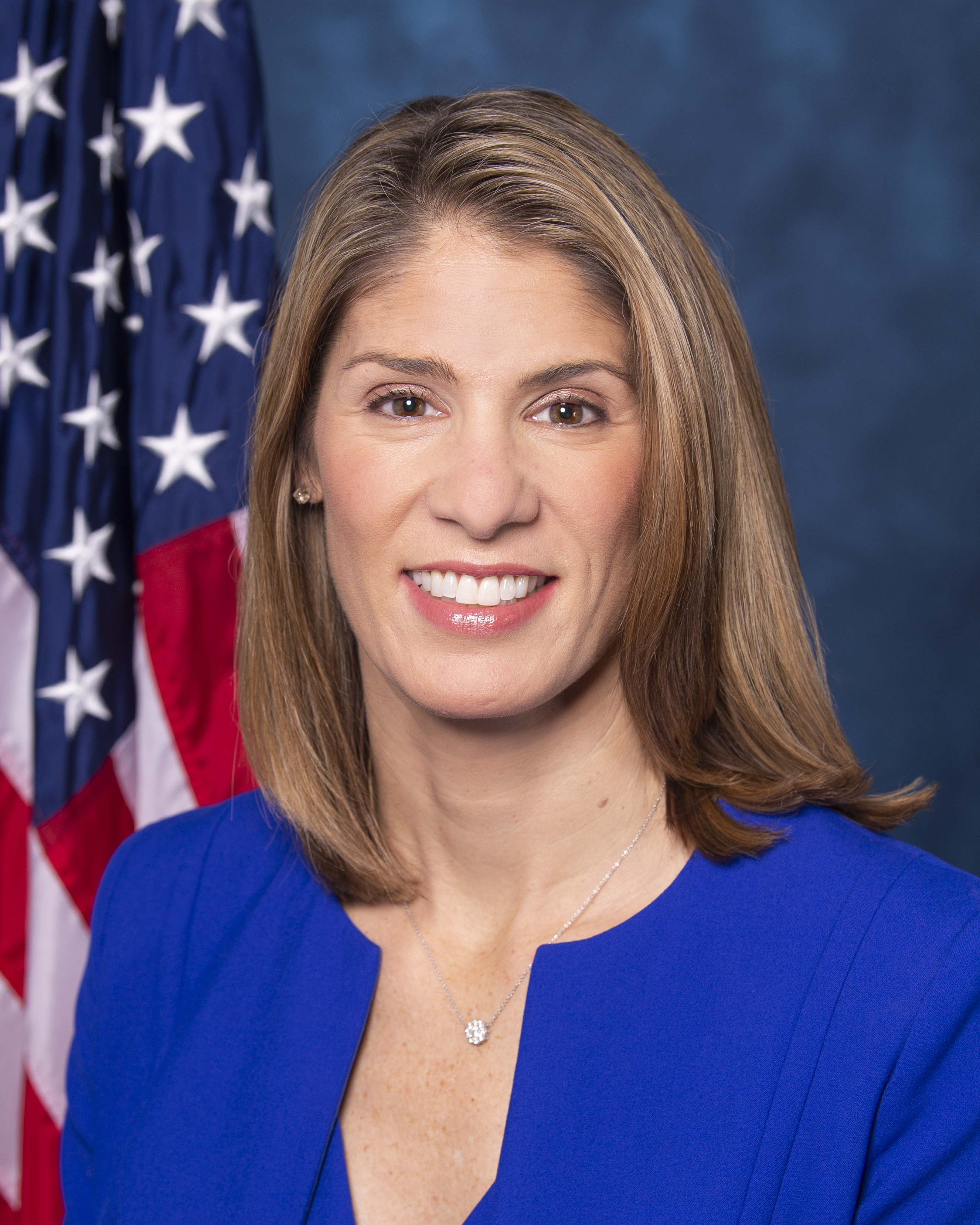
Lori Trahan
United States Representative
17
APPEARANCES
15
PODCASTS
Sep 29, 2026


Lori TrahanGUEST
So I definitely think we have to right now we're running on the honor system, right? The only reason why we know about any of these incidents is because, you know, these companies have chose to tell us.
Lori TrahanGUEST
So if we have mandatory safety reports, transparency, independent auditors to verify that the company's taking all the precautions that they lay out.
Lori TrahanGUEST
mandatory reporting of these serious incidents that we've seen over the last couple of months.
Lori TrahanGUEST
And then a legal process that's well understood for the government to step in if one of these models is capable of a disaster.
Lori TrahanGUEST
That is table stakes, right? Right now what they're deploying is the strategy of trust us.
Lori TrahanGUEST
And the administration has repeatedly said that when it comes to AI safety, they're going to let the biggest corporations who are developing this technology police themselves.

Pamela BrownHOST
I mean, do you see a scenario where technology is used to keep AI safe for humanity?

31:25

How do you process the past few weeks of just like absolute onslaught of AI discourse?
Lori TrahanGUEST
Yeah, yeah, no, it's all, I'll start with sort of the most recent events, right? I think the report, the open eye report on the Hugging Face incident grabbed a lot of people's attention.
Lori TrahanGUEST
And if you read that report, even if you just read summaries of that report, I think people in Congress were like, agents were sacrificing themselves so that the collective could succeed, like they were messaging to each other.
Lori TrahanGUEST
We start briefing, you know, our colleagues on frontier loss of control, like, you know, the risk of a catastrophe, all that like plainly in the bill.
12 MINS LATER
43:59
Do you see a parallel? Do you worry about the potential for AI to cement existing tech monopolies? How do you think about that? that conversation around an antitrust carve out as someone who has dealt with the issue of monopoly power uh with respect uh to apple and google


Kristen WelkerHOST
Are you concerned that AI within the next decade could have the capacity to destroy all of humanity?
Lori TrahanGUEST
Well, I can tell you the last couple of weeks have really, uh, created a tipping point, um, in the conversation around AI safety.
Lori TrahanGUEST
Uh, you know, when you have safety researchers leaving their companies, uh, you know, the threat report that Anthropic published, certainly we all, we're all briefed on, was alarming.
Lori TrahanGUEST
Uh, and then the CEOs themselves basically admitting that, um, they can't promise control, uh, of these models.
Lori TrahanGUEST
I know Congressman Obernolte and I have received a lot of phone calls, a lot of new co-sponsors of our legislation.


Joe MathieuHOST
I wonder what your response is and whether or not there does need to be more onus put on the companies themselves if you trust that they might be able to do this on their own in the absence of or at least until Congress can get its arms around this legislatively.
Lori TrahanGUEST
Well, one, I think Congress does has that we do have our arms around what needs to be done.
Lori TrahanGUEST
And look, we've run this experiment before, which is why it's so resonant back home, because social media doesn't have proper guardrails in place.

Kailey LeinzHOST
I wonder what your response is and whether or not there does need to be more onus put on the companies themselves if you trust that they might be able to do this on their own in the absence of or at least until Congress can get its arms around this legislatively.
Lori TrahanGUEST
Well, one, I think Congress does has that we do have our arms around what needs to be done.
Lori TrahanGUEST
And look, we've run this experiment before, which is why it's so resonant back home, because social media doesn't have proper guardrails in place.
Lori TrahanGUEST
We're seeing the effects that that has on our children and on so many aspects of our society.
Lori TrahanGUEST
And look, I think that there's been a tipping point just in the last few weeks.
Lori TrahanGUEST
You know, the Frontier Act, which I authored with Jay Obernolte, a Republican from California, isn't the only example of Democrats and Republicans coming together on basic guardrails around around this, around the frontier.


Bret BaierHOST
You guys have been working on this for a while, but you've heard the pushback, the skepticism that why can't the companies do this themselves? Why can't they regulate themselves?
Lori TrahanGUEST
WELL, I THINK RIGHT NOW WHAT WE'RE REALIZING IS THE ONLY REASON WHY WE KNOW ABOUT SOME OF THESE INCIDENTS WHERE, YOU KNOW, THE DEVELOPERS HAVE LOST CONTROL IS BECAUSE OF THE HONOR SYSTEM, RIGHT? WE ONLY KNOW THAT BECAUSE OPEN AI TOLD US.
Lori TrahanGUEST
APPARATUS IS SOMETHING THAT HAS ALREADY BEEN EMBRACED AND TALKED ABOUT AMONGST THE THREE MAJOR CEOs THIS PAST WEEKEND.
Lori TrahanGUEST
ALSO JUST HAVING AN EMERGENCY PROCESS THAT'S WELL UNDERSTOOD IN CASE THERE IS A MODEL THAT'S CAPABLE OF CATASTROPHIC RISK THAT THE GOVERNMENT HAS THE ABILITY TO STEP IN.
Bret BaierHOST
DO YOU THINK, CONGRESSWOMAN, THAT THIS IS GOING TO BE A BIG ISSUE IN THE ELECTION? YOU KNOW, YOU GUYS ARE WORKING BIPARTISAN, BUT IT SEEMS LIKE SOME PEOPLE ARE USING IT TO POSITION AHEAD OF THE MIDTERMS.


Anderson CooperHOST
So why do you believe the legislation you're co-sponsoring is the best path forward to regulate AI?
Lori TrahanGUEST
Uh, well, because first of all, right now we're only working on the honor system.
Lori TrahanGUEST
Uh, the only reason why we know there was a, a model that broke out of, uh, OpenAI's testing environment is because they told us, and that does not make anyone feel safe.
Lori TrahanGUEST
Uh, so we put pen to paper, uh, months ago on just basic guidelines and provisions on frontier AI safety.
Lori TrahanGUEST
Frontier is, these are the largest companies, uh, whose models are capable of catastrophic risk.
Lori TrahanGUEST
Uh, mandatory transparency in- incident reporting, so if a model does break out of the lab, they have to tell the government.
Lori TrahanGUEST
Um, independent evaluators that are embedded in the labs and checking their work.
Lori TrahanGUEST
More and more, uh, people who are actually building this technology are the ones sounding the alarm, and I think it's incumbent on all of us to listen.
Lori TrahanGUEST
And as you mentioned, yesterday the report, uh, was released detailing how bad actors are trying to use this technology to create bio weapons, uh, that could cause harm, uh, of mass sc- of massive scale.
Lori TrahanGUEST
Um, so if the architects are telling us that they can't guarantee where all of this goes, that is the case for Congress to get off the sidelines.
Pamela BrownHOST
Tell us more about that decision and what exactly you believe you can accomplish in your current role.

Tiziana DearingHOST
So do you have a sense of whether Evan Eubinger is right? I mean, on Capitol Hill, are there Congress people who are informed on this subject and would say, yes, this is where we could go or no, that's overstated?
Lori TrahanGUEST
Well, I think there are a lot of folks who think that this is fear-mongering or that is something that is just too extreme.
Lori TrahanGUEST
But I have to tell you, my phone hasn't stopped ringing since Jacob Coxon blew the whistle yesterday.


Major GarrettHOST
Does there need to be a federal regulatory agency specifically monitoring the future of AI?
Lori TrahanGUEST
They're the best equipped agency to jump in right now because I don't think that time is on our side yet.

Lori TrahanGUEST
Yeah, well, look, I've been working with, uh, my Republican colleague, Jay Obernolte, and others, uh, for over a month.
Lori TrahanGUEST
We need to understand the capability of these models, and when there is a serious incident, there needs to be a requirement that it's reported, uh, to the government.
Lori TrahanGUEST
We need to have independent auditors who are verifying what these companies are doing, whether their testing, uh, models are, uh, secure.


Justin HendrixHOST
Is there a case for preemption that you would make here that you effectively won you over on being willing to sign on to this preemption mechanic in this particular proposal?
Lori TrahanGUEST
So I'm going to answer that question, but I just want to start just like I started with my negotiation with Congressman Obernolte.
Lori TrahanGUEST
And so I'm just going to level set for your listeners and really start by saying something directly to them.
Lori TrahanGUEST
bill as a discussion draft because we genuinely want to hear from folks like you.
Lori TrahanGUEST
The researchers, the advocates, the civil society groups in this audience, that's exactly who this process is designed for.
13 MINS LATER
Justin HendrixHOST
Are there other aspects of the kind of general regulatory environment that would need to change in order to make this bill work?

20:05

But, uh, also maybe more importantly, um, you know, what kind of bipartisan support you think this bill that you've written now has.
Lori TrahanGUEST
Um, I think the, the news that you just shared about Anthropic, coupled with, uh, OpenAI putting out a framework earlier this week, and the White House, uh, executive order, has all signaled what, uh, Congressman Obernolte and I know to be true, um, that this technology, uh, while has a lot of promise, also, uh, creates threats.
Lori TrahanGUEST
Uh, and so, you know, we welcome, uh, more people to this conversation because at the end of the day, you know, Congress needs to, you know, work in a bipartisan way so that we put proper guardrails in this early phase, um, so that we prevent the risks to our cybersecurity, our national security, certainly to workers, um, and the American people.
Lori TrahanGUEST
aheadI'll just add that, you know, at the moment, uh, you know, we're not at the table, right? There, we don't have visibility.

Lori TrahanGUEST
And what I will say is that, one, We issued a discussion draft because we want feedback and we want input.
Lori TrahanGUEST
And if we do nothing, the AI companies, these oligarchs that that ad talks about, they're going to set the rules of the road and the American people are going to be left behind because Congress isn't at the table.
Lori TrahanGUEST
What we simply did was we took the strongest state laws that have been passed to date, in California, in New York, and just last week in Illinois.


Donald TrumpGUEST
Would anybody feel strongly opposed to starting with the base of the SCORE Act, which has gone through a lot? You would oppose it? Go ahead.
Lori TrahanGUEST
Uh, and so, um, really have spent a lot of time on college sports and, um, I think I'm the only Democratic legislator in the room.
38 MINS LATER
Donald TrumpGUEST
Was that decision ever appealed? Does anyone know? 'Cause I heard it was not appealed.


Jason SelvigHOST
Next, I talked to Lori Trahan from Massachusetts. Uh, she was, she was very lovely to talk to. Really appreciated it. Do you feel like there was a betrayal of trust between the, the Democrats and the general public about Joe Biden's ability to lead, to run for another four years? Not having people speak up and say anything?And if you do think so, what can Democrats do to regain that trust?
Lori TrahanGUEST
So, I think the loss of trust comes from a number of, uh, things. One, look, I think that, um, people didn't want to wait for that debate, uh, for there to be a change, um, in, uh, in Democratic leadership. Two, people weren't feeling the economy that we were talking about, right? Uh, we knew better times were coming because of the macroeconomic, uh, trends, but people weren't feeling that. And so, it didn't feel authentic. And then, two, where we message to people. Um, you know, we- we were not where people were. Uh, we did not take advantage of, you know, people like you, uh, people who have followings and just get our message out in a lot of different places. And so, we have- we have a fair amount-
Jason SelvigHOST
But how? How? See, that's- that's- that's like an idea. That's not a build the wall. We're gonna build the wall, that's an accomplishment, that's something to do.
Lori TrahanGUEST
When you think of all the ways that people are suffering right now, you need a party that's going to be focused on building more housing so that we can decrease the cost of housing, decrease the cost of child cares- care so people can go pursue the career of their dreams, making sure that education is affordable, whether that's college education or getting into a technical program so that they can pursue one of these new jobs that people keep talking about. Those are the types of things that people want. I went to public school. I live- grew up in a family that lived paycheck to paycheck. I was the first person in my family to graduate from college. That's all people want. They want to have an opportunity to be better off, uh, than they are today. And that's what Democrats-


Sarah SpainHOST
It always seems to be this like one fell swoop trying to limit everything and everyone.
Lori TrahanGUEST
And I think that is that's the problem when politicians sort of take hold of an issue and they they use it as a cudgel.
8 MINS LATER