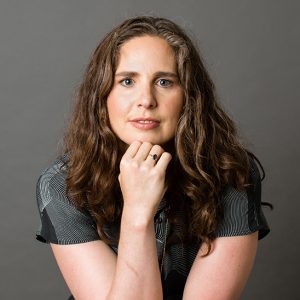
Lauren Klein
American academic
12
APPEARANCES
12
PODCASTS
Nov 11, 2026

Stephen PimperiHOST
And one of the takeaways that you offer is, and I quote, "...ask for and by whom the visualization was designed." So I wonder, Lauren, if you might use that as a jumping off point to tell us a bit about what is happening in Chapter 1 and what it is that you think we can learn from it.

Lauren F. KleinGUEST
So all the chapters are oriented towards a particular either phase or component of the visualization process.
Lauren F. KleinGUEST
And this chapter takes on a really challenging data set that has actually been one that has posed problems for visualization designers and also scholars more broadly for decades.
26 MINS LATER
Stephen PimperiHOST
So as we move even further into arguably the light, tell us a little bit about what we should take away from chapter five.

Stephen PimperiHOST
What's the central image of that chapter and what can we learn by thinking, doing that kind of critical work that you just referenced?
Lauren F. KleinGUEST
Yeah, so I should say here, so the arc of the, you know, there's like two arcs of the book.
Lauren F. KleinGUEST
So one of them is sort of expanding conceptual layers over the process of visualization.
Lauren F. KleinGUEST
The other is definitely like a negative slope into the darkest points of human history, which reaches its nadir in chapter three.
Lauren F. KleinGUEST
So, you know, just for people who are thinking that everything is despair and doom and gloom, it does get better.
Lauren F. KleinGUEST
But so this chapter, actually, the central image is a map created by an Indigenous woman, a Beothuk woman named Shauna DeFitt.
15 MINS LATER
Stephen PimperiHOST
So as we move even further into arguably the light, tell us a little bit about what we should take away from chapter five.

Stephen PimperiHOST
And one of the takeaways that you offer is, and I quote, "...ask for and by whom the visualization was designed." So I wonder, Lauren, if you might use that as a jumping off point to tell us a bit about what is happening in Chapter 1 and what it is that you think we can learn from it.
Lauren F. KleinGUEST
So all the chapters are oriented towards a particular either phase or component of the visualization process.
Lauren F. KleinGUEST
And this chapter takes on a really challenging data set that has actually been one that has posed problems for visualization designers and also scholars more broadly for decades.
28 MINS LATER
Stephen PimperiHOST
So as we move even further into arguably the light, tell us a little bit about what we should take away from chapter five.

Stephen PimperiHOST
And one of the takeaways that you offer is, and I quote, "...ask for and by whom the visualization was designed." So I wonder, Lauren, if you might use that as a jumping off point to tell us a bit about what is happening in Chapter 1 and what it is that you think we can learn from it.
Lauren F. KleinGUEST
So all the chapters are oriented towards a particular either phase or component of the visualization process.
Lauren F. KleinGUEST
And this chapter takes on a really challenging data set that has actually been one that has posed problems for visualization designers and also scholars more broadly for decades.
27 MINS LATER
Stephen PimperiHOST
So as we move even further into arguably the light, tell us a little bit about what we should take away from Chapter 5.

Stephen PimperiHOST
And one of the takeaways that you offer is, and I quote, "...ask for and by whom the visualization was designed." So I wonder, Lauren, if you might use that as a jumping off point to tell us a bit about what is happening in Chapter 1 and what it is that you think we can learn from it.
Lauren F. KleinGUEST
So all the chapters are oriented towards a particular either phase or component of the visualization process.
Lauren F. KleinGUEST
And this chapter takes on a really challenging data set that has actually been one that has posed problems for visualization designers and also scholars more broadly for decades.
29 MINS LATER
Stephen PimperiHOST
So as we move even further into arguably the light, tell us a little bit about what we should take away from chapter five.


Stephen PimpareHOST
And one of the takeaways that you offer is, and I quote, "...ask for and by whom the visualization was designed." So I wonder, Lauren, if you might use that as a jumping off point to tell us a bit about what is happening in Chapter 1 and what it is that you think we can learn from it.
Lauren F. KleinGUEST
So all the chapters are oriented towards a particular either phase or component of the visualization process.
Lauren F. KleinGUEST
And this chapter takes on a really challenging data set that has actually been one that has posed problems for visualization designers and also scholars more broadly for decades.
26 MINS LATER
Stephen PimpareHOST
So as we move even further into arguably the light, tell us a little bit about what we should take away from chapter five.


Lauren KleinGUEST
People sometimes go to attorneys and they get a really nice trust and a really nice will and all the other documents we've been talking about, but then the documents don't work, the plan doesn't work in the way that they intended.
Lauren KleinGUEST
And the reason for that, there's a couple of reasons, but one of the biggest reasons for that is You don't actually go and then retitle your assets, which could be moving assets into a trust.
15 MINS LATER

Rachel DuncanHOST
So let's, yeah, tell me, tell me your thoughts on what's going on there with a great wealth transfer.


John SchwabischHOST
So maybe you can start with like why these particular graphs and then we can talk about the practical piece of it.
Lauren KleinGUEST
And if you think of, and the reason why that is true is because in the humanities, when you write a book, the structure of the book is that there are four or five chapters and each of the chapters has a central text or image or artifact or whatever.
Lauren KleinGUEST
And when I conceived of this book, I was in my second year of being an assistant professor.
John SchwabischHOST
you know, kind of like in the back of, I think, your head, my head, like, you know, if you're thinking about these things, these are the ones that kind of pop up, right? Were there ones that you ended up using in the book that you, you know, kind of discovered in the process of writing and developing the project?

Adam LeeHOST
So maybe tell us a little bit about what it's like crewing someone who's on course record pace at the Divide.
Lauren KleinGUEST
It's not unusual at these races for Harry to come into where an aid station should be before the aid station exists.
9 MINS LATER


Lauren KleinGUEST
Yes, this is my favorite topic and I get very, very fired up because there's a lot of misconceptions and there's a lot of attorneys that don't really have a full holistic approach to this.
Lauren KleinGUEST
So there's a couple of things that you brought up that are so incredibly important.
Lauren KleinGUEST
You can have the best trust in the world, the most beautiful trust, but if you don't retitle your assets, for example, a bank account, a brokerage account, updating life insurance beneficiaries, moving a home into a trust.
Lauren KleinGUEST
But if you don't do that part, you're likely to have to have your family go through probate to get access to those assets because it's not just the creation of the trust and putting things in the trust or assigning assets into the trust.
6 MINS LATER

Vinki LoombaHOST
What does that really mean? You know, what does that actually mean in real life of families over the next decade or two? You know, what is going to look like?

EricaHOST
So what's the timing look like? Is this part of the divorce process? Is it something that they should do within a year after? How do we make it easy for somebody who doesn't have it done, but maybe they're still kind of in the chaos and the overwhelm of divorce?
Lauren KleinGUEST
I mean, best case scenario, before you have evenFiled for divorce, find a really good estate planning attorney to look at what you have in place, if anything, to see whether it needs to be updated.
Lauren KleinGUEST
And start, you know, one of the, the first parts of, of getting an estate plan together is marshaling the assets.
Lauren KleinGUEST
What accounts do you have, or what accounts are joint? And you might already be doing that within the divorce process, so leverage that, right? Let's make our lives easier.
Lauren KleinGUEST
Look at what you have, see how it's titled, see if you have beneficiaries named.
9 MINS LATER
EricaHOST
So where does a will fit in on this? Would you have a will and a trust? Would you only have a trust? And is there a certain, like, income revenue asset value plateau that you hit to stay in a will or to move into a trust?

Heather QuickHOST
However, you know, it is relative and relevant to what we're talking about because let's talk about estate planning and how it can tie into divorce and why it's so important not to ignore wills, trusts, and tax issues when you are headed for a divorce.
Lauren KleinGUEST
Yeah, I mean, you know, any life transition is a really, really great time to look at your estate plan or update your estate plan.
Lauren KleinGUEST
But I think divorce is probably one of the most, if not the most important time.
Lauren KleinGUEST
Obviously, you know, death of a family member or children or moving to a new state can also be a transition that is an important time to look at your estate plan.
Lauren KleinGUEST
Sometimes when there's a divorce, it removes the spouse as a beneficiary if there's a will or a trust, but not in every state.
Heather QuickHOST
let me ask you a question because i think our listeners would like to know i hear i've heard for years and some of this from different individuals in different states namely like california they're like you've got to put everything in a trust before you get married or even when you're married you need to have a trust because then that protects it from being divided in a divorce Now, that is a very general, big question loaded, but I'd love for you to give us a little bit of insight on what a trust can and can't do and what can it protect you from.