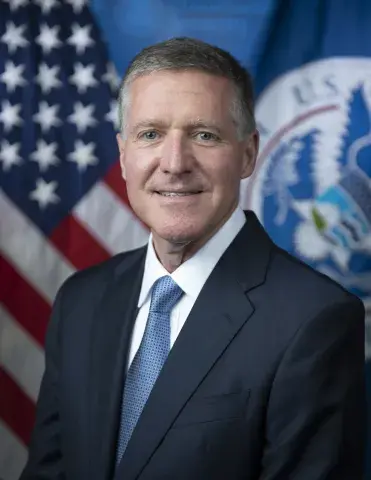
Kenneth L. Wainstein
Lawyer and former United States Homeland Security Advisor
3
APPEARANCES
3
PODCASTS
Sep 10, 2026


Ken WainsteinGUEST
Oh, well, you know, for instance, the, um, the Terrorist Surveillance Program.
Ken WainsteinGUEST
The Terrorist Surveillance Program was something that the president ordered by executive order about a month or so after nine eleven, which addressed the, the fact that it was really difficult and cumbersome to get individual orders from the federal court, the Foreign Intelligence Surveillance Court, every time you want to surveil, um, a foreign terrorist.
Ken WainsteinGUEST
And, you know, there, there are some peculiarities about the, the governing law at the time and the way the law is being applied that made it particularly cumbersome.
Ken WainsteinGUEST
So he issued an order which has subsequently been debated by lawyers ever since, uh, saying that it could be done without going-- that surveillance could be done with- without going to a court if you're trying to surveil somebody who's, you know, Al-Qaeda.
16 MINS LATER


speaker_3UNKNOWN
The WPD.
Ken WainsteinGUEST
The WPD commission, um, that they recommended that DOJ integrate its assets that are focused on counter ter-- international terrorism and, and interna-- or transnational threats generally.
Ken WainsteinGUEST
But that would, that was the Counterterrorism section and the Counterintelligence section that were in the Criminal Division, and then OIPR, the Office of Intelligence Policy Review, which became the Office of Intelligence.
Ken WainsteinGUEST
Of course, the folks who, in DOJ, who represent the government before the FISA court.
Ken WainsteinGUEST
They were t-- you know, completely organizationally distinct, and the recommendation was let's pull them together, put them in one division, appoint an assistant attorney general to oversee all of them.
Ken WainsteinGUEST
Also, for-- and importantly, for that assistant attorney general to act as the liaison to the intelligence community.
Ken WainsteinGUEST
So integrating DOJ's capabilities together within the department, but also integrating DOJ with the intelligence community.
30 MINS LATER


Steve BunnellHOST
Uh, Ken, maybe you could talk a little bit about, you know, kind of where these, these values and traditions, these ideals, uh, where do they come from? Are they, are they written down? Um, how, how does one come to learn these things, uh, as a prosecutor?
Ken WainsteinGUEST
Um, it's a good question, and the, the short answer is no, they're not written down.
Ken WainsteinGUEST
Um, but I think you, you did a good recitation of some of the, sort of the, the things that distinguish Being a federal prosecutor from being a lawyer in any other capacity, I mean, you, as you said, you have an obligation as a federal prosecutor to protect the institution of the criminal justice system.
Ken WainsteinGUEST
In other words, your job is not just to win a case for your client, but to protect the process and make sure that the process is fair to everybody and that it's perceived as fair, because the criminal justice system only works, jurors only serve and serve responsibly, people only trust the verdicts and, um, you know, people will only cooperate and come testify in the judicial system if they feel like that system is fair.
Ken WainsteinGUEST
And as the chief representative of the government, the one side in a criminal prosecution, the side that's taking action, that has the power to bring, um, criminal cases, it's incumbent on you to act in a way that protects that, uh, both the reality and appearance of fairness.
24 MINS LATER