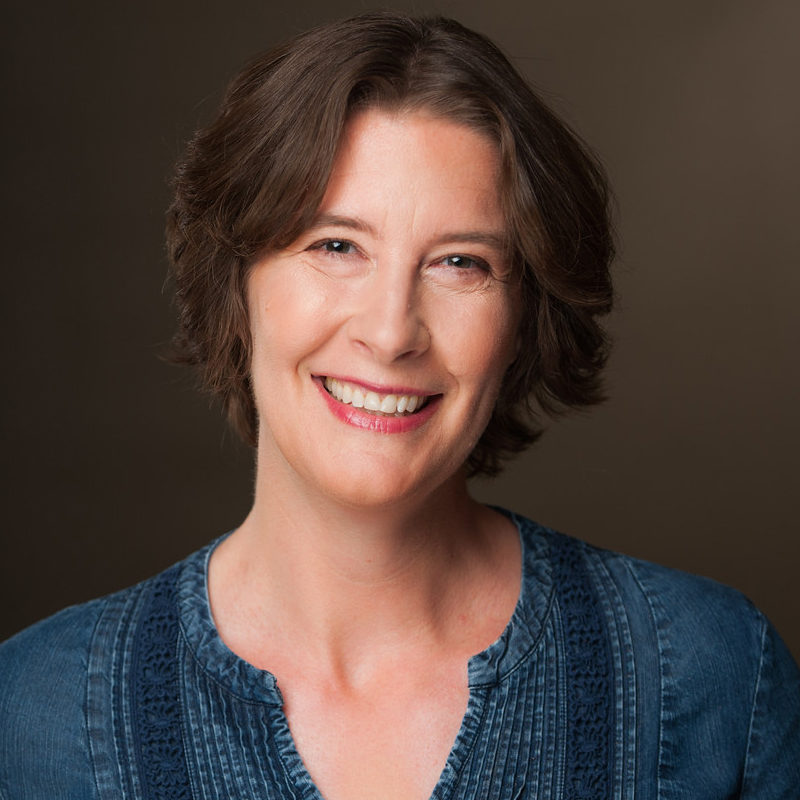
Julia Mossbridge
Neuroscientist
13
APPEARANCES
11
PODCASTS
Sep 12, 2026


Julia MossbridgeGUEST
But I guess what I always want to say to Eric, which is what I say in private, too, is we go through what we do when we go for our walk and talks as we go through these.
Julia MossbridgeGUEST
ideas like remember when we first went on that walk eric and talked about telepathy tapes and we're like is it real what's the deal why are they touching each other you know how could this be an actual telepathic communication and that's why i ended up getting involved so i do want to say thank you for that and kelly thank you for the success of the telepathy tapes along you're welcome but those kind of conversations that eric and i have we challenge each other to think about sort of what is the underlying phenomenon that's going on.
Julia MossbridgeGUEST
And so it's hard to find other people who are trained rigorously in the mechanistic thing but also have the intuitive and creative mind and so yeah so that is a deep thank you from me to you because really we do need to get together more often because there there are a few people like that and um and we can challenge each other in ways that not everyone does you know and we also think philosophically both of us


Kai DickensHOST
And with that story, I mean, do you think he was just talking to someone like in a mediumship way? Or do you think that he was slipping through a timeline in some way, remote viewing over time? Because some of the non-speakers in Chicago have said they could do that.
Julia MossbridgeGUEST
Remote viewing itself is usually thought of differently than they're using it.
Julia MossbridgeGUEST
It's kind of this technical capacity that you use a paper and pen for whatever.
9 MINS LATER

Julia MossbridgeGUEST
And Epstein saying, well, we didn't used to have to worry about diversity.
Julia MossbridgeGUEST
So basically, there were 20-some people coming to the conference to speak about AI, professors.
43 MINS LATER
Julian DoreyHOST
So question being, if we have or if we could, better way to put it, figure out time travel, would it matter for the reality we're in?


Julia MossbridgeGUEST
I didn't know I was writing a book, and, uh, I'm like, "Ah, I guess I'm writing something." And, um, I realized, you know, maybe about halfway through the first part of the book, that it was about disclosing fr- in yourself, and it was a, almost like a spiritual process, but also like a physical process, but also a social process.
Julia MossbridgeGUEST
And by the time I got done with that part of the book, which I thought was the end of the book, I realized that that process had worked on me, and that I had to write about my own internal disclosure of this thing.
Julia MossbridgeGUEST
And, uh, you know, you can hear me swallow and stuff because [laughs] it's hard still, and I've talked about it several times, uh, publicly.
Julia MossbridgeGUEST
Um, but nonetheless, it's hard to sort of recognize out loud that who you are as a person was sort of shaped on purpose, not just by your parents and not just by your community, but by something that you didn't even know was... had an intention to shape who you are.
2 HRS 10 MINS LATER
Julia MossbridgeGUEST
Second of all, it's so hap- uh, makes me really happy to be here because- The ION's crew is...
Julia MossbridgeGUEST
Um, just lit the path for humanity and for the applications of science and technology that can actually help people thrive and help us understand our inner wisdom.
Julia MossbridgeGUEST
So I'm just, I'm just happy to be here and be in support of this amazing crew.

TimHOST
Can you just briefly explain a bit about who they were in terms of, you know, background? Were they sort of kooky, clairvoyant enthusiasts? And then what they did in terms of their work?
Julia MossbridgeGUEST
Well, that's very interesting question because I think they were sort of considered after the fact kooky.
Julia MossbridgeGUEST
I think the deal is when I first had my meta-analysis of physiological responses to future events published in a mainstream journal, I got a call from a reporter at the New York Times.
28 MINS LATER
TimHOST
I'd love to hear how you got involved with it and what your initial reaction to the telepathy tapes was and then go into what you're finding with your involvement.

Julia MossbridgeGUEST
And, and you know, the people that I grew up with were very counter-cultural.
Julia MossbridgeGUEST
Um, lots of, um, yeah, like I wrote the underground newspaper at Libertyville High School, and then built one at Lake Forest High School, which was unusual for the North Shore.
15 MINS LATER

Julia MossbridgeGUEST
Now, these non-speakers generally seem to be in a place, not all the time, but often, much more often than neurotypicals, in a place of unconditional love.
Julia MossbridgeGUEST
They're very desperate, in fact, to talk about different timelines and to point out to you, Kai, specifically, they've said like, "Tell Kai we remote view in time," or, "Tell Kai that we do time travel." Because their p- point of view is very different than ours when it comes to time.So this is by Naoki Higashida, a Japanese non-speaker, from the book called The Reason I Jump.
Kai DickensHOST
Okay, so given, like, so much of the research you've done, what do you think is the most compelling evidence that the mind can gather information from the future?
Unknown podcast
Unraveling Time Travel
May 13 · 30m
Julia MossbridgeGUEST
Now, these non-speakers generally seem to be in a place, not all the time-But often, much more often than neurotypicals, in a place of unconditional love.
Julia MossbridgeGUEST
They're very desperate, in fact, to talk about different timelines and to point out to you, Kai, specifically, they've said, like, "Tell Kai we remote view in time," or, "Tell Kai that we do time travel." Because their p-point of view is very different than ours when it comes to time.
Julia MossbridgeGUEST
So this is by Naoki Higashida, a Japanese nonspeaker, from the book called The Reason I Jump.
Kai DickensHOST
Okay, so given, like, so much of the research you've done, what do you think is the most compelling evidence that the mind can gather information from the future?


Joe RoganHOST
And when you started asking them and trying to apply it in, uh, using the scientific method, how did you first attempt to do that?
Julia MossbridgeGUEST
I, I was a, I ha- I'm kind of fearless when it comes to cold calling people, especially scientists, 'cause very few people call scientists.
Julia MossbridgeGUEST
I called him up, and I said, um, "Hi, my name's Julia, and I was thinking of [laughs] going into this field, and I think precognition is real." And he's like, "Oh, okay." And, [laughs] and I remember where I was sitting, uh, when I called him.
Julia MossbridgeGUEST
And, uh, he said, "The thing you have to do is get your PhD in a field that is not this.
18 MINS LATER

Rick ArcherHOST
Um, how, how could unconditional-- firstly, how can unconditional love be kinda propagated so that it's, you know, begins to, um, impact millions of people, tens of millions of people? And, um, uh, what would be the mechanics through which those people would actually shift their perspective so that there would be less polarity? And how does the whole time machine concept enter into this?
Julia MossbridgeGUEST
Anyway, time-- the way Time Machine works is it asks you to love yourself as you listen to the message that you sent to yourself in the past.
Julia MossbridgeGUEST
So it's a self-guided auto, audio, uh, journaling tool that challenges you to love yourself.
Julia MossbridgeGUEST
And it, it's especially helpful, I think, to people who have been addicted to drugs and/or had any kind of mental health struggle.
6 MINS LATER
Rick ArcherHOST
And why, why don't you explain what it is in, for anybody who may not have heard about it or listened to it?
10:32

Can you talk to us about this time travel experience you had yourself in the loop with your past and future self-connecting?
Julia MossbridgeGUEST
Yeah, I have it all the time, but there was a particular profound case of it that was very healing for me that I think got me on this path of thinking about unconditional love and how it flows through time and how it heals and thinking about...
Julia MossbridgeGUEST
And part of why I created Applied Love Labs, which is a nonprofit that used to be called TILT, the Institute for Love and Time.
Julia MossbridgeGUEST
It's at applied.love, and within a week you'll be able to see the website, and right now you can't.
Julia MossbridgeGUEST
As a kid, I was in this family that was very eccentric, which you might guess, and messed up in certain ways and not messed up in other ways.
30 MINS LATER

Amy RobbinsGUEST
And so they're just getting so much more information than, and they don't know how to filter it and how that might change how we think about particularly that diagnosis.

Julia MossbridgeGUEST
So, psionics or P-S-I, psyops, um, what it- what that is, uh, are applications that use essentially what I like to call consciousness technology.
Julia MossbridgeGUEST
So, the ability to directly use your mind to influence something, like we call that telekinesis or psychokinesis.
Julia MossbridgeGUEST
But also the ability to use your mind to receive information that's distant in time or space.
Chris FosterHOST
Um, a- are there theories about how this stuff might work with our existing known laws of science? Or how is- how are you moving something with your mind, how are you seeing something in the future, how are you seeing something halfway around the world based on what's in books so far? Or is that stuff just not in books yet?