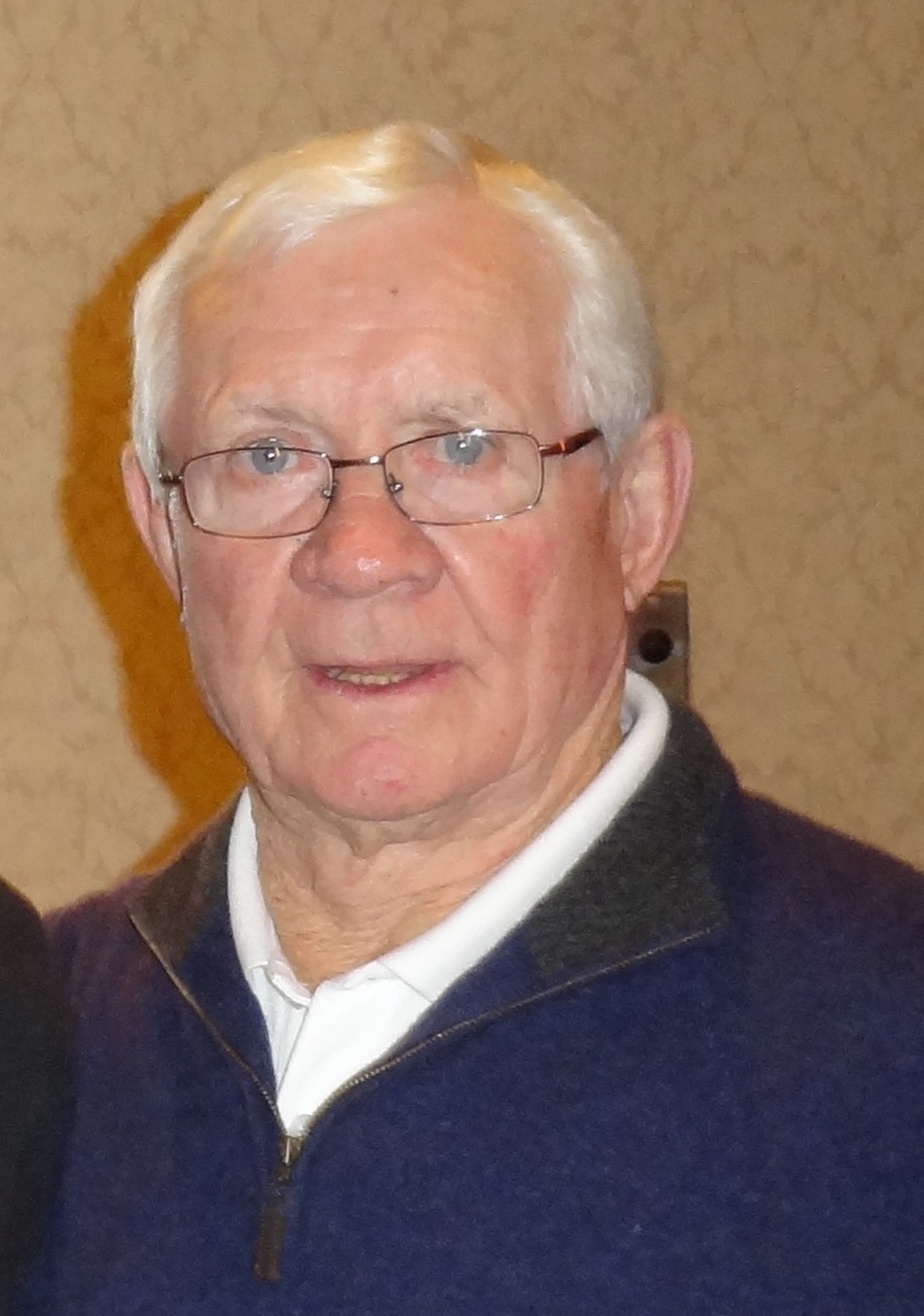
John McKenzie
Interim chief executive officer of TMX Group
11
APPEARANCES
7
PODCASTS
Aug 18, 2026


John McKenzieGUEST
Well, yeah, it's interesting that you said maybe ruined it because that's the reason I wanted to use that word because I think it encapsulates his influence.
John McKenzieGUEST
The book itself is an attempt to talk about that narrative arc where at one point it felt as though you couldn't talk about football without talking about Pep Guardiola, at least in the mechanical sense.
John McKenzieGUEST
If you wanted to know how to win games of football, you had to do something like what Guardiola was doing.
John McKenzieGUEST
developed into almost a sense of resentment, where it was almost a feeling of he's ruined the game.

speaker_5UNKNOWN
Yeah.
John McKenzieGUEST
But at the same time, if you, if you understand history in that cyclical way then it's really hard to account for, like, new things happening.
John McKenzieGUEST
It's really hard to account for someone like Guardiola, who as you say, like, and I agree with you, I think he's the greatest manager of all time.
John McKenzieGUEST
And I think it's hard to understand that if you just simply understand history as like this cyclical thing.
John McKenzieGUEST
You just have to be like, "Well, he was just a guy who was in the right place at the right time for the ideas to come back around." But I don't think that's the case.
John McKenzieGUEST
He takes those ideas and makes them function in a, in a way that is, that is new and novel.
9 MINS LATER


John McKenzieGUEST
And then what you do is you have basically two players who are effectively, you know...
John McKenzieGUEST
I mean, it's, it's Haaland and, and O'Riley, who are effectively, like, very similar physical profiles at this point.
John McKenzieGUEST
And you've- you're, you're suddenly playing up against two strikers with a, with a physical mismatch.
John McKenzieGUEST
So, um, yeah, that physicality now that's coming into the game is, is a really interesting topic to talk, talk about.
10 MINS LATER


Harry SethiHOST
Um, and yeah, I think people vaguely have a notion of kind of what that means, but what was it about Iraola's, um, interpretation of that, all the influence that, that it had on him that you, you enjoyed?
John McKenzieGUEST
I think the thing that stood out for me was that he was doing something different.
John McKenzieGUEST
I don't know, maybe, maybe it didn't, maybe I'm just sort of narrating this differently to myself now five years later, but it felt as though he was doing something that was modern in some senses, certainly innovative.
John McKenzieGUEST
Um, and that's the thing that I keep coming back to with him, is that it feels as though, it feels as though he understands football, uh, on a certain level in a way that's maybe deeper than some other coaches.
John McKenzieGUEST
I think a lot of other coaches are kind of very much practitioners, um, and they see the, the task as being we are, we need to get these players into, into the best shape we can for, for the next match day.
John McKenzieGUEST
But, um, and we're gonna do that by, you know, putting them in some kind of system or structure.
27 MINS LATER
Joe DevineHOST
"It does raise concerns about his suitability for that role at Chelsea, particularly given his previous history." [notification sound] Yes, John?

John McKenzieGUEST
The word responsibility here I think is worth dwelling on for a little while because I think often when we have these sorts of conversations in football, um, people are very quick to jump into this idea of, well, you know, we believe in re- rehabilitative justice.
John McKenzieGUEST
If someone makes a mistake, then as long as we feel as though they're being contrite and, uh, and, and haveGone out of their way to remedy whatever they did wrong, uh, then they deserve every chance to, to come back in.
John McKenzieGUEST
And, you know, I think rehabilitative justice is really important and, uh, and I'm, uh, yeah, I would advocate for that in, in almost every situation.
John McKenzieGUEST
But there's a, there's a big difference, I think, between, um, being found guilty of something like this, uh, but then being given a job in a, in a position of responsibility.
11 MINS LATER


Kaya KaynakGUEST
I thought maybe he mishandled that post-match and was a bit too emotional rather than-
John McKenzieGUEST
than-Uh, realizing it's halftime within the tie, um, I might not put it as bluntly as Colin there, but I, I agree that I think you need to, um, move on as quickly as possible, particularly given that Diego Simeone is a very emotional coach who wants you to play an emotional game where he's kind of in your heads and under your skin.
John McKenzieGUEST
And if you'd asked Arsenal if, um, they, if, if they could go back to the Emirates Stadium and have the chance of beating a team they've already beaten this season to get to the final of the Champions League for the second time in their history, they'd 100% take that.
John McKenzieGUEST
But in the second half, it drops down to 45%, which, uh, again, is, it's, it's, it's something like a seven-point swing from, from the first half.


John McKenzieGUEST
Um, you know, first of all, any, any company in Canada that's getting the benefit of Canadian government support, and therefore taxpayer support, and it's completely reasonable for us to have stay-in-Canada pieces around that, and if you leave, you give that back.
John McKenzieGUEST
And even when we talked about the reforms around R&D, one of the things I didn't like is we were still putting R&D tax credits into foreign companies.
John McKenzieGUEST
So there- there are ways we can fix that so that it's Canadian companies that get the benefit of things that come from Canadian governments, Canadian taxpayers, and if they leave, they, not only they lose that, they pay them back.
9 MINS LATER
John McKenzieGUEST
And I think it's really interesting that he sets it out like this, where he's like, "I'm, I'm having to try and find the balance between those two things." Um, balance between applying the laws and, and again, that's the, the sort of this is wrong, and it should be punished.
John McKenzieGUEST
But then he adds to that like a modicum of consistency and fairness, so you-you're not only working that out, whether or not the laws have been broken and how they should be, um, how, how there should be retribution or whatever.
John McKenzieGUEST
You have to take that other approach to justice into account, which is how do we let the game flow so, um, the, the...
John McKenzieGUEST
We, we at the time, Leeds had Marcelo Bielsa, and I was, um, I was working for-- Well, I was, I was doing stuff for a, a Leeds podcast where we, we sort of focused on the tactics side of things a lot.
John McKenzieGUEST
So the big question was who's gonna replace Bielsa? So that was my introduction to Iraola.
John McKenzieGUEST
And from that season onwards, when I, I made a, a video just breaking down his tactics, I watched every game of his at Rayo, at, at Rayo Vallecano, so the last couple of seasons, and then just carried on doing it when he, he came to, to Bournemouth as well.
10 MINS LATER
John McKenzieGUEST
And in this instance, what's so interesting is that going back to a more zonal approach seemed to cause Arsenal all kinds of problems in terms of how they build up.
John McKenzieGUEST
I think so much of their, uh, approach to build up at the moment is based on rotational principles, right? So the player's switching positions because they know they're dragging man markers with them, and in doing so, they then open out space that they can then access.
John McKenzieGUEST
So it's almost as though that Arsenal's build up is so good at the moment precisely because they know how to operate within those conditions.
John McKenzieGUEST
And so City have come into the game and been like, "Fine, we're not gonna do that.
29 MINS LATER


John McKenzieGUEST
The main source of food for the sea urchin is, is kelp, um, the, the seaweed.
John McKenzieGUEST
So because there's more sea urchin, there's less kelp because they're eating more.
John McKenzieGUEST
And kelp is fundamental to, to the, the marine environment around that part of the coast.
John McKenzieGUEST
And, um, with the kelp all dying off, there's less places for, for these e- emergent like communities of, of, of sea life to, to exist in.
John McKenzieGUEST
One little change, killing off the sea otters, has a massive effect, uh, across the, the rest of the board for the marine life on the West Coast of the US.