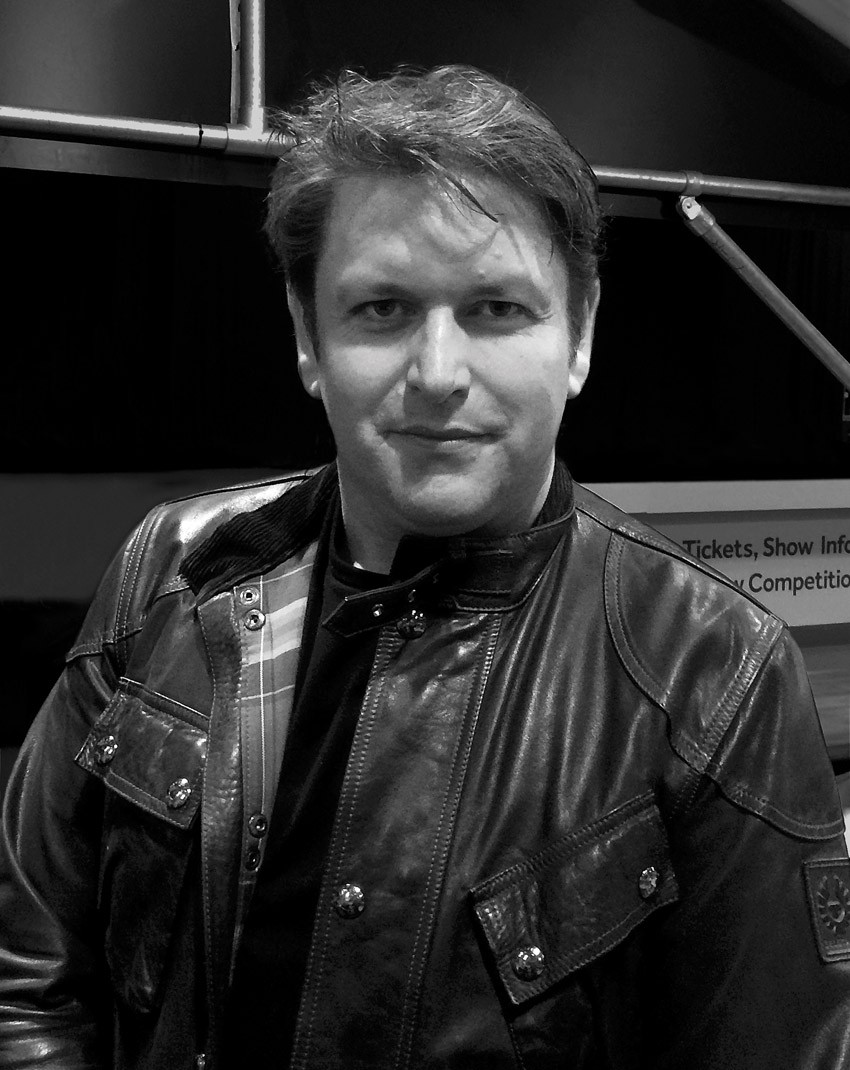
James Martin
British chef and TV show host
43
APPEARANCES
35
PODCASTS
Oct 8, 2026

James MartinGUEST
I made an appointment to see some Jesuit, and he gave me this vocational literature, these pamphlets, you know, what it means to be a Jesuit.
James MartinGUEST
I could never do this." And I, I actually threw them out, and the Jesuits would continue to send me sort of recruiting literature.
James MartinGUEST
And I would stand outside, uh, near the mailbox on, gosh, Rock Spring Road in Stamford, where we were, I was living with, uh, two roommates, and I would tear up the, uh, vocational stuff that they would send me.


Niala BoodhooHOST
As we're talking about the advent of particularly generative artificial intelligence, are we in a similar moment?

James MartinGUEST
Interestingly, you know, I would say that in addition to him responding to a certain time, He's also responding to just people's natural desire for God, right? And this is one of the main reasons he creates what's called the spiritual exercises, which is a four-week plan for retreat.
James MartinGUEST
But I would say that Ignatius was very intent on responding to what was going on, right? One of the reasons that Jesuits founded schools was because they needed schools.
8 MINS LATER


James MartinGUEST
Um, it seems like they have very much rejected the like, "Oh, because I, uh, like I might be queer in some way, that I there- therefore must fall into like these political camps, these ideological camps," this or that.
James MartinGUEST
And, um, yeah, just these, these barriers seem to be coming down, and they're very willing to like...
James MartinGUEST
Like, you can have conversations and be like, "Yeah, like I really disagree with any choice to act on certain inclinations, but we're gonna like have this really interesting conversation about it," and they can be like, "Yeah, well, I disagree," and, "Well, I disagree," you know? [laughs] I think you're right.
James MartinGUEST
I think a lot of those ba- I think a lot of those sort of barriers and lanes in New York, you know-
18 MINS LATER

James MartinGUEST
It was one of these small papers that existed all over the suburbs, at least in Philadelphia, I'm sure all over the country.
35 MINS LATER


James MartinGUEST
Yeah, I learned a lot about, uh, hard work first of all, but also, uh, being kind to people.
James MartinGUEST
Uh, because when you're humiliated as a busboy or a dishwasher or a caddy, uh, you know, you learn how not to humiliate people.

James MartinGUEST
Uh, and in each chapter I mention, you know, a, a song or two that was popular during the summer.


James MartinGUEST
It was the summer of 1976, 50 years ago, and I was working as a busboy dishwasher at a place called the Ice Cream Inn in Plymouth Meeting, Pennsylvania, where I grew up.
James MartinGUEST
And to make a long story short, the Bicentennial Wagon Train, I just love that phrase, was coming through our town.
James MartinGUEST
And, uh, one afternoon at the Ice Cream Inn, I sort of looked outside the kitchen and noticed that everyone had left their tables, and I thought, "Well, it's time to bus all their tables." And I thought it was a little odd that everyone would leave at the same time, but I very diligently bussed all the tables and washed all the dishes, and suddenly I hear this great commotion from inside, and, uh, the manager sort of burst into the kitchen and said, "What did you do?" And he was followed by a patron who started screaming at me.
James MartinGUEST
Well, all the patrons had leapt up from their tables and went outside to watch the Bicentennial Wagon Train pass by, and, uh [laughs], you know, I had taken all their food, you know, before they were finished.
7 MINS LATER
AliciaAUDIENCE
... faith leaders, one of the things we have to do is also, like, examine, um, what others around us are also encountering or enduring.


James MartinGUEST
Well, you know, Tim, it's great to hear you talk about the spiritual warfare, too, because that's a very Jesuit concept.
James MartinGUEST
But that idea of the good spirits and the bad spirits, I think you're absolutely right.
14 MINS LATER

Candice GuardinoHOST
I will ask you, because you've written so many books, is this particular book, Work in Progress, your favorite? I'm wondering.


James MartinGUEST
Let's say what would, uh, enable a person, anyone, to say that Jesus is not in favor of the poor and the marginalized? I would say a person who is fundamentally misreading the Gospels or not reading the Gospels or deciding that, uh, it's just too hard.
James MartinGUEST
I mean, Jesus says in-The Gospel of Matthew in chapter 25, as you know, right? The, if you do it to the least of my brothers and sisters, right? And he talks about people who are poor and sick and struggling and hungry and imprisoned and strangers, right? This is widely understood to be, you know, refugees, aliens, migrants, right? Depending on what word you wanna use.
James MartinGUEST
Then you do it to me, right? So as you treat these people, as Bishop Buddy was saying, you know, who are poor and marginalized, you do it to me.
James MartinGUEST
In addition to that, as she was saying, in Exodus, God says to the people of Israel, "You shall not oppress the alien, for you were aliens yourself once in the land of Egypt." In other words, when the, when the, the Jewish people were in exile, right, they were aliens, right? And so God's saying to them, you know, "You were that yourself, so don't mistreat people who are refugees and migrants." So to say that Jesus is not interested in the poor and the struggling and the sick and the marginalized is to say that you know very little about the Gospels.
39 MINS LATER


Matt GallowayHOST
What changed when y- your friend Brad was in a car wreck? Tell me a little bit about, about him and, and w- what you went through given his experience.
James MartinGUEST
And, uh, between junior and senior years he was killed in a car crash with another friend.
James MartinGUEST
And I remember at his funeral, uh, in Potomac, Maryland sitting in the pew thinking, "I'm done with God.
16 MINS LATER

James MartinGUEST
Yeah, I mean, I think that that is an essential part of any solution to the problem we've got.
James MartinGUEST
We're talking a, a seven billion dollar market and growing, which means that expenditure on illicit tobacco is worth more than cannabis, cocaine, heroin, and ecstasy combined.
James MartinGUEST
Um, so lowering the tax is, uh, I think just a, a common sense, you know, really basic way of reducing the appeal, um, of illicit tobacco.
James MartinGUEST
It's not like most of the, the consumers of tobacco want to be breaking the law, but with price differential as massive as it is-

Tom ElliottHOST
I mean, I'm sure all of those are worthy activities, but I just don't think, you know, even if all those things double, I don't think it's gonna make this illicit market go away.

Zac DavisHOST
Well, I thought it was slightly different what, uh, Francis in his somewhat famous remarks would say, like, "We don't have to bring this up all the time." Leo actually said, "It's less important [laughs] than issues of justice."
James MartinGUEST
Yeah, which is a big deal, and I think it was important for him to say that because for most Catholics, uh, for many Catholics, and I think for many people looking at the Church, they think this is the only thing that the Church is interested in.
James MartinGUEST
Um, but the second thing he said was, you know, "We're not going further," and the Holy See, um, opposes the moves by the German Bishops' Conference.
James MartinGUEST
So it was done very politely, right? Uh, and then the third thing was this risked unity, right? So if we go further, and I have to say, you know, having been at the synod and talked to these bishops, it does risk unity.
James MartinGUEST
I mean, if they went any further than Fiducia Supplicans, which already had stirred up controversy in Africa, there was a bishops conference there that refused to implement it, right? And the Vatican had to determine how to respond to that, and they basically accepted it, um, would mean real disunity.
James MartinGUEST
And so, you know what Leo is trying to do is to balance this sense of, um, sort of fidelity to Fiducia Supplicans, and not wanting to break the Church over it, uh, over this.
James MartinGUEST
And I would say, even as someone who works for LGBT, with LGBTQ people, rather sort of particular issue.

Ian ChillagHOST
... you're spending your last moments with a person or with, in her case, a burrito.
James MartinGUEST
Yeah, I don't wanna trivialize what she's talking about because it, you know, like Proust's madeleine, right? It can kind of stir up memories.
James MartinGUEST
You know, I lost my mom a couple weeks ago, and I was actually with her on the last day of her life, so I was able to say goodbye.
James MartinGUEST
But for people, like, letting go of people, I think, you know, as a Christian, I believe, you know, they're in heaven, and we can say goodbye to them in our prayer.
James MartinGUEST
One of the things that we can do to sort of help us say goodbye to something was something that was recommen- recommended to me by a, a Trappist spiritual director.
James MartinGUEST
Uh, my mom had moved out of her house, and he said, as a meditation, "Why don't you imagine yourself going through the rooms with God," or if you're not a believer, just kind of going through those rooms, "and, uh, remembering all the things that happened in those rooms and letting it go?"

James MartinGUEST
I was dealing with a Jesuit in my community who couldn't stand me, and I mean really couldn't stand me.
James MartinGUEST
And my retreat director asked me to pray over what's called the Rejection at Nazareth, and that's the story of Jesus standing up in the synagogue in his hometown and basically just declaring himself as the Messiah, in so many words.
James MartinGUEST
And I remember asking Jesus in my imagination, "How could you do this?" Right? I mean, how could, [laughs] how could...
Aaron CalafatoHOST
Can you maybe articulate to the listeners your viewpoint on that and sort of where you stand in that advocacy?
James MartinGUEST
Yeah, I learned a lot about, uh, hard work, first of all, but also, uh, being kind to people.
James MartinGUEST
Uh, because when you're humiliated as a busboy or a dishwasher or a caddy, uh, you know, you learn how not to humiliate people.
speaker_16UNKNOWN
[laughs]
James MartinGUEST
Uh, and in each chapter, I mention, you know, a, a song or two that was popular during the summer.


Laura CoatesHOST
What do you believe was the underlying message, and, and who do you think it's meant for?

James MartinGUEST
for?It's meant fir- first of all for the people of Cameroon, you know, who are suffering.
James MartinGUEST
Uh, when the Pope speaks, uh, he's speaking in the most general terms possible.
James MartinGUEST
Uh, you know, unless he's naming somebody or unless, uh, he's naming a country.
James MartinGUEST
But again, he's, he's talking about Jesus's message, "Blessed are the peacemakers," not, "Blessed are the warmongers." And, uh, after the resurrection, Jesus's message to the disciples is, "Peace be with you," not, "Vengeance is mine." So he's being consistent and preaching what all popes have preached in the same way, which is not only peace, but Jesus's message of love and mercy and compassion.
Laura CoatesHOST
What is your reaction to even that comparison or Hegseth invoking the Bible to condemn the media?

James MartinGUEST
I was struck more by the specter of the vice president lecturing, uh, Pope Leo, who is an Augustinian, uh, who was visiting the home of Saint Augustine about just war theory, which originates with Saint Augustine.
James MartinGUEST
Uh, I think the pope has probably forgotten more about, uh, just war theory and theology than most of us will ever know.
James MartinGUEST
He has a, a master's in divinity, uh, a doctorate in canon law from a pontifical university.
James MartinGUEST
Uh, by the same token, I think it was good that the US bishops, uh, clarified things to remind people that this is what just war theory is and this is what it isn't.
James MartinGUEST
But again, the specter of someone lecturing the pope on needing to know more theology was really a kind of, a sort of unprecedented moment, I think, in our country's history.

Chris HayesHOST
Do you think, um, do you think this changes the way that Americans view the Church or American Catholics particularly? I have to say that in the circles I travel in, which is a high quotient of what we might call lapsed Catholics who are libs, [laughs] liberal lapsed Catholics, there, there really is this thing happening where people really like this pope and are, are kind of, I don't know, uh, it drawing some people back in the Church maybe?

James MartinGUEST
Well, it's an ancient concept, uh, in the Catholic Church, uh, and in the Christian Church more broadly, that talks about, uh, the types of requirements, um, that are needed for a war to be considered just.
James MartinGUEST
For example, there has to be a proportionate response, it's usually in defense.
James MartinGUEST
And pretty much every theologian, including, uh, Cardinal Robert McElroy, who's a doctorate in theology and political science, Archbishop Timothy Broglio, former head of the USCCB, have concluded this is not a just war in Iran.
James MartinGUEST
So it's a certain, uh, number of qualifications that are needed to consider a war to be just.

Amna NawazHOST
What are you hearing from members of the Catholic community at this time about all of these headlines about the Pope's leadership and these public feuds that we're seeing?
James MartinGUEST
seeing?Well, I would say Catholics from traditional Catholics to progressive Catholics were really pretty appalled.


Amy GoodmanHOST
So that's J.D. Vance, if you can respond to that, and also the AI image Trump posted of himself as Jesus Christ, but start with Vance.
James MartinGUEST
Vance.Yeah, uh, he said the Catholic Church should stick to matters of morality.
James MartinGUEST
Uh, I don't know any other more pressing moral issues than war and peace, than taking care of the poor, the sick, uh, the homeless, the stranger.
James MartinGUEST
These are moral issues, right? And so that is exactly what Pope Leo has been doing.
James MartinGUEST
And so I don't understand how Pres- Vice President Vance can not see that war, uh, is a moral issue.
James MartinGUEST
Uh, secondly, this idea of President Trump posting a, a picture of himself as Jesus, you know, some have called it blasphemous, which is, you know, speaking ill words a- against God, but I- I think it's more idolatry.

Juan GonzálezHOST
And he- his spiritual advisor, Paula White-Cain, has declared that, quote, "To say no to President Trump would be to say no to God." Uh, what do you say to that and the, the evangelicals around him, uh, that, uh, uh, that promote this, these views?

Amy GoodmanHOST
So that's J.D. Vance, if you can respond to that, and also the AI image Trump posted of himself as Jesus Christ, but start with Vance.
James MartinGUEST
Vance.Yeah, uh, he said the Catholic Church should stick to matters of morality.
James MartinGUEST
Uh, I don't know any other more pressing moral issues than war and peace, than taking care of the poor, the sick, uh, the homeless, the stranger.
James MartinGUEST
These are moral issues, right? And so that is exactly what Pope Leo has been doing.
James MartinGUEST
And so I don't understand how Pres- Vice President Vance can not see that war, uh, is a moral issue.
James MartinGUEST
Uh, secondly, this idea of President Trump posting a, a picture of himself as Jesus, you know, some have called it blasphemous, which is, you know, speaking ill words a- against God, but I- I think it's more idolatry.
Juan GonzálezHOST
And he- his spiritual advisor, Paula White-Cain, has declared that, quote, "To say no to President Trump would be to say no to God." Uh, what do you say to that and the, the evangelicals around him, uh, that, uh, uh, that promote this, these views?

Amy GoodmanHOST
So that's JD Vance, if you can respond to that, and also the AI image Trump posted of himself as Jesus Christ, but start with Vance.
James MartinGUEST
Vance.Yeah, uh, he said the Catholic Church should stick to matters of morality.
James MartinGUEST
Uh, I don't know any other more pressing moral issues than war and peace, than taking care of the poor, the sick, uh, the homeless, the stranger.
James MartinGUEST
These are moral issues, right? And so that is exactly what Pope Leo has been doing.
James MartinGUEST
And so I don't understand how Pres- Vice President Vance can not see that war, uh, is a moral issue.
James MartinGUEST
Uh, secondly, this idea of President Trump posting a, a picture of himself as Jesus, you know, some have called it blasphemous, which is, you know, speaking ill words a- against God, but I- I think it's more idolatry.
Juan GonzálezHOST
And he- his spiritual advisor, Paula White-Cain, has declared that, quote, "To say no to President Trump would be to say no to God." Uh, what do you say to that and the, the evangelicals around him, uh, that, uh, uh, that promote this, these views?


James MartinGUEST
Not, "Blessed are the warmongers." And, uh, you know, standing up for migrants and refugees.
James MartinGUEST
Jesus says, "Welcome the stranger." So, you know, Leo, he only-- notice, he only uses President Trump's name when people ask him specifically, but otherwise, in his prayer for peace, uh, a couple of days ago, um, he just talked about peace and reconciliation in general.
speaker_7SOUNDBITE_SPEAKER
Christ.To put my message on the same plane as what the president has attempted to do here, I think is not understanding what the message of the gospel is.
Matt GallowayHOST
What changed when your friend Brad was in a car wreck? Tell me a little bit about, about him and, and w- what you went through given his experience.
James MartinGUEST
And, uh, between junior and senior years, he was killed in a car crash with another friend.
James MartinGUEST
And I remember at his funeral, uh, in Potomac, Maryland, sitting in the pew thinking, "I'm done with God.
James MartinGUEST
That's it." You know, "I, I don't believe in a God that, mm, you know, kills my friends, or I don't wanna believe in a God that kills my friends." And I persisted in that unbelief or sort of atheistic or agnostic state for a couple of months until a friend of mine really brought me up short.
15 MINS LATER

James MartinGUEST
Uh, well, I think the problem at the moment really stems from a, a lack of appreciation of what the limits of enforcement are in this space.
James MartinGUEST
So, um, you know, that's everything from seizures at the border or even, you know, beyond the border, working with international partners, all the way down through, you know, to the retail level, trying to close stores and so on.
James MartinGUEST
Um, but those things actually don't produce any meaningful impacts on the market themselves.
James MartinGUEST
And that's because when a market gets beyond a certain point, while you can, you know, severely impact or disrupt individual criminal networksThere are so many other players in the space that they don't interpret, you know, some other rival being shut down as a deterrent.
Matt GallowayHOST
What changed when your friend Brad was in a car wreck? Tell me a little bit about, about him and, and w- what you went through given his experience.
James MartinGUEST
We were very close and, uh, between junior and senior years, he was killed in a car crash with another friend.
James MartinGUEST
And I remember at his funeral, uh, in Potomac, Maryland, sitting in the pew thinking, "I'm done with God.
James MartinGUEST
You know, I, I don't believe in a God that m- you know, kills my friends, or I don't wanna believe in a God that kills my friends." And I persisted in that unbelief or sort of atheistic or agnostic state for a couple of months until a friend of mine really brought me up short.
15 MINS LATER
Scroll for more appearances