Ian Lyngen
18
APPEARANCES
3
PODCASTS
Aug 19, 2026


Ian LyngenGUEST
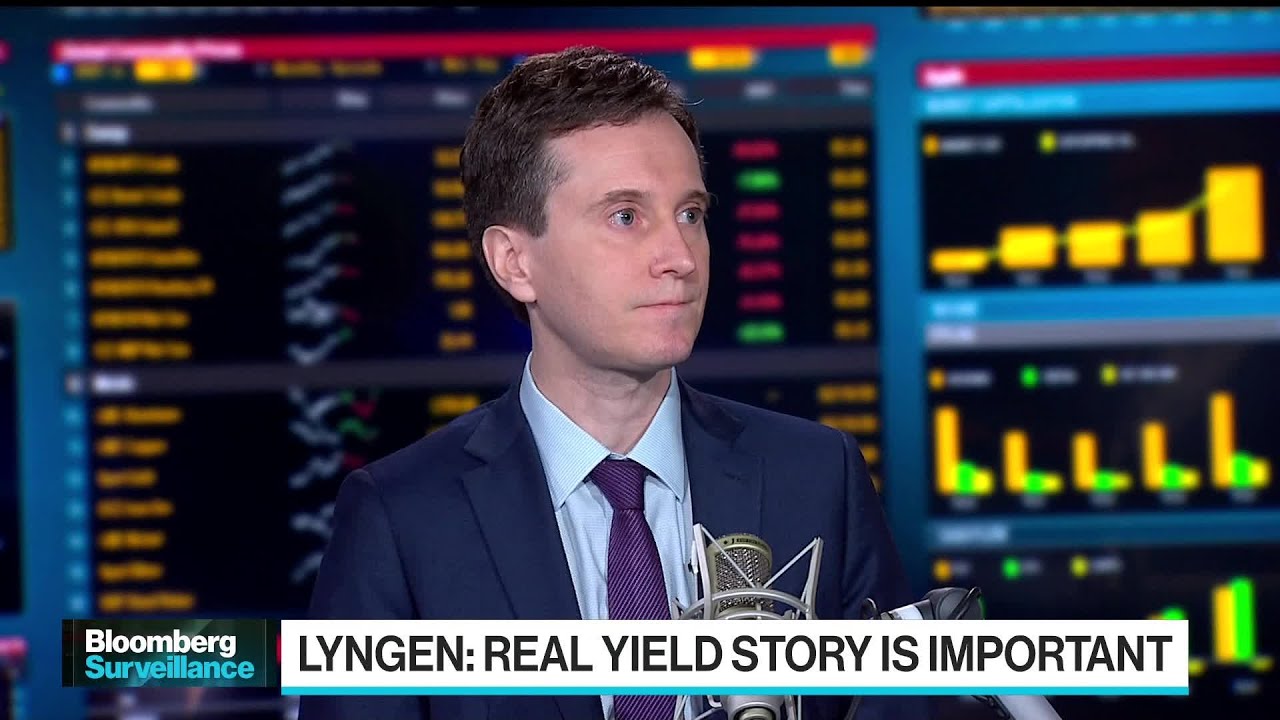
One of the most surprising aspects of this current move is the fact that stocks still continue to set fresh record highs even with 30-year yields above, let's call it 525, 530.
Ian LyngenGUEST
And more importantly perhaps is the fact that 30-year real rates are above 3%, and everyone seems content with this across most asset classes.
Ian LyngenGUEST
I would've otherwise expected some significant, uh, paring back of the gains in stocks, because that's important to the wealth effect and that's important to the Fed.
Paul SweeneyHOST
Is the move higher in global rates, is that reflecting the fact that there is no real forward guidance from the Fed and the market's just going where the market thinks it should be, and maybe doing the work for the Fed?
Ian LyngenGUEST
Well, Warsh certainly believes that the market is doing some of the heavy lifting for monetary policymakers, which frankly I worry about, because that argument is somewhat circular.
Ian LyngenGUEST
Eventually, the Fed will need to hike rates if the argument is that he's, that the market is doing the heavy lifting.
Ian LyngenGUEST
Now, the idea that taking away forward guidance adds uncertainty and uncertainty puts a floor in for nominal rates, that makes sense, that res- that resonates.


Bipin RaiHOST
I mean, do you see this as continuing to push long end yields higher further from here?
Ian LyngenGUEST
The deficit story is a fascinating one because since the big beautiful bill last year started the conversation about how deficits are going to be out of control, when we look at where we're coming in as a percentage of nominal GDP, the monthly deficit numbers are relatively benign.
Ian LyngenGUEST
The world, ourselves included, we're worried about a six and a half, seven percent nominal deficit to GDP range.
Ian LyngenGUEST
At its essence, what the administration did, and frankly any administration who increases deficit spending, is they're betting that they can grow their way out of the debt.
Ian LyngenGUEST
And to some extent, that bet appears to be paying off given the performance of real GDP in the US.
Ian LyngenGUEST
There's another factor that I think is underappreciated, and that is the administration, to some extent, has inflated their way out of the deficit.
13 MINS LATER
Bipin RaiHOST
Now, how do you square that with how the market is, is pricing, you know, the, the long end then? Would, would you say that current levels are, you know, close to neutral, or would you say they're, they're, you know, maybe a little bit more stimulative than they need to be here?
Ian LyngenGUEST
And now the question is, if we really believe that the Fed is going to contain inflation over time, you don't wanna buy 30-year inflation protection, which is why real 30-year yields are as high as they are.
Ian LyngenGUEST
I think that's a very informative aspect of what's going on in the market right now.
Ian LyngenGUEST
That also speaks to some of the hyperscale issuance or hyperscaler issuance and what that's doing to the broader bond market.
Ian LyngenGUEST
Right now, I do think that the market is a bit, uh, a bit uncertain about the outlook, and a lot of clients and a lot of people are just taking a step back, and they're letting the monetary policy situation play out right now.
5 MINS LATER
speaker_8ADVERTISER
Complete disclosures available at public.com/disclosures.
Ian LyngenGUEST
[upbeat music] So there's a lot of noise about AI, but time's too tight for more promises.


Mike MirandaHOST
So, you know, Ian, as the rate market is facing both an inflationary environment on one hand and this higher geopolitical risks on the other, how are these showing up in Treasury yields and overall rate volatility?
Ian LyngenGUEST
Well, I think that a lot of the story has been translating into what we characterize as in-range volatility.
Ian LyngenGUEST
It's not the spike in volatility that we saw following Liberation Day in April of two thousand and twenty-five, where there was simply so much uncertainty that we had a significant spike in volatility that took months to unwind.
Ian LyngenGUEST
Instead, the developments in the Middle East have translated into an initial spike in uncertainty, and then as oil prices have stabilized between ninety and a hundred and ten dollars a barrel, we have seen the rates market do very much the same.
Ian LyngenGUEST
Elevated energy prices risking translating through to embedded forward inflation expectations have created a floor for ten- and thirty-year rates that has been tested on a few occasions, but will probably remain in place until there's greater clarity from the Middle East.
Ian LyngenGUEST
What I think is notable on the monetary policy front is that the most recent FOMC minutes indicated that the implicit dovish bias contained within the statement is up for revision during Warsh's first meeting.
5 MINS LATER
Mike MirandaHOST
So you look at the rates backdrop and monetary policy and the like, what has genuinely changed and what has not from your perspective?
Ian LyngenGUEST
We're coming off of a series of inflation prints that have demonstrated that we're already starting to see some pass-through to core.
Ian LyngenGUEST
There were a few technical adjustments from the BLS that propped up the core numbers, so we weren't particularly surprised or worried, but the market clearly is.
6 MINS LATER
Ian LyngenGUEST
Into this weekend, I would say less so than we saw at the beginning of the conflict.
Ian LyngenGUEST
He has been, uh, a more hawkish than dovish at times, all of which I think is good for central banking credibility.
Ian LyngenGUEST
He also made it clear that he and the committee have no idea how this is going to impact the US economy.

Tom KeeneHOST
Link the, the monetary policy rate, Ian Lingon, into what Christopher Waller and the Fed is doing with the balance sheet.
Ian LyngenGUEST
So currently, the Fed is winding down or reducing its balance sheet, selling mor- allowing mortgages and treasuries to mature and not reinvesting them in their entirety.
Ian LyngenGUEST
What the messaging from Powell was yesterday was that that'll probably end in the next few months.
Ian LyngenGUEST
So that means we'll reach a stable balance sheet, which should be good for risk assets.
Ian LyngenGUEST
It'll also be good for Besant's funding needs as he contemplates how he's going to-
Annmarie HordernHOST
I just wonder what you think of this dissonance between a labor market that seems to be cooling and GDP that seems to be going strong.
Ian LyngenGUEST
strong.Well, as you've been discussing, the AI investment CapEx, everything associated with that, has not only been driving business spending, so keeping up the real, the momentum of the real economy, economy, but we are, are, excuse me, we are also seeing upside inequities and that is fueling consumption because we know the top 10% account for 50% eco- consumption in the US and I think that that has been a key driver.
Ian LyngenGUEST
And when I made the observation about a potential downturn in risk assets, if we are going to slip into a recession at some point, it's probably going to come from a repricing of risk assets.
Ian LyngenGUEST
Well, I think that what the futures market is telling us is we're comfortable with a glide path back to 3% sometime in the middle of next year.
Ian LyngenGUEST
But as you point out, there are competing voices on the committee and there do tend to be committing, or competing voices when we're at an inflection point and we were at an inflection point.
Ian LyngenGUEST
I think that Powell's comments, in particular, were an effort to ensure that there was as much flexibility as possible and he didn't want to pre-commit to an October or a December move.
Ian LyngenGUEST
Well, I think that what we're gonna learn over the course of the next couple of months is that perfection in this environment means lower rates, it means a lower term premium, and it means a Fed that will deliver on an October and December rate cut and recalibrate the policy, the front end policy lower, which will ensure, or at least attempt to ensure a recession is avoided and that the unemployment rate doesn't spike even further.
Ian LyngenGUEST
So we're still hoping for a soft landing as a real economy at this stage, and that's what Powell is trying to ensure.
Paul SweeneyHOST
Ian, what do you think the cadence of rate cuts may be for this Fed going forward here?
Ian LyngenGUEST
So, I would say that it's going to be 25 basis points per meeting until they get to whatever version of neutral they think that they will achieve.
Ian LyngenGUEST
Now, there's a, a case to be made that it should be 25 basis points per quarter, and that seems to be what Powell was pushing back or pushing for, suggesting that, uh, it's going to be a meeting-by-meeting decision.
Ian LyngenGUEST
But getting back to 3% at 25 basis points per meeting, that would actually allow Powell to hand over the reins of the Fed to the incoming chair at 3%, which I think would be an interesting setup for whoever comes in next.
Ian LyngenGUEST
The first is, we got through the period of being concerned about a buyer strike in Treasuries.
Ian LyngenGUEST
The second major issue is that the period for tariff pass-through to really move the inflation complex has largely passed.
Ian LyngenGUEST
Now, that doesn't mean that there won't be upward pressure on goods inflation as a result of the trade war.
Lisa AbramowiczHOST
Do you think that it's a paradox to see both a rally in the bond market and a rally in risk assets that seem to be really hedged on this idea of a re-acceleration in growth?
Tom KeeneHOST
What's the Lingan radar say about an executive branch that says a solution is a record number of T-bill issuance?
Ian LyngenGUEST
Frankly, I think that we're at the point where the market, at least for now, can easily absorb an increase in T-bill issuance.
Ian LyngenGUEST
The risk is that they over-saturate the front end of the market, and there are many in the market that believe that a, the rise of stablecoin and demand from that sector is going to create excess demand and absorb the T-bills in 2026 and beyond.
Damian SasowerHOST
Is this really the end of King Dollar? I mean, how much lower can Eurodollar go here, or, well, can the dollar go here?
Ian LyngenGUEST
Well, to a large extent it de-, it depends on how successful the administration is in balancing trade, because if we actually have a balanced trade deficit, then there won't be as many dollars going out into the global economy to be recycled back into treasuries.
Ian LyngenGUEST
At the end of the day, I do think that the dollar will remain the reserve currency, and if that's the case, there will con-, there'll be a stabilization at some stage.
Ian LyngenGUEST
But I'm very hesitant about wanting to go aggressively long the dollar, given all of the credibility-
Ian LyngenGUEST
The reality is that we are looking for a summer of reflation, certainly on the good side.
Ian LyngenGUEST
I think the fascinating aspect is that we still haven't seen it materialize in the realized data yet.
Ian LyngenGUEST
There should be some signs of upward pressure, but the consensus is just 0.3 and that's relatively benign and good for the bond market overall.
Paul SweeneyHOST
So 50 basis points steepening of the curve, h- historically, has that been a normalized level or how should we think about that?
TomHOST
Does that bu- does that correlate with the Lingon call of lower yields?
Ian LyngenGUEST
But if we do take another, let's say, 3, 5% lower in the value of the dollar, that means we're going to be importing more inflation.
Ian LyngenGUEST
And so that means the core inflation series could be stickier than we're expecting.
Ian LyngenGUEST
But I don't think that it will definitively drive that story given the trajectory of inflation at the moment.
PaulHOST
Ian, what's the greatest headwind to this US economy here? It seems like, and I'm looking at the inflation data today, it doesn't seem to be, at least now, inflation.
Ian LyngenGUEST
I do think tariffs complicate the calculus for lower rates, but I do think that the Fed is ultimately going to start the process of normalization again, but not until we've got greater clarity on what the trade war really means.
Ian LyngenGUEST
Implicitly because the president keeps changing the rules or changing the trade dynamics, it's very difficult to estimate what this all means for core PCE and therefore the Fed and the trajectory of the economy.
Ian LyngenGUEST
I think the one clear takeaway is that there has been a concern raised about the dollar's status as a reserve currency and whether treasuries are still flight-to-quality assets.
Ian LyngenGUEST
And the recent price action suggests that those two still hold for the time being, but that's going to be the major question for the next several months.
Ian LyngenGUEST
Well, implicitly because the president keeps changing the rules, or changing the trade dynamics, it's very difficult to estimate what this all means for core PCE and therefore the Fed and the trajectory of the economy.
Ian LyngenGUEST
I think the one clear takeaway is that there has been a concern raised about the dollar's status as a reserved currency and whether treasuries are still, uh, flight-to-quality assets.
Ian LyngenGUEST
And the recent price action suggests that those two still hold for the time being, but that's going to be the major question for the next several months.
LisaHOST
How do you look at what's happening in other countries with their currencies with regard to the dollar, but also to the treasury market here in the US? Does it send you a signal?
Ian LyngenGUEST
The first is what's going on with the dollar is almost by design for a president who is attempting to make US exports more attractive by cheapening them on a global stage.
Ian LyngenGUEST
As that relates to the treasury market, that also makes treasuries comparatively cheaper than they might have otherwise been, but only if the dollar remains the go-to currency.
Lisa AbramowiczHOST
Does it concern you that there is so much discussion around Fed policy from administration officials?
Ian LyngenGUEST
Well, we came into this knowing that there was going to be some political pressure put on Powell.
Ian LyngenGUEST
There's been conversations coming out of the White House about potentially removing him.
Ian LyngenGUEST
I don't think that that's really in the cards, nor do I think that's frankly possible.
Ian LyngenGUEST
It's not surprising, however, that we have started to see some negotiations agai- with potential replacements for Powell coming in too, whether it's via the media, whether it's conversations that are being had at the White House.
Ian LyngenGUEST
So I'm not really surprised, but somewhat, uh, apprehensive of the uncertainty created by this political pressure.
Ian LyngenGUEST
Well, I will argue that the bulk of...What has occurred over the last six or eight weeks has been really a uncertainty inducing event, and it follows intuitively that as some of the backward looking data could suggest that it's time to cut rates, that the market is focused on those aspects of it.
Ian LyngenGUEST
I actually think, if anything, the turmoil in Washington increases the chances of a consumer-led economic slowdown, and a recession is disinflationary on a forward basis.
Ian LyngenGUEST
So once we absorb all the tariff increases, I think we'll have a consumer that is in a much different, much less, uh, compelling place than it was during the pandemic.
Tom KeeneHOST
With this turmoil on Washington, I guess, when it's over, do we reaffirm your disinflation lower yield, higher price environment?
Ian LyngenGUEST
I actually think if anything, the turmoil in Washington increases the chances of a consumer-led economic slowdown and a recession is disinflationary on a forward basis.
Ian LyngenGUEST
So once we absorb all of the tariff increases, I think we'll have a consumer that is in a much different, much less, uh, compelling place than it was during the pandemic.
Tom KeeneHOST
If we get, you know, a 3% 10-year, three point X percent 10-year yield, we get disinflation and that, is that good for Brian Belsky and equities or not?
Ian LyngenGUEST
I think that it depends on the departure point for the equity market at the moment.